Contemporary Istanbul, Türkiye’s leading international art fair, once again affirmed its role as a key meeting point for artists, galleries, and collectors from Türkiye and beyond in its latest edition in September. Following this milestone edition, Ali Güreli (A.G) the fair’s director spoke with Selections to reflect on Contemporary Istanbul’s journey, its expanding influence on Türkiye’s cultural landscape, and how it continues to bridge local and global art communities.
You started Contemporary Istanbul with the dream of making Istanbul a global player in the art world. How has that initial vision evolved over the past two decades, and what were the biggest challenges you faced in those early years?
A.G: When I started Contemporary Istanbul, my vision was clear: I wanted to make Istanbul a true global player in the art world. I had seen what fairs like Art Basel were doing – bringing together world-class galleries, artists, and collectors in a way that shaped the cultural and commercial conversation around contemporary art. I believed Istanbul deserved the same. This city has always been a cultural crossroads, and I felt it was time for the art world to recognise that.
Back then, in 2005, Turkey didn’t really have a developed contemporary art market. There were collectors, yes, but most focused only on Turkish artists. Sales were mostly local, and there was little international exposure or engagement. We didn’t yet have the infrastructure or confidence that the global art scene requires. One of the biggest challenges in those early years was simply building awareness. We had to convince galleries to take a chance on us, to believe in the potential of Istanbul as an international platform. We had to encourage artists to think beyond just surviving, to see themselves as part of a larger, global conversation. And we had to nudge collectors to look beyond their comfort zones, to explore and support art from outside Turkey as well.
We also faced plenty of logistical and financial hurdles – bureaucratic red tape, political uncertainties, and a lack of institutional support. But what mattered most to me from the beginning was that Contemporary Istanbul shouldn’t just be a copy of Western fairs. I wanted to create something with its own identity, something rooted in Istanbul, shaped by the unique position of this city, and a fair that gave space to regional artists, not just the big international names.
You’ve described Istanbul as a “cultural translator” between East and West. How has Contemporary Istanbul fulfilled this role, and how has the fair’s identity been shaped by the city itself?
A.G: Istanbul has always been a meeting point. Different cultures, religions, and histories have lived here together. This gives the city a deep and special energy that is hard to find anywhere else. From the beginning, I saw Istanbul as a kind of translator between East and West. That idea has always been at the centre of Contemporary Istanbul. The fair brings together galleries and artists from Europe, the Middle East, Asia, and other regions. But it does more than just show art; it helps build connections between different ways of thinking, different styles, and different art markets. It also gives international curators and collectors a chance to discover artists they may not know, and it gives our artists a way to be seen and respected on a global level. Contemporary Istanbul is shaped by the spirit of this city. Its history, its energy, and even its challenges give the fair a unique character. We are not trying to copy other big fairs like Basel or Frieze. We are doing something that belongs to Istanbul.
How have you seen the local and regional art market change since 2005, and what role do you think the fair has played in its development?
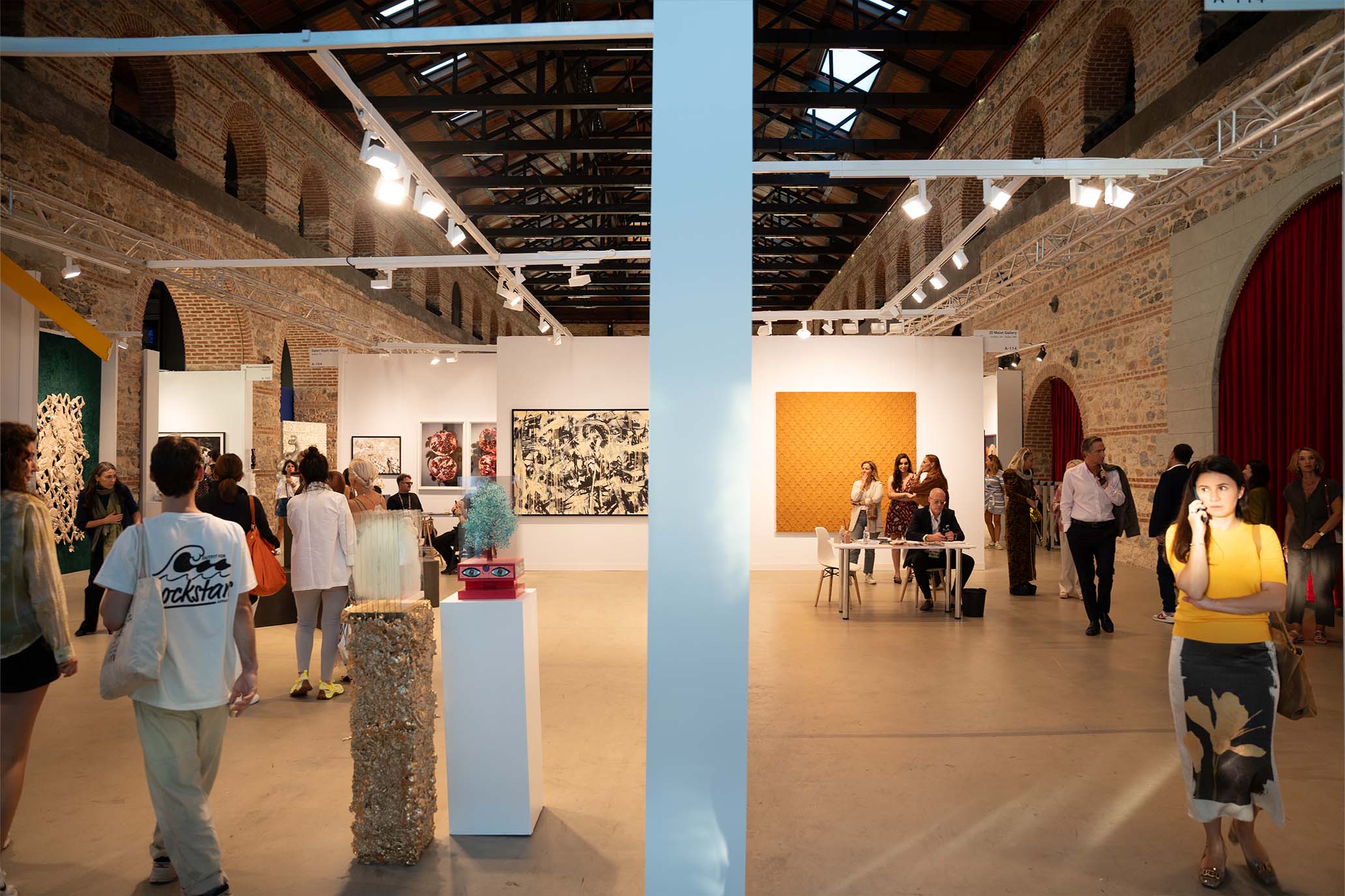
A.G: The change has been very strong. When we started, there were only a few serious collectors, and most of them were focused on modern Turkish art. Today, we see a new generation of collectors. They are more open, more curious, and more willing to take risks. They buy international works, support young artists, and build collections with clear ideas and goals. Galleries are now more professional and more connected with the world. Many artists from Turkey and the region are showing their work in international exhibitions and biennials. They are also working with well-known curators. In Istanbul, we now have museums and art spaces that didn’t exist 20 years ago. I believe Contemporary Istanbul has helped this development. We built a platform where international galleries could discover this region, and where artists from Turkey and nearby countries could be seen by the world. We helped raise the quality and encouraged new ideas. I think we helped artists and collectors become more confident. In many ways, the fair reflects how much the art scene here has grown.
Looking ahead, where do you see Contemporary Istanbul in the next 20 years, and how do you envision the global art fair model adapting to new challenges and opportunities?
A.G: In 20 years, I hope Contemporary Istanbul will be known not only as an art fair, but as a cultural institution. I want it to support artists, collectors, and the art scene throughout the whole year – not just during the fair. I also want to build stronger connections with nearby regions like the Gulf, the Caucasus, and Central Asia. These are places with shared histories and growing creative energy. My goal is for CI to be a bridge, not only between East and West, but also between new and established parts of the art world. Around the world, the art fair model is changing. Political and economic issues, digital platforms, and younger generations are all pushing the art world in new directions. Fairs like ours need to adapt. We have to offer more than a space to sell art. We need to give people real experiences, support learning, and bring value to artists, galleries, and visitors. For me, the legacy I hope to leave is simple: I want to know we helped create a strong and lasting art environment in Turkey, that we gave artists a platform, helped collectors grow, and made Istanbul more visible in the global art scene. If future generations see Contemporary Istanbul as a key moment in that story, then we’ve done our job.