The 17th edition of Abu Dhabi Art will take place from 19 to 23 November 2025 at Manarat Al Saadiyat, organised by the Department of Culture and Tourism – Abu Dhabi, bringing together 140 galleries from 37 countries. This year, the fair appoints Shaikha Al Mazrou (S.M) as its Visual Campaign Artist, whose distinctive practice continues to shape the UAE’s contemporary art landscape.
Known for her sculptural works that merge industrial materials with a sense of tension and transformation, Al Mazrou brings her conceptual approach to the fair’s visual identity. In this interview, we speak with the artist about her creative process, the ideas behind the campaign, and her hopes for the fair.
Can you walk us through the identity you’ve created for Abu Dhabi Art?
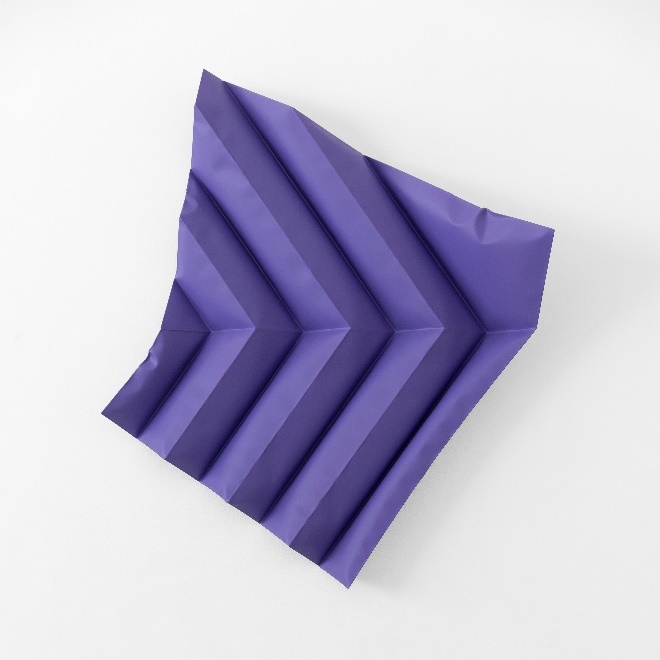
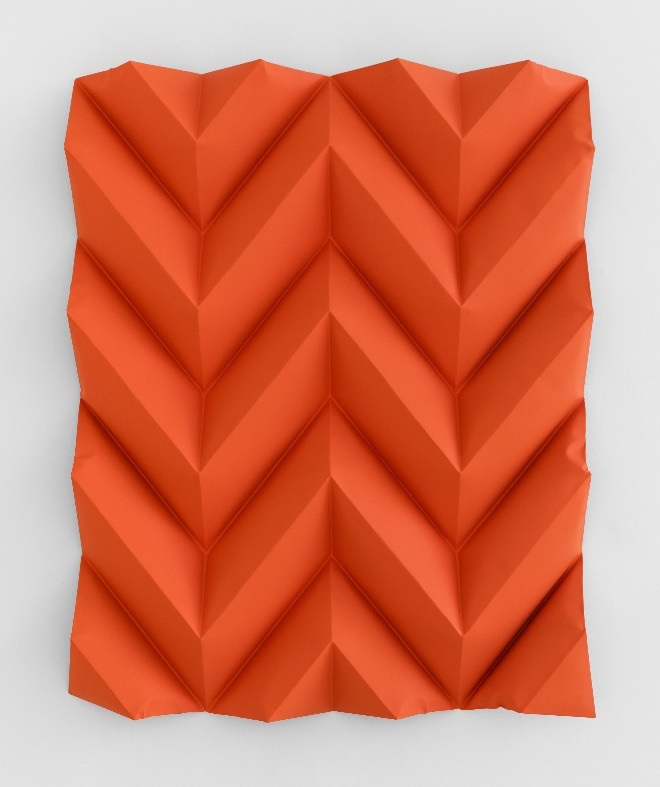
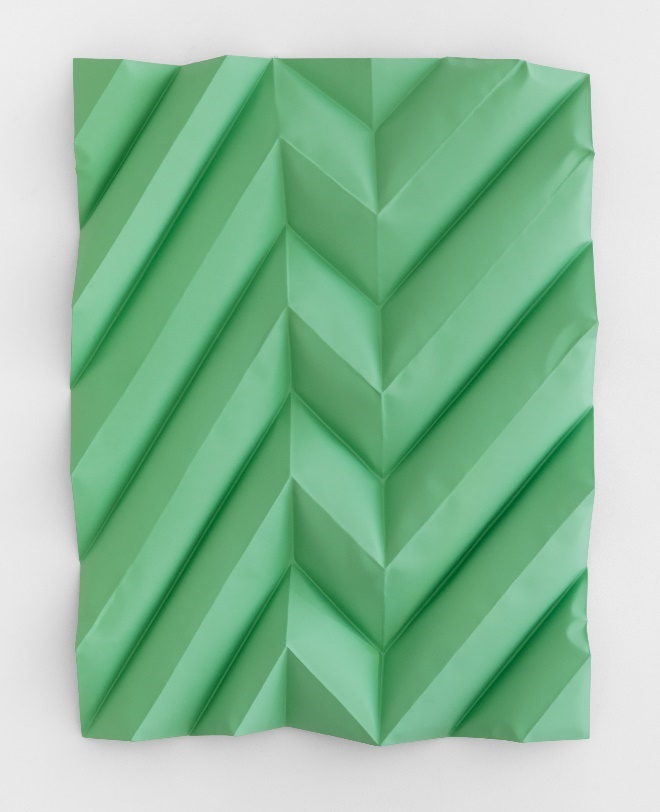
The visual identity for Abu Dhabi Art 2025 plays with the idea of structural tension, not just in form, but in meaning. I’ve approached the campaign as a kind of aesthetic infrastructure, where nothing is fixed and everything is in negotiation: between expansion and restraint, form and void, surface and suggestion. This year’s identity is less about declaring a theme and more about questioning the scaffolding that holds meaning together in art, in institutions, and in public perception.
It’s a language of compression and release, quite literally, but also metaphorically. Think of it as a design with a pressure point. Something that doesn’t scream for attention but lingers like a taut line waiting to snap.
You first participated in Abu Dhabi Art as a Beyond Emerging Artist in 2017. Looking back, how do you see your journey from that moment to now, being named Visual Campaign Artist for 2025?
Participating in Abu Dhabi Art in 2017 as a Beyond Emerging Artist was a pivotal moment. It offered me not just visibility, but also a space to take creative risks within a supportive framework, something that’s not always easy to come by. That opportunity helped shape the foundation of how I think about artistic practice today: as something that must remain fluid, responsive, and at times, resistant.
What made that experience even more memorable was the research trip that accompanied it, a journey I shared with two of my favourite people in the art scene, Cristiana de Marchi and Mohammed Kazem. It was a moment of dialogue, learning, and camaraderie that continues to resonate in my practice.
To now return as the Visual Campaign Artist for 2025 feels both meaningful and full circle. It speaks to the fair’s ongoing commitment to artists’ evolving practices and to allowing space for growth that isn’t always linear or easily categorised. Over the years, I’ve moved between restraint and scale, between minimalist form and layered conceptual grounding. If there’s a thread running through it all, it’s perhaps the refusal to settle into fixed definitions. Ambiguity has been a guiding principle and I’m grateful that Abu Dhabi Art has continued to embrace that.
What lasting impression do you hope people carry from the fair’s visual identity this year?
I hope people leave with a sense that the visual identity wasn’t just decorative, but disruptive. That it subtly asked questions without necessarily answering them. That maybe, just maybe, the horizon they saw within my work in the campaign was less about looking forward, and more about interrogating the frameworks that tell us to look forward in the first place.
If someone walks away thinking, “I’m not entirely sure what that was, but it stuck with me,” then it’s done its job.
About Shaikha Al Mazrou
Shaikha Al Mazrou (b. 1988, UAE) is a sculptor whose work bridges minimalism and conceptual art, exploring ideas of tension, weight, and spatial balance. She received her MFA from Chelsea College of Fine Arts, University of the Arts London, where she was awarded the MFA Student Prize, and previously studied and taught at the University of Sharjah. Working with industrial and mass-produced materials, Al Mazrou transforms construction and electronic waste into geometric compositions that question materiality and form. Winner of the Paulo Cunha e Silva Art Prize (2020), she was also shortlisted for the Louvre Abu Dhabi Richard Mille Art Prize.