
As part of the Khoos initiative, Baseqat: The Palm Tree is an exhibition that explores the palm tree as both material and metaphor; a living symbol of resilience, memory, and craft firmly grounded in the region’s cultural landscape. On view at Ithra, the exhibition unfolds through a material-driven narrative, bringing together artists, designers, and researchers to reinterpret the palm’s anatomy and meaning.
In this conversation, Selections spoke with Samer Yamani (S.M), head curator and Razan Masri (R.M), cultural anthropologist and senior curator to discuss the making of Baseqat, the dialogue between material and culture, and the enduring presence of the palm in contemporary creativity.
Samer, Baseqat follows a material-driven curatorial approach. Could you tell us more about how this methodology shaped the exhibition’s concept and selection of works?
S.Y: At the heart of Baseqat lies a deep exploration of material as both subject and medium. The curatorial approach is material-driven, meaning that the narrative starts with the palm tree itself; its physical properties, its cultural symbolism, and its historical significance. From there, we built a dialogue around how this material has inspired creative practices across disciplines. The selected works were not chosen merely for their aesthetic value, but for how they interpret, transform, or question the essence of the palm as a living resource, a cultural icon, and a creative stimulus.
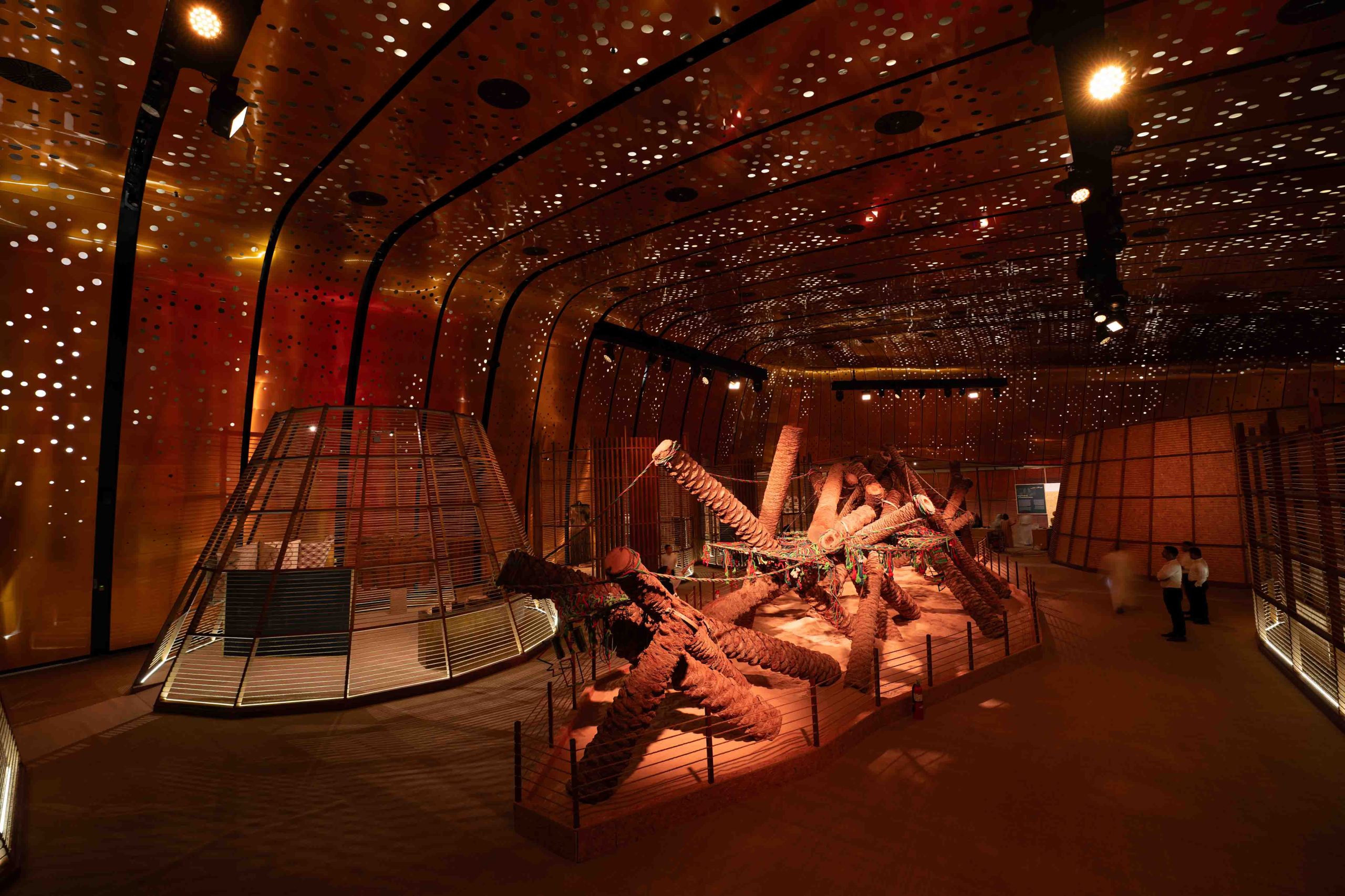
The scenography of Baseqat seems to play a central role in the visitor experience. How did you translate the symbolic and material qualities of the palm tree into spatial design?
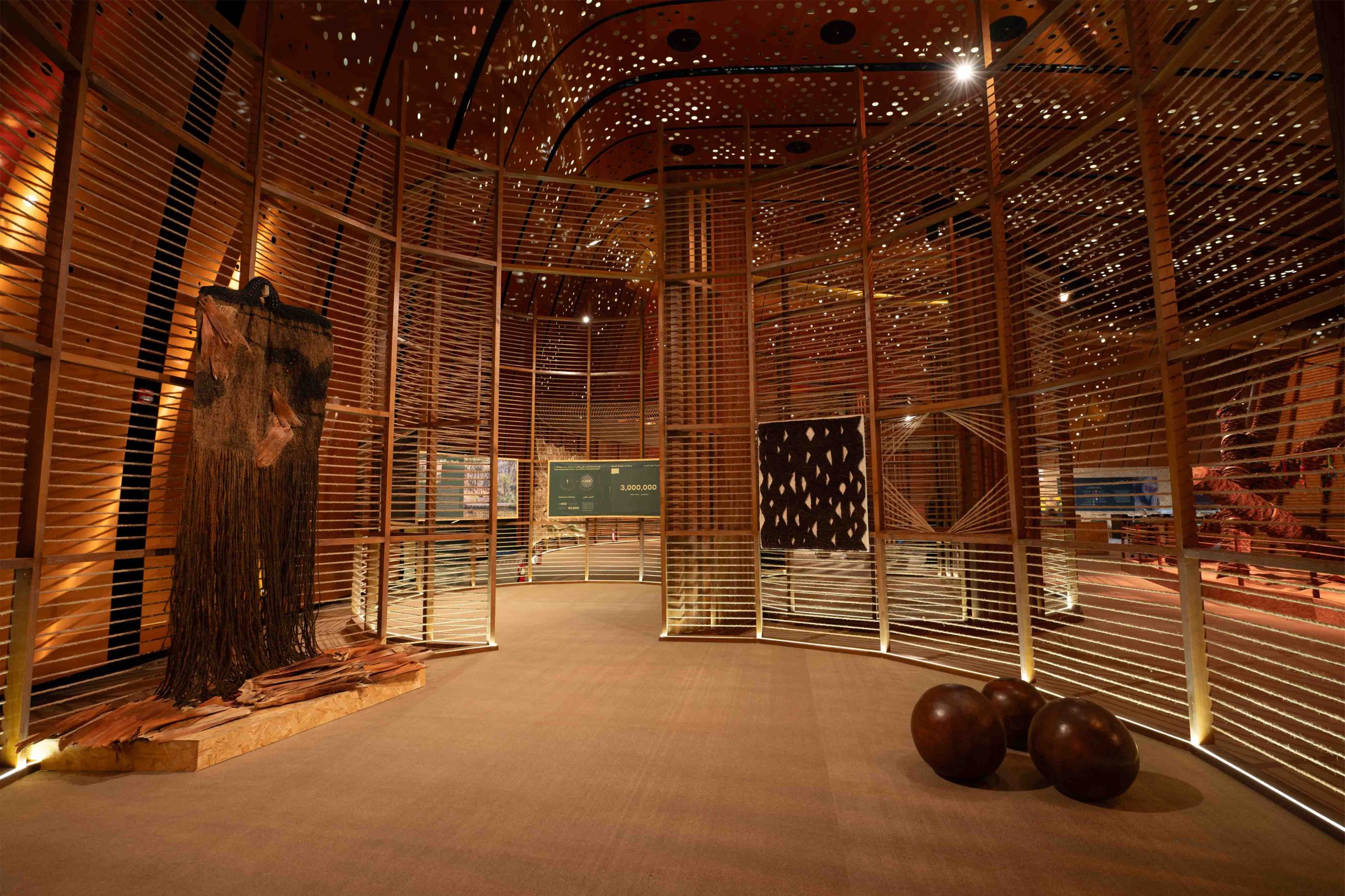
S.Y: The scenography was conceived as an immersive journey through the anatomy of the palm. Each spatial zone represents a part of the tree – from the roots to the trunk, fronds, and fruits – creating a sense of ascending discovery. All materials used in the construction of the scenography are derived from the palm itself, allowing visitors to physically and sensorially engage with the tree’s texture, scent, and form. This spatial narrative transforms the exhibition into an experience of both contemplation and connection – where design, nature, and culture intertwine.
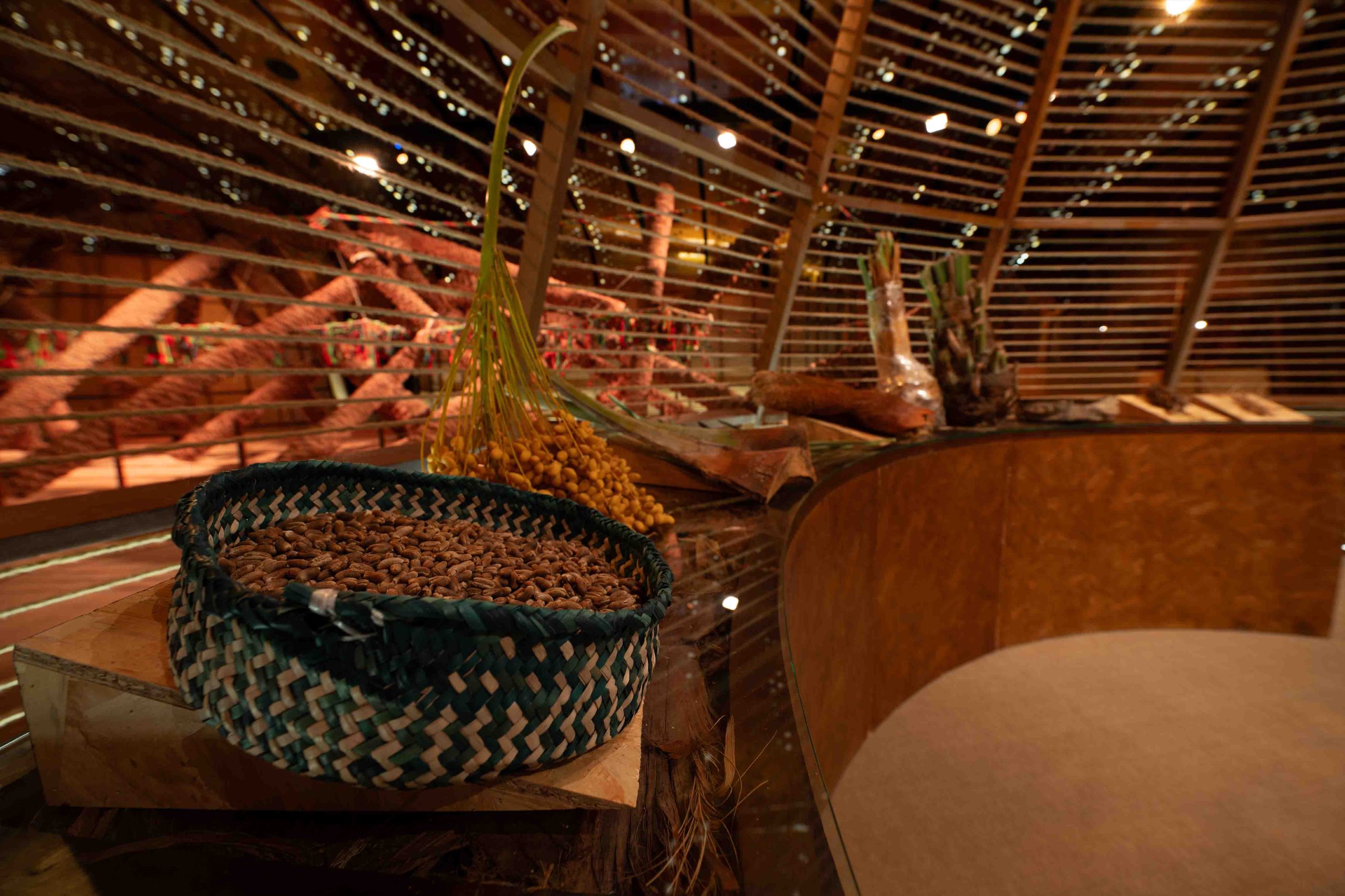
Many of the works are crafted entirely from palm-derived materials. How did this decision influence the creative dialogue between material, maker, and meaning?
S.Y: Working exclusively with palm-derived materials was a curatorial choice that emphasised authenticity and coherence. It challenged both the curators and the participants to push the limits of what the material could express, not only functionally but poetically. The process itself became an exploration of transformation: how natural fibers, wood, or fronds could be reimagined through contemporary design and artistic language. In doing so, the material became an active participant in shaping meaning, bridging ancestral knowledge with modern creative processes.
The exhibition brings together artists, designers, and researchers from diverse disciplines. What inspired this multidisciplinary approach, and how did it enrich the overall narrative?
S.Y: Baseqat was conceived as a platform for dialogue between disciplines. The palm tree is not only a botanical subject but also a cultural and symbolic system that touches art, architecture, craft, anthropology, and sustainability. Bringing together practitioners from different backgrounds allowed us to unfold the story of the palm from multiple perspectives – material, social, and conceptual. This multidisciplinary collaboration gave the exhibition its depth and complexity, transforming it into a collective reflection on the intersection of tradition, innovation, and knowledge.
From a curatorial standpoint, what do you hope audiences will take away from Baseqat – both visually and intellectually?
S.Y: I hope visitors leave Baseqat with a renewed appreciation for the palm as a living legacy – one that embodies resilience, generosity, and cultural identity. Visually, the exhibition invites awe through its beauty and craftsmanship; intellectually, it prompts reflection on our relationship with materials, heritage, and ecology. Ultimately, Baseqat is not just about the palm tree, it’s about how we can rethink our creative and cultural practices through the lens of what nature has already perfected.
Razan, as an anthropologist, how did you approach the research process behind Baseqat, especially in connecting the palm tree’s cultural symbolism with material practices?
R.M: The beauty of anthropology lies in its curiosity, its desire to understand the source of everything. And because it is a comparative study, it asks where each subject exists within the larger picture.
My approach to Baseqat began from wanting to understand how the palm tree, as a natural source, connects with communities, how this connection has fostered symbolic meanings and how these communities engage with the palm not simply as a tree, or a nakhla, but as a material presence that has long sustained life, craft, and imagination.
As an anthropologist, I approached my research process by looking at the palm tree as a living cultural system, one that shapes and reflects the values, rituals, and creative practices of the people who live with it. I wanted to connect the symbolic and the material, to explore how the palm tree’s identity extends beyond ecology into memory, spirituality, and social formation. The research evolved within the curatorial framework tracing the life of the palm through its anatomy, from roots to fronds, from structure to symbolism, revealing how deeply it is woven into both tangible and intangible heritage.

What were some of the most revealing findings or insights that emerged during your research for the exhibition?
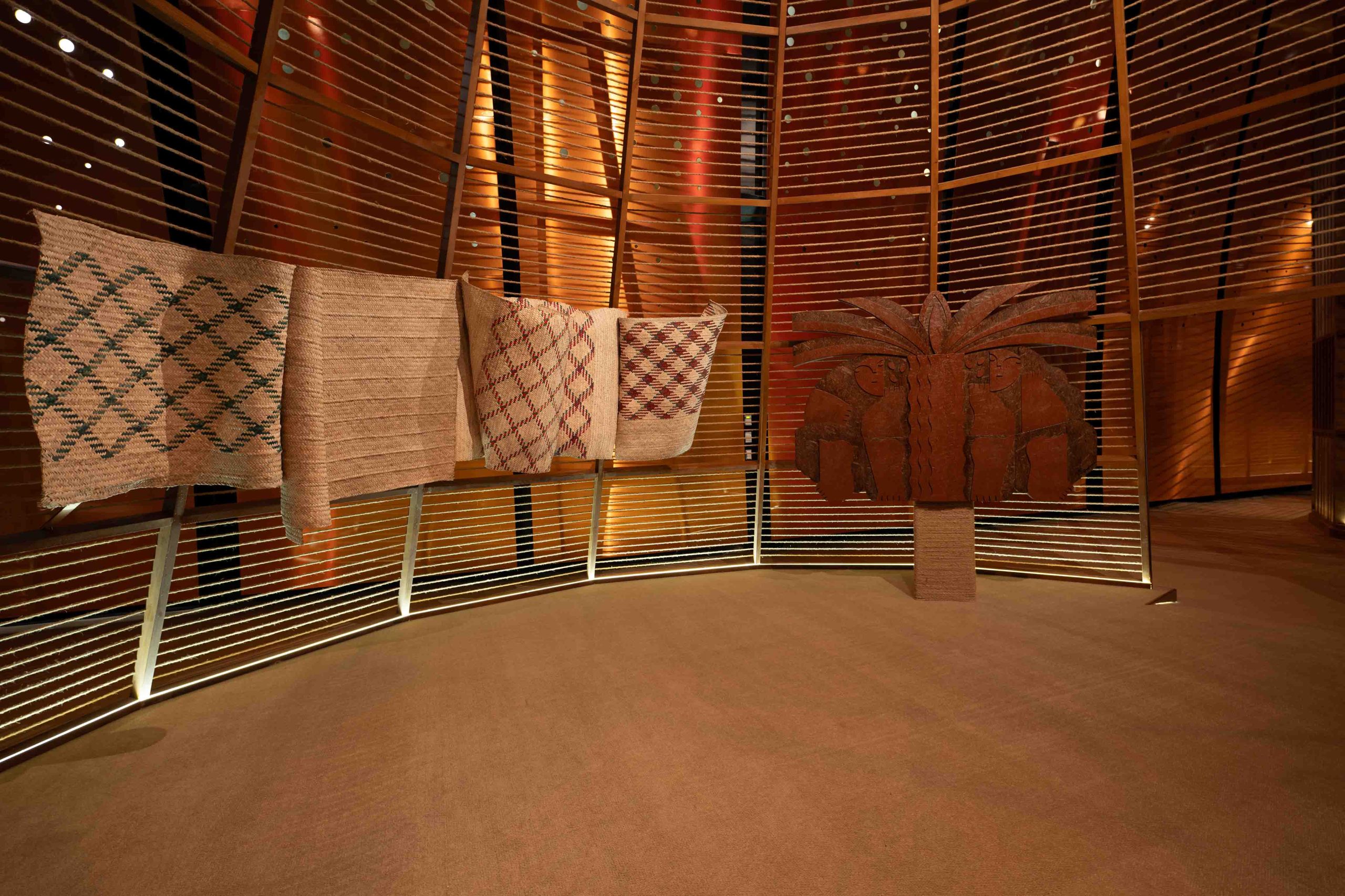
R.M: Honestly they were many. Let’s start with the palm tree as a material. When I began researching artists who had worked with the palm tree, I was astonished by the sheer diversity of the ways it could be used, transformed, and crafted, from beautiful sculptures and woven rugs to intricate decorative pieces and sustainable innovations.
Biologically, I was equally fascinated by the Heart of Palm. I first encountered it as a vegetable when I lived in Canada (palmetto), but learning that it also exists within the date palm tree added new layers of meaning. In Arabic, it’s lierally called Qlab Al-Nakhla, the “heart of palm”, and sits at the very core of the trunk, much like a human heart. What’s even more symbolic is that once it is extracted, the palm tree’s life comes to an end, which makes it an incredibly delicate and precious product, only harvested at the tree’s final stage of life. And perhaps most poetically, when you unlayer the heart of palm, the very last layer inside is shaped like a heart, a natural metaphor that beautifully connects life, fragility, and renewal.
How does the collaboration between curators, designers, and anthropologists expand our understanding of material culture in contemporary contexts?
R.M: Collaboration between curators, designers, and anthropologists allows material culture to be understood not just as a collection of objects, but as a living system of relationships, between people, materials, and meaning.
Anthropology seeks to understand context and human behaviour. Curation gives form and narrative to the subject. Design shapes spatial, sensory, and emotional experiences.
In Baseqat, these three dimensions came together to create a holistic experience. The collaboration not only celebrated the palm tree’s cultural and ecological significance but also reimagined its traditions through innovative and creative practices. By engaging with the palm as both a natural and a cultural language, the exhibition offered continuity, allowing ancient practices of weaving, making, and storytelling to evolve within a modern context.
Ultimately, it revealed how the palm tree continues to connect people of different backgrounds and languages, bridging heritage and innovation through shared material and cultural expression.
What role do you see for anthropology in shaping future exhibitions that merge craft, culture, and design research?
R.M: Anthropology, to me, plays a vital role in shaping the future of exhibitions that merge craft, culture, and design research. It reminds us that creative expression is not produced in isolation, it is rooted in human behaviour, environment, and collective memory. Through anthropology, we begin to see materials not just for what they are, but for the stories, and relationships they hold.
In future exhibitions, I see anthropology serving as both a method and mindset, one that values curiosity, observation, and empathy. It can guide us to look beyond form and aesthetics to understand why and how people create, and how those creative processes reflect changing identities, environments, and ways of belonging.
When integrated with craft and design, anthropology enables a more human-centred approach, one that honours tradition while encouraging experimentation and innovation. It ensures that exhibitions remain not only visually compelling but also contextually meaningful, connecting audiences to the deeper stories that shape our material world.
Location: Ithra, KSA.