
This interview is an excerpt from issue #75 Being Wael Shawky. In this chapter, we explore how Shawky engages myth, not as a retreat from reality, but as an alternative system of knowledge. The layered, echoing voices that surface throughout his work act as guides, leading us toward a deeper, timeless sense of place, history, and belonging.
Anastasia Nysten (N.A): You went from the trilogy of Cabaret Crusades into another trilogy, Al Araba Al Madfuna.
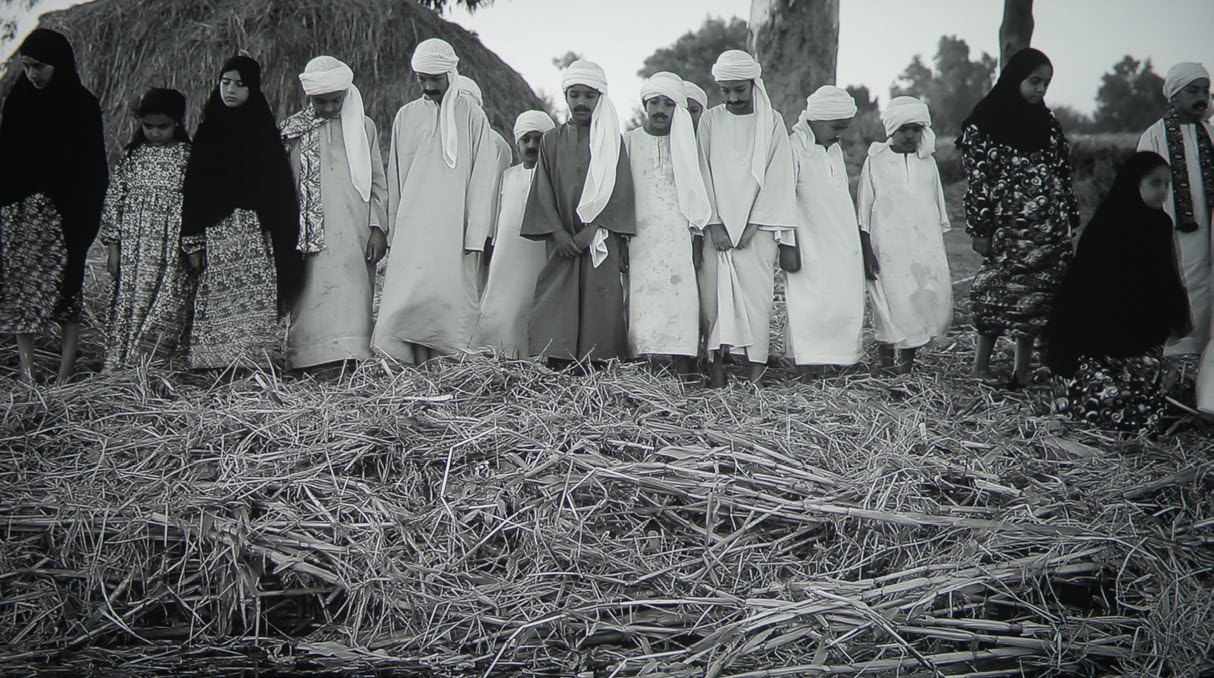
Wael Shawky (W.S): Yes, I worked on them in parallel, actually. While creating Cabaret Crusades, it was very good to be reading Ibn Kathir, Ibn Jubayr, Ibn al-Qalanisi and Usama ibn Munqidh. Al Araba Al Madfuna was a completely different type of production. It derived from a novel I’d read when I was in my twenties called Dayrut Al Sharif (Tales from Dayrut) by Muhamed Mustagab. I always wanted to make a film based on this and I decided to go back to working with kids. The whole trilogy was made with kids telling us parts of Mustagab’s short stories.
It was really nice, because these two series had nothing to do with each other. One was to do with literature, the other with history. One is concerned with my own country and a personal experience I had in Upper Egypt, the other with the history of the Crusades. Basically, I realised that, with this history, the relationship between West and East changed completely. It had a lot to do with what is happening today. It’s really always this idea about the Crusades, launched by Pope Urban II. You could connect this to a speech by George Bush, and then you could see what was happening in our region.
Going back to the personal experience, though, it was in 2001 or 2002. During that time, I really liked the idea of ‘moulid.’ I was thinking of it as folklore, and I was going to film it and try to talk about it. Anyway, I met someone during that time who believed he knew how to find treasure underground and how to heal people, and how to speak to the spirits of dead people, and to the jinn. He totally believed in this, and not only him, actually: the people around him also believed it. I didn’t believe in any of this at the time, but then I started to attend meetings with him and, of course, after a while you start to get completely fascinated by this world. I even started to see things myself. Then, one day, he told me he’d been invited to visit a village in Upper Egypt called Al Araba Al Madfuna. This village is located near an ancient Egyptian temple called Osireion. It’s a weird underground temple that has its own water supply. And just next to it, there’s this small village called Al Araba Al Madfuna.
Once, this whole area, known as Al-Balyana, was the capital of Upper Egypt. When you go there now, you find nothing, just very poor people, in a small village. But long ago it was the capital. And this temple was extremely important. Nobody knows what it is exactly. But anyway, I went to this village and I attended many, what you might call, meetings.
A.N: What were this man’s beliefs?
W.S: Well, he’s Muslim, but he believes that he can speak to spirits. I went with him to this village, and they believe in him completely, so they started to show us around, underground. And they were really digging underground to find treasure, but at the same time, they were speaking to spirits and healing people.
And I’ve seen things with my own eyes, like exorcisms, or a young girl speaking in the voice of a man, and such like. And instead of using the cross, he was using the Quran. Anyway, I came out of this experience thinking wow, what was that? It was an incredible experience. It was a real turning point for me, because I suddenly started to believe that there was something called metaphysics, that it really existed.
These people believe there are two different worlds, but our senses only allow us to see one and not the other. And it made sense, what they were saying, that there are two different worlds which can speak to each other, the spirit world and the material world, our body and our spirit. Things always happen between these two things.
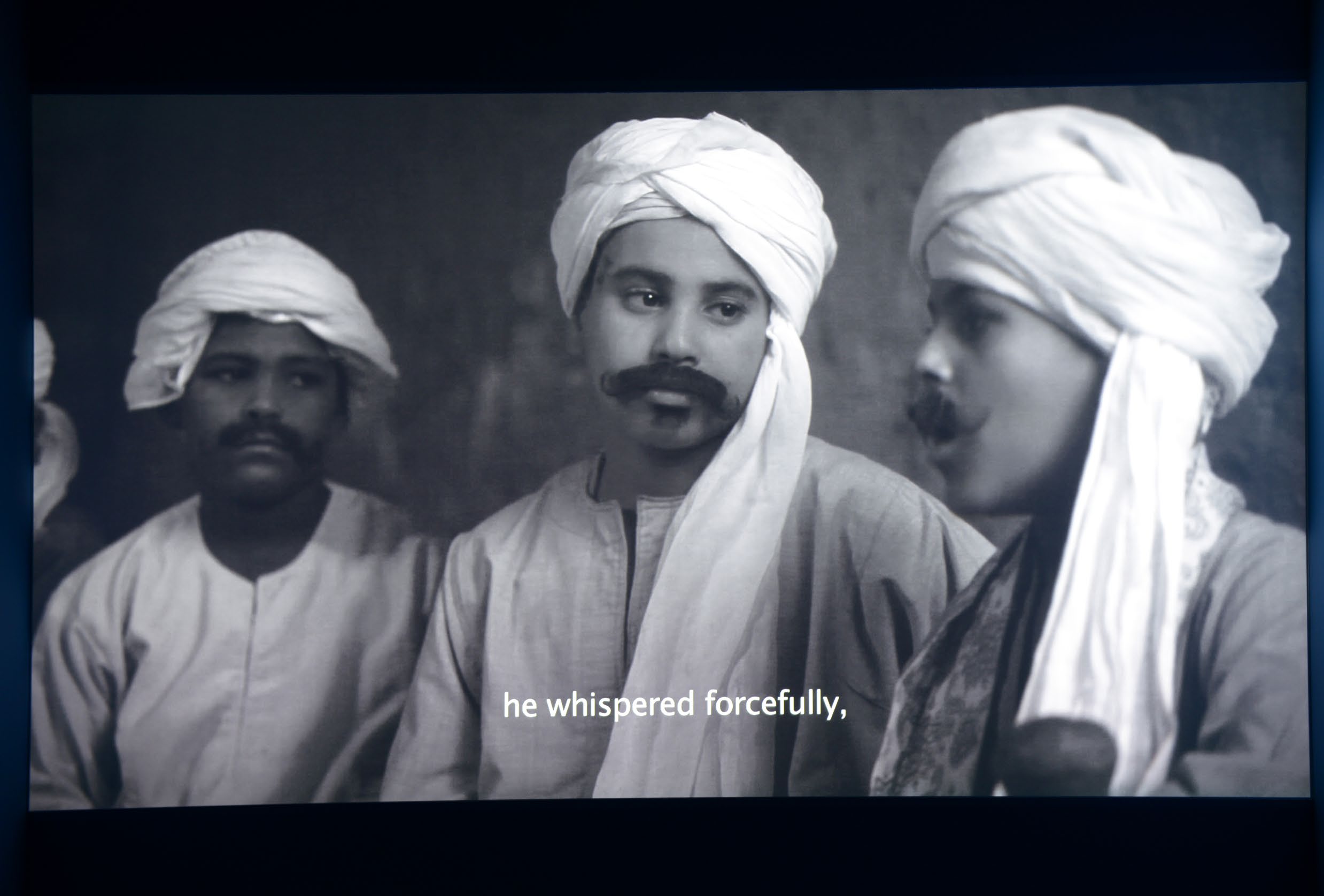
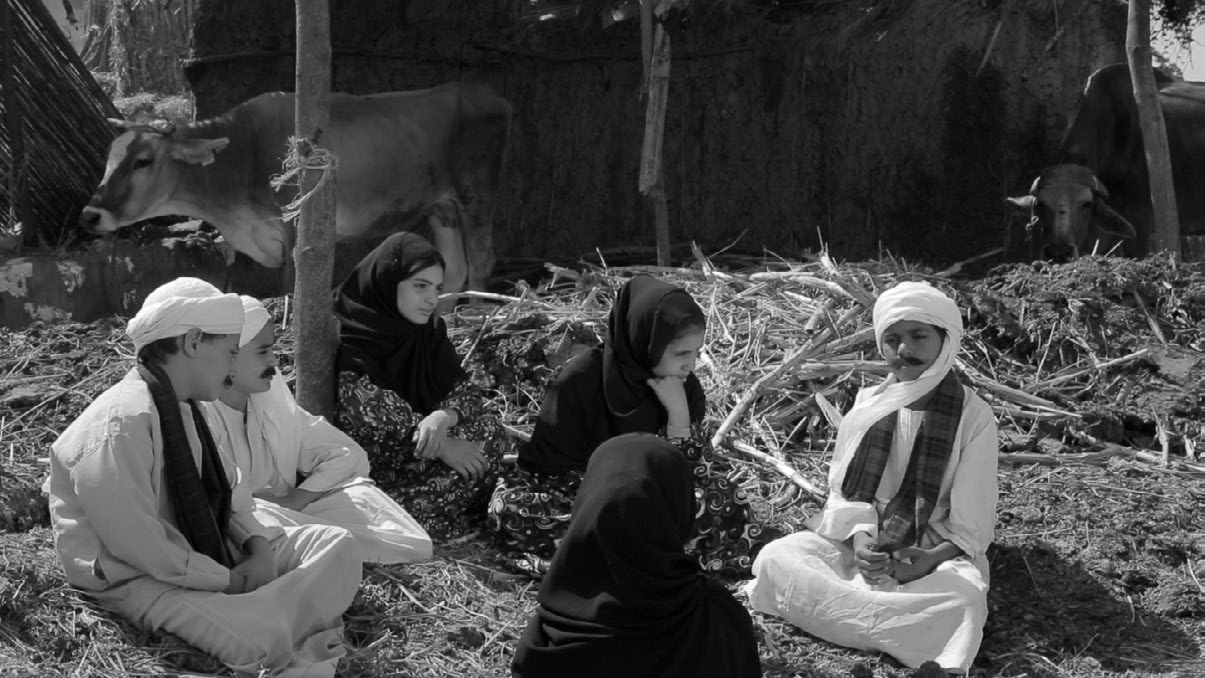
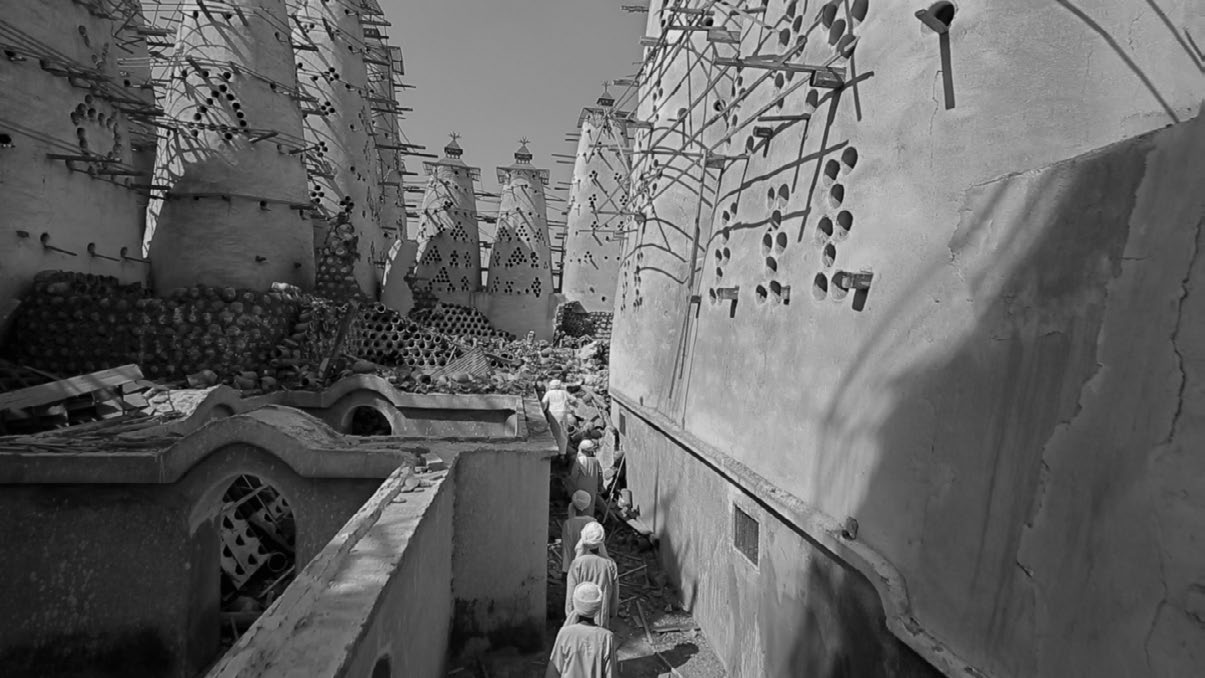
Anyway, ten years later, in 2012, I was invited by Hoor Al Qasimi to the Sharjah Biennal, and I decided to make the first film of Al Araba Al Madfuna, with one person in the middle, digging the ground. But everything is happening with kids. And at the same time, the kids are telling a story by Muhamed Mustagab. The story has nothing to do with the visuals. It’s something else. Everything is different. The kids are acting, but their voices are adult, because I was recording with adults. I said, everything is like this, two different worlds that are living together, but we don’t know what they are, really. We don’t have a way even to compare them. I think that was the first story. It’s called Al-Jabarina.
A.N: What does Al-Jabarina mean?
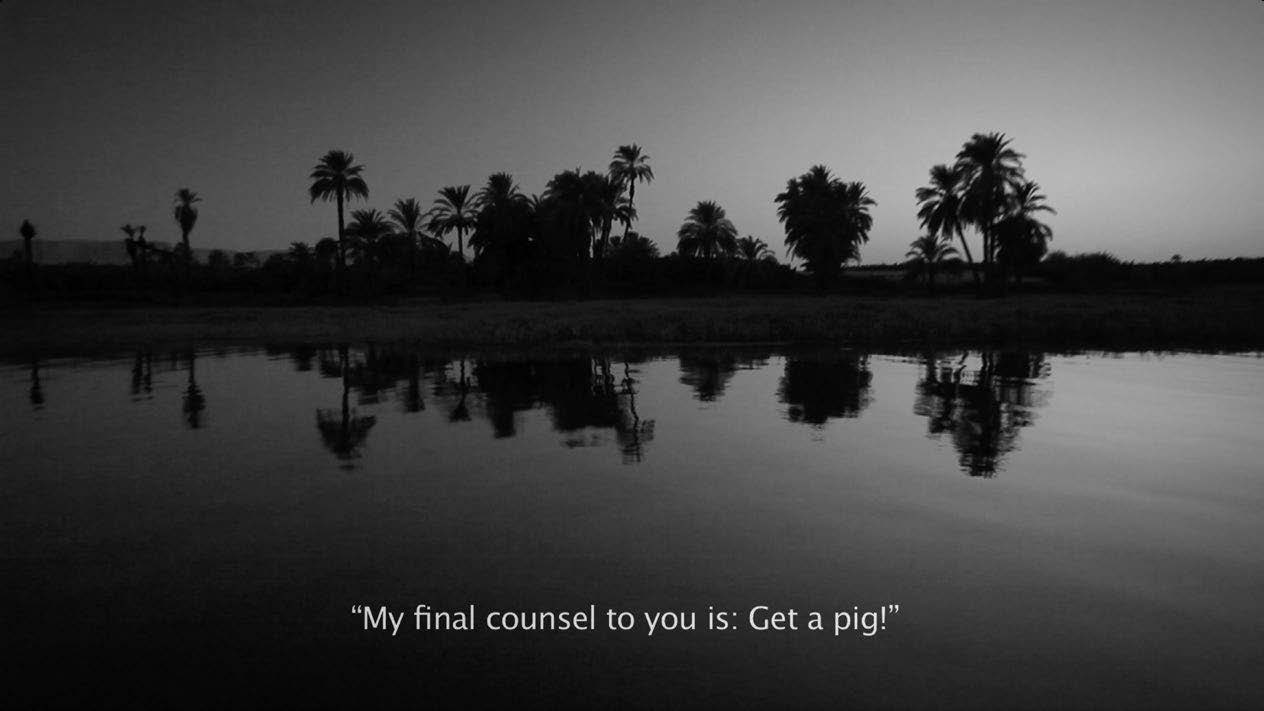
W.S: Mustagab is always talking about something ancient. We don’t know exactly what ancient means for him, but it’s happening in Egypt and it’s ancient. So, he speaks about a tribe called Al-Jabarina. Within this tribe, everyone is doing something, but they’re all following the leader. On the first day, at the beginning of the story, they all surround the leader on his deathbed. And he tells them, in a sepulchral voice, ‘Before I die, I recommend you acquire a camel.’ That is the first thing they hear. Everyone is really confused, because they all own donkeys. They don’t know anything about camels, so how could they, suddenly, own a camel?
But after the leader dies, the whole village heeds his final words. They start, one by one, to get rid of the donkeys and replace them with camels. As a result, things start to change, even their faces and their costume, because of the camels. Their eating habits change. The plants change. The heights of their houses and doors change. Everything changes just because they decide to own camels.
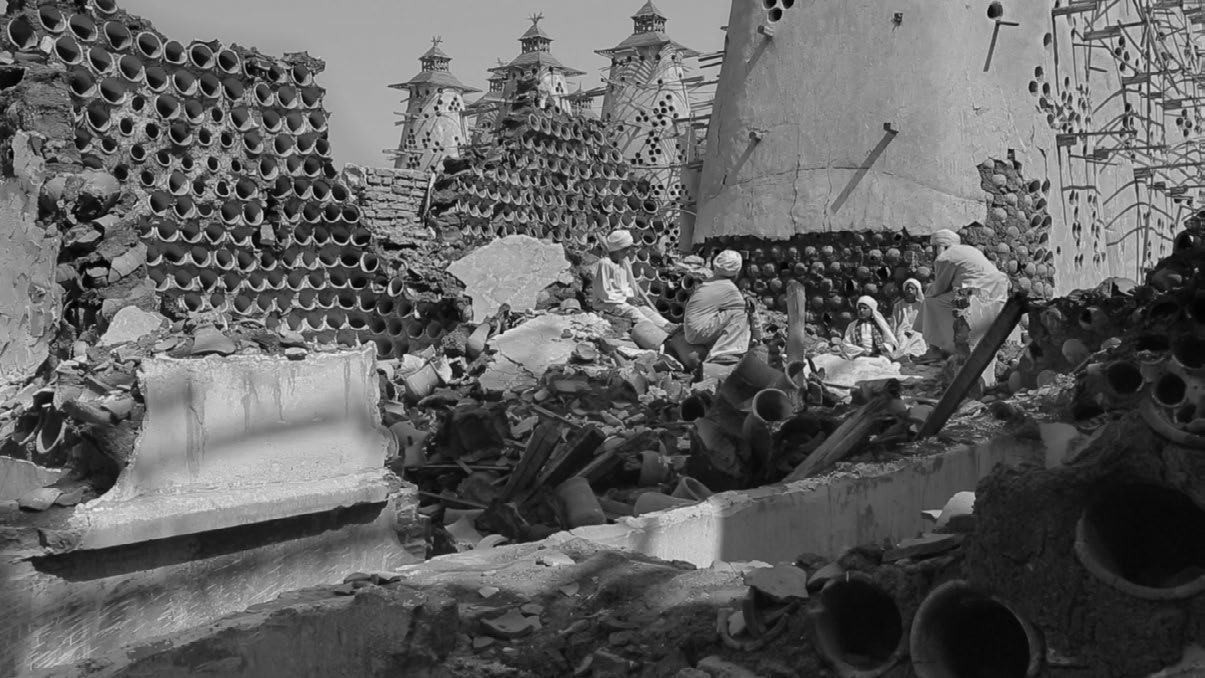
And you just see everything and you’re carried along by this whole idea, until suddenly the new leader is also on his deathbed. The villagers surround him and he says ‘I recommend you acquire some mules.’ Again, the same shock just like before, but after the leader passes away they start, gradually at first, to get rid of all the camels. They start to replace them with mules. And so on. And the story continues like this: they cut the heads off some animals and bring other animals to replace them. It’s repetitive.
And how they change is based on the type of animal they own. All the stories of Muhamed Mustagab are the same. There’s always this idea of repetition. Another story, which I used in the second part, is called: Al-Fursān Yā ‘Ushāqnā al-‘Uṭūr. In this village, everyone is celebrating as the leader is marrying a queen. They celebrate for four whole days. Finally, on the fifth day, they cease their celebrations in the early morning. Everybody is happy. That is, until they see the leader’s new wife, the queen, holding his decapitated head by the hair. She carries the head to the market place and throws it into the middle of the square, then she returns to her quarters.
At this, the entire village goes crazy. They cry ‘What is happening? Our leader is killed!’ and they want to kill the queen. However, the brother of the slain leader intervenes and calms the villagers down. He goes off to see the queen in the palace and negotiations commence. Then he comes out onto the balcony, saying ‘Okay, we found a solution for what happened. What is the solution? We will get married.’ So, they get married.
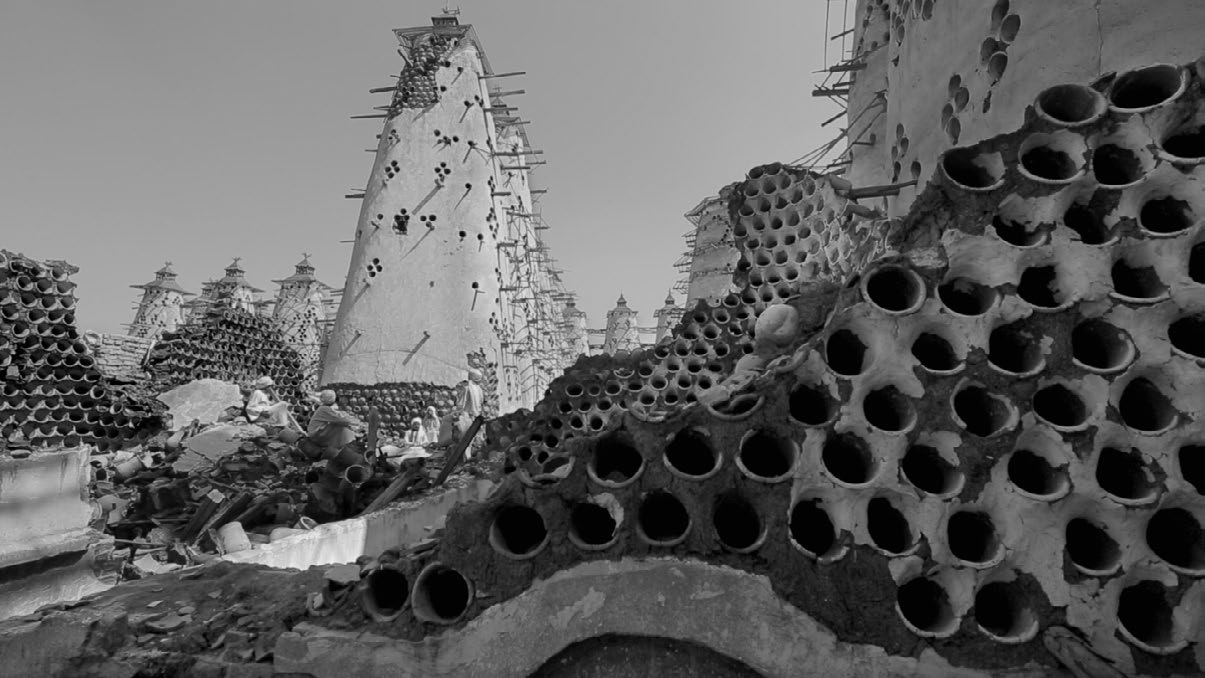
The whole village celebrates for four whole days, and on the fifth day, she cuts the brother’s head off and throws it in the middle of the square. These are the stories of Muhamed Mustagab. The kids tell these stories while they carry out the rituals that I witnessed in Upper Egypt. It was very important for me to show how this theology is something completely Egyptian and has to do with this metaphysical world that we inhabit.
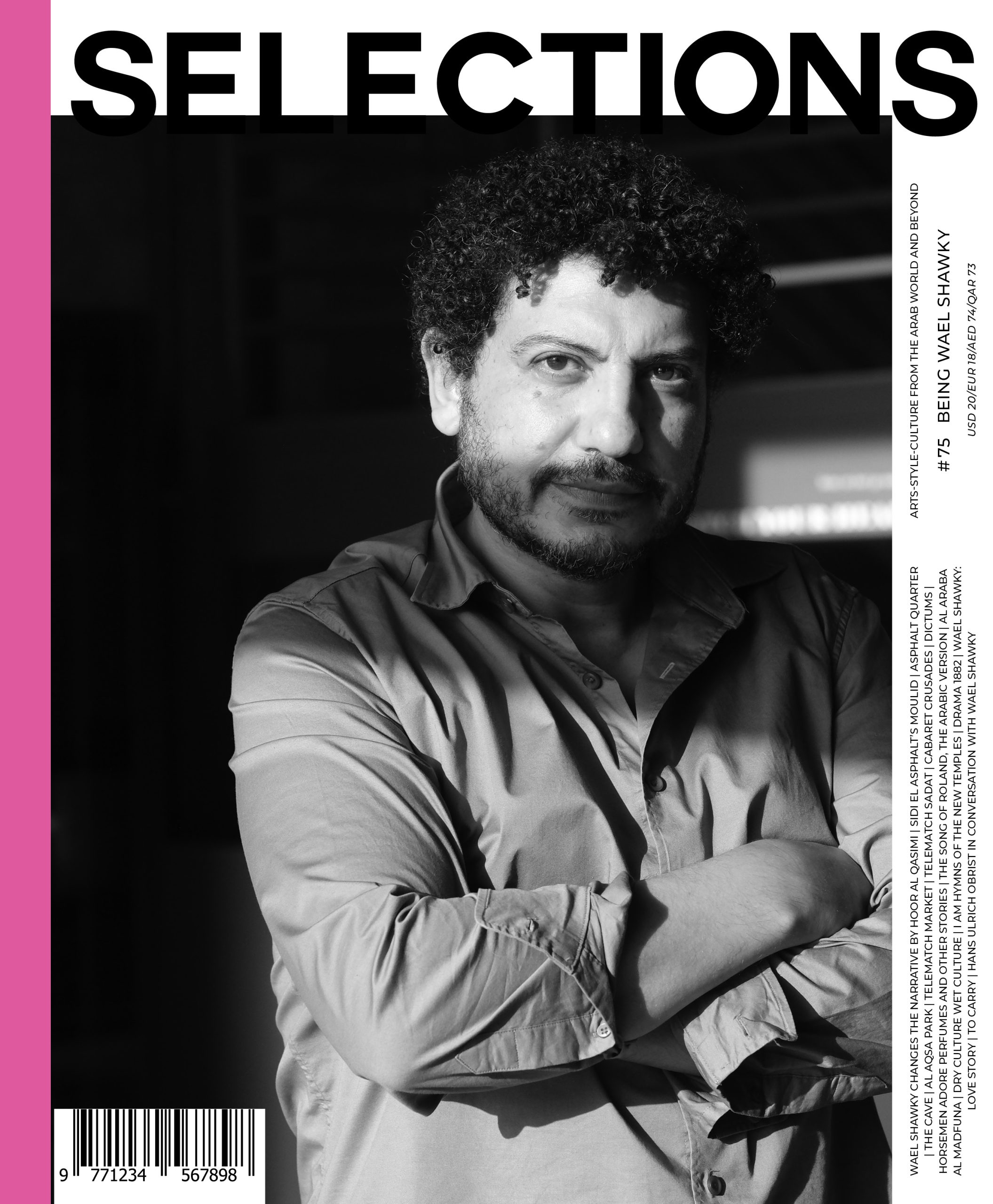
Selections’ issue #75 Being Wael Shawky traces the arc of Wael Shawky’s practice, where rigorous historical inquiry meets poetic, time-based form.
Throughout the four chapters; Traces Of Becoming, Architectures Of Narrative Files, Hidden Worlds, and Politics, Performance, & Myth, the publication reflects Shawky’s role in shaping artistic infrastructure, from founding MASS Alexandria to leading programmes at the Fire Station in Doha. Appearing at a pivotal moment in his international trajectory, the issue brings together voices, collaborations, and long-term research that illuminate an artist whose work bridges scholarship, imagination, and cultural pedagogy. Click here to buy the issue.