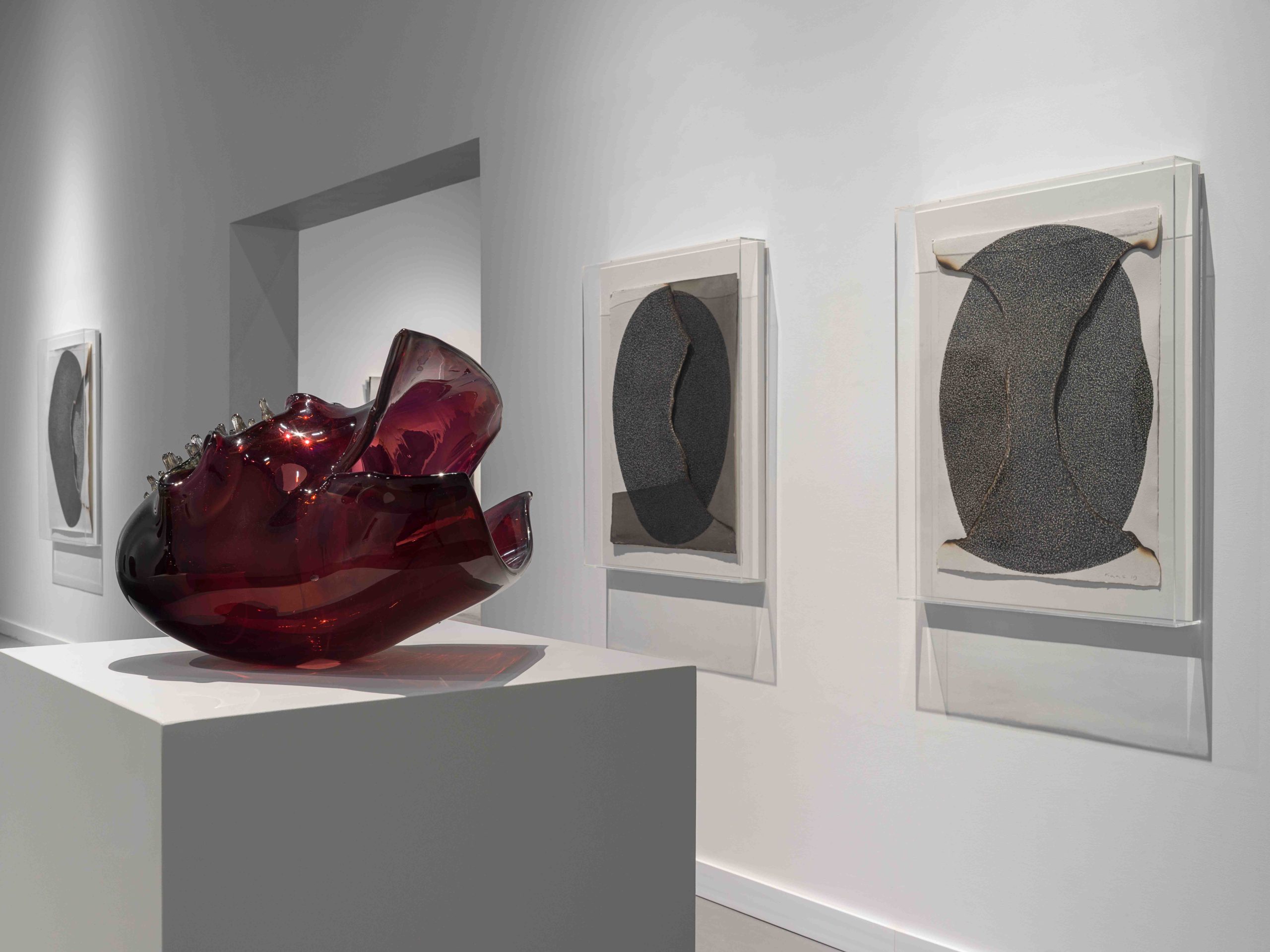
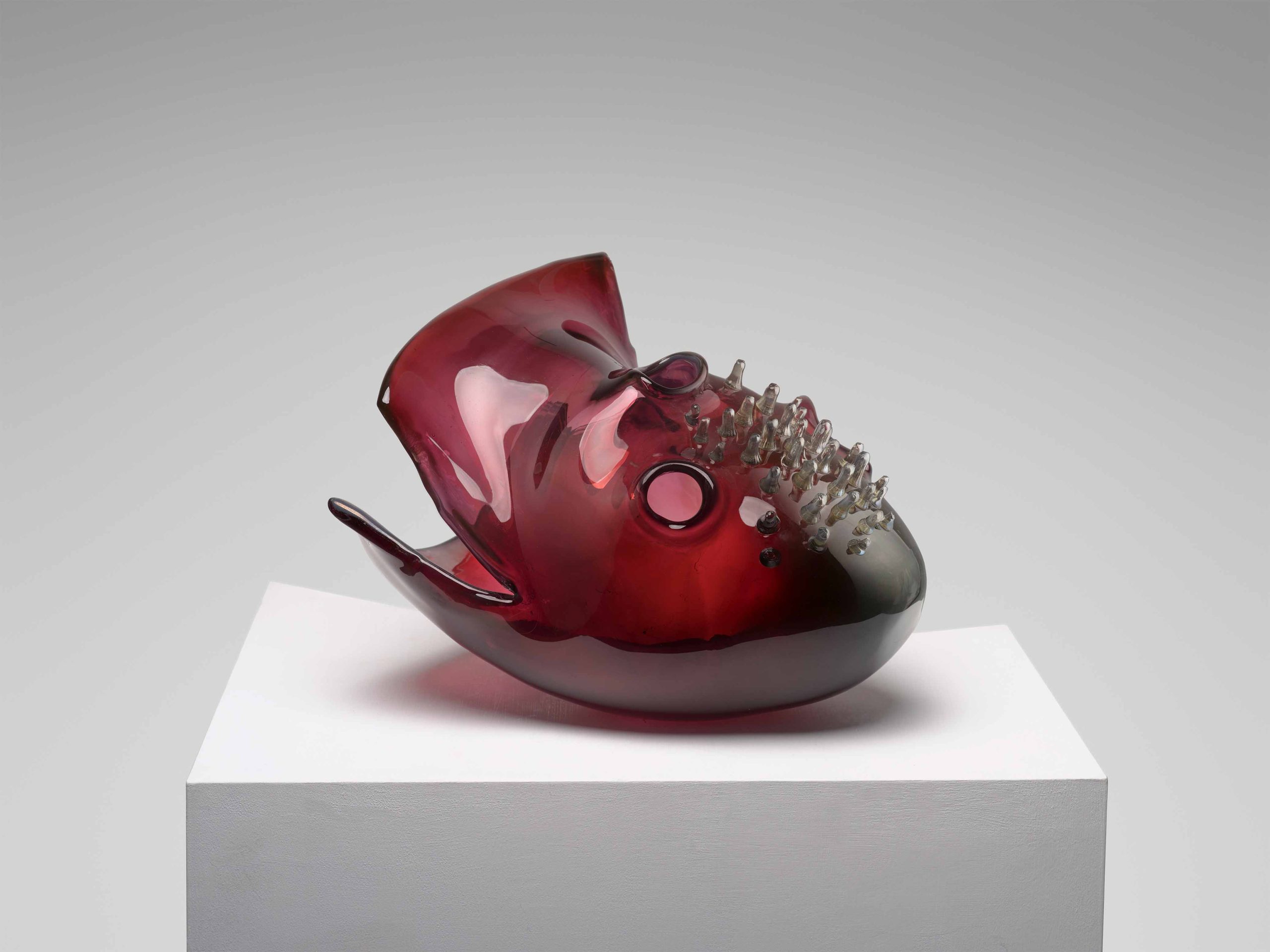
At Ayyam Gallery, The Fire’s Edge brings together key bodies of work by Ali Kaaf (A.K), marking his first solo exhibition with the gallery and offering a focused entry point into a practice shaped by material tension and restraint. Working across paper, charcoal, ink, glass and photography, Kaaf repeatedly positions his work at thresholds: between density and void, control and chance, endurance and fragility. Fire, both as method and metaphor, runs through the exhibition, not as spectacle but as a quiet force that alters surfaces, erases forms and exposes limits. This interview approaches Kaaf’s work through these edges.
Your work often sits at the threshold between material presence and void. In The Fire’s Edge, how did you approach this tension differently, and what new questions did the exhibition allow you to explore?
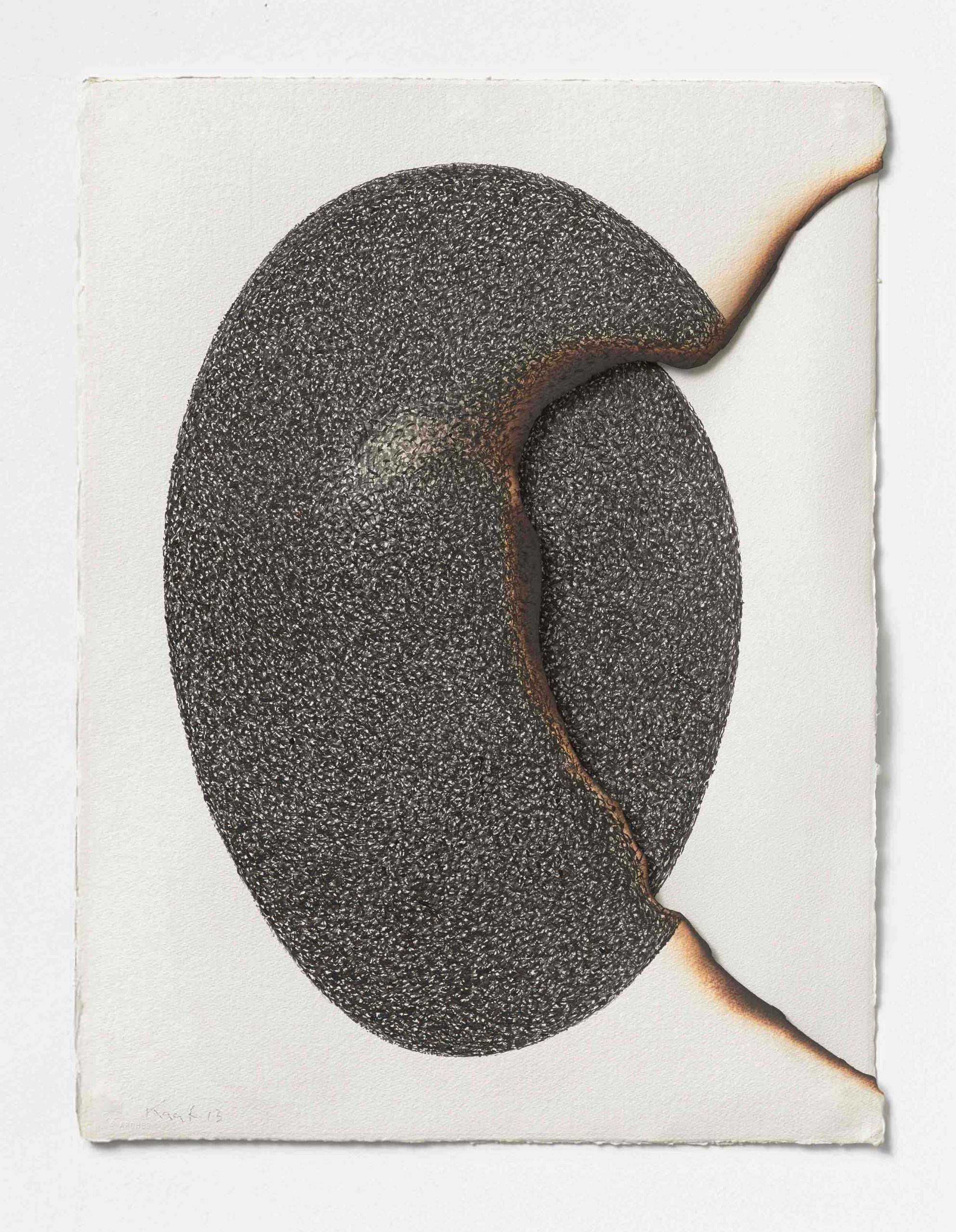
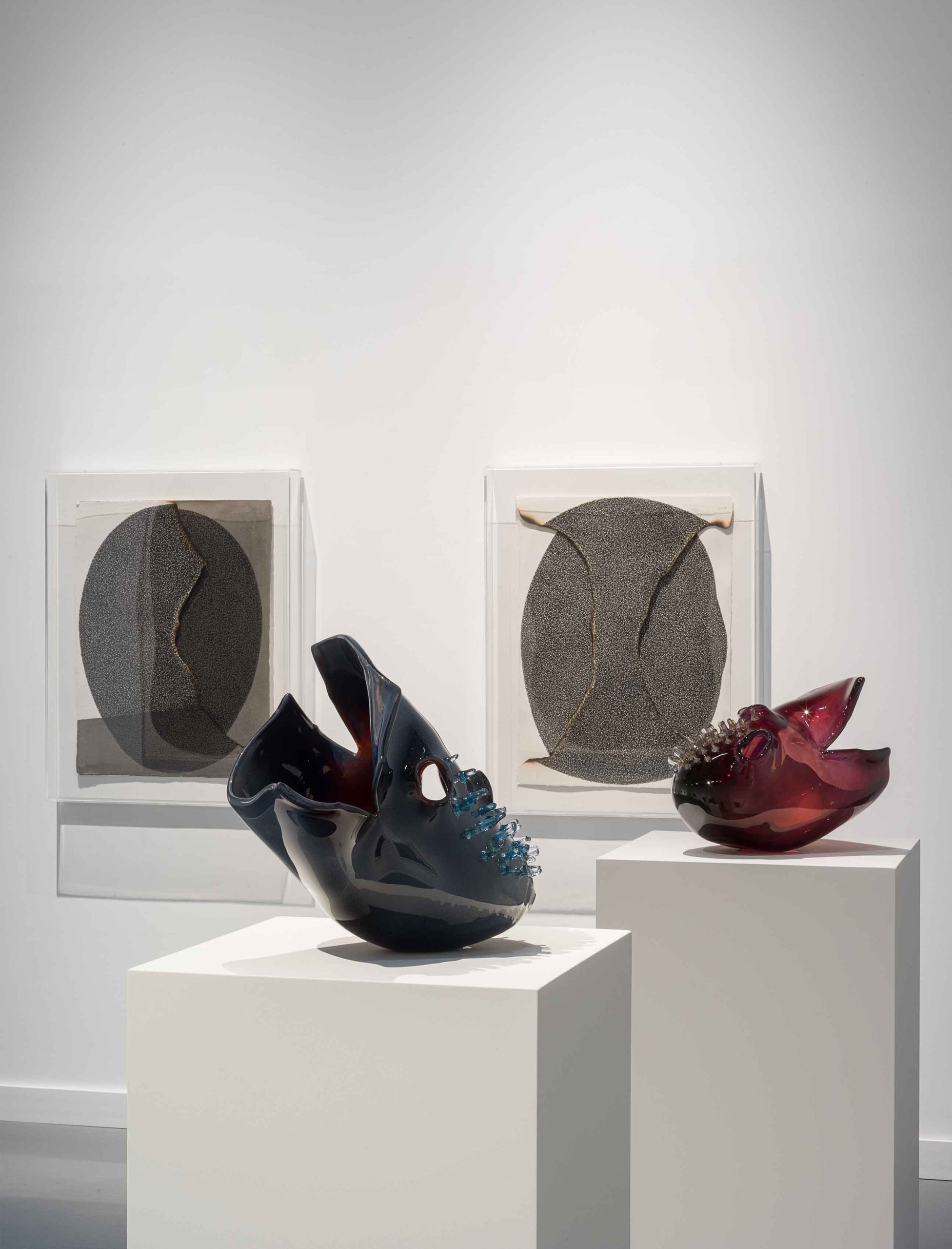
A.K: The tension between material and void is central to my practice. With The Fire’s Edge, I aimed to explore this boundary in a way that felt both deeply personal and connected to natural processes. Growing up in the Mediterranean, I saw fire’s power to both destroy and transform the land. It wasn’t just about absence, it was about how the land, after being scorched, was reshaped, reformed, and redefined. There’s a profound contrast between what’s burned away and what remains. In a sense, fire creates a kind of new ‘presence’ in the void, carving out lines and spaces that speak to both loss and regeneration.
In this exhibition, I wanted to bridge my experiences, especially through the Rift series, and start to explore my process through themes of transformation, erosion, and regeneration. I allowed that tension to manifest in different ways; instead of simply implying absence through the void, I examined fire’s aftermath as a material force, almost like a language, a way to understand how space is both lost and reconstructed in one motion.
It’s a transformation that occurs over time, and through this process, new questions arise about how we understand and interact with space; What does it mean for something to ‘exist’ in the midst of destruction? What remains once everything else has been burnt away?
Across your practice, from early ink works like Aswad to the Rift series, you return to burning, cutting, and erasing as acts that both reveal and conceal. How have these gestures evolved for you, and what do they allow you to articulate about loss, fracture, and persistence?
A.K: Burning, cutting, and erasing have been fundamental elements in my practice from the very beginning. They are connected to my background and cultural upbringing in the Mediterranean region, between Syria and Beirut. When I moved to northern Europe, the contrast deepened my focus on themes of identity, loss, and the tension between presence and absence.
These acts of destruction and transformation are also rooted in art history, particularly the fragility of materials and the process of working through them. For me, they serve as an alternative to painting on canvas. Returning to ink is a way of reconnecting with pre-modern art practices, especially from non-Western traditions, while placing them within a contemporary, universal context.
There’s a melancholic undertone in my work that speaks to loss, fracture, and persistence – motifs that are also very personal. Growing up in Damascus, I was struck by the sharp contrast between the elegance of ancient ruins and the violence of a totalitarian regime. This brutalist tension – a modernity marked by both beauty and violence – shaped my perception of the world around me. The materials I use, as well as my process, became a way to embody this tension. The physicality of burning, cutting, and erasing is a means of expressing both destruction and resilience, an ongoing dialogue between what is lost and what remains.
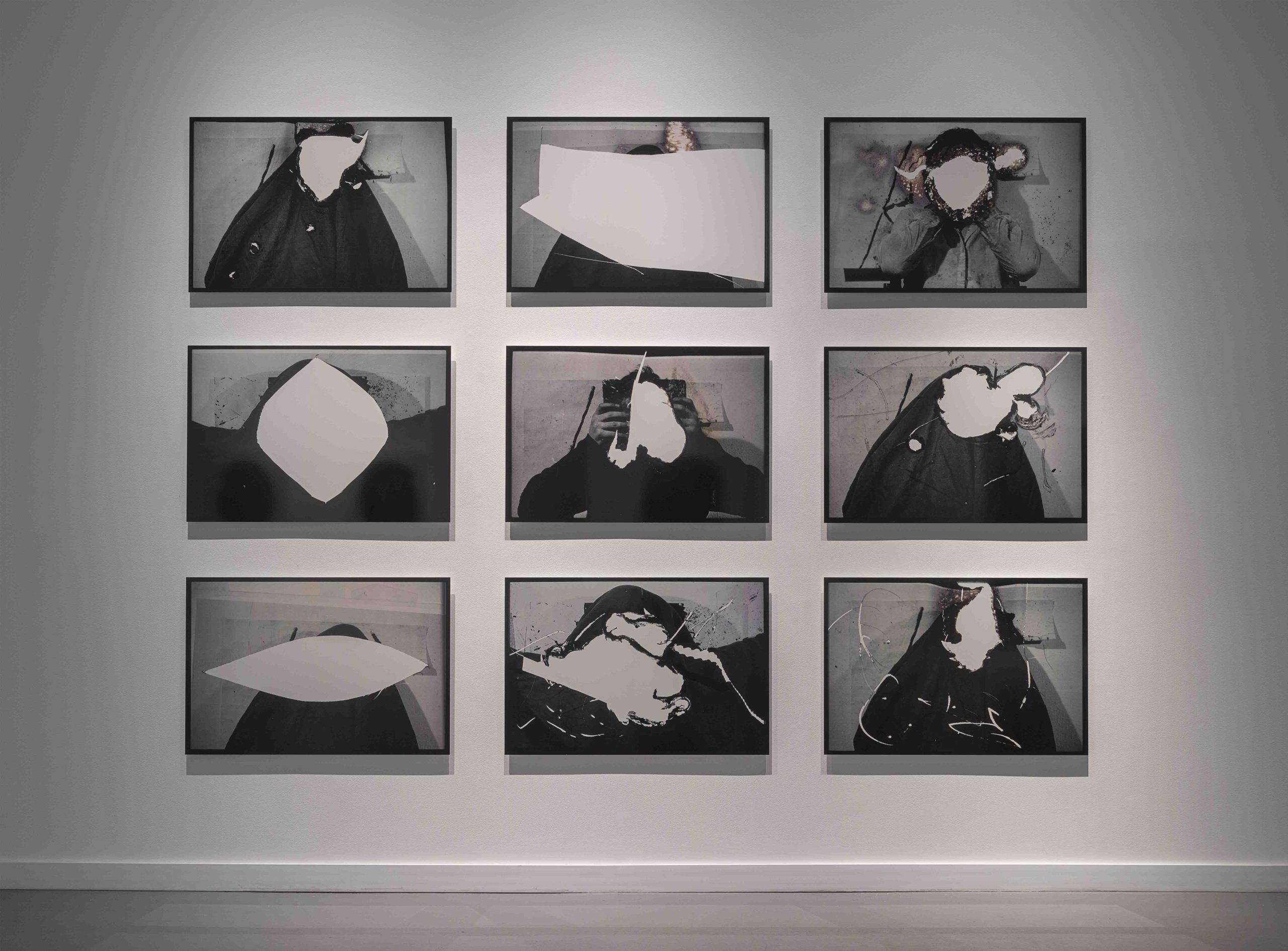
Your recent works incorporate laser-cutting, photomontage, and rotated architectural fragments, such as in The Byzantine Corner 10. What possibilities do these newer processes open for you that fire, ink, and paper could not, and how do they shift your engagement with ornamentation and historical imagery?
A.K: The shift happened organically through my process. The act of cutting has always been central to my practice, but with these techniques, the physicality and precision of the cut take on a different dimension. The medium itself suggests a new way of engaging with the work. Cutting with a laser or working with photographs feels more like a direct conversation with space, structure, and architecture than earlier processes of burning. It’s more about shaping the material rather than transforming it. This shift also enables me to respond to space in a more sensual way.
My installation, I am a Stranger. Twofold as a Stranger, at the Pergamon Museum was an interpretation of the Mshatta Facade. The laser-cut elements in my work reflect this sense of estrangement. By reassembling architectural fragments, I aimed to acknowledge that history, particularly in a place like the Pergamon Museum, is not static; it’s fragmented, layered, and open to interpretation. The laser-cut fragments and their interactions with light and shadow add a new kind of depth to the work, inviting viewers to engage with history in a more dynamic, almost tactile way.
Mentorship from figures such as Rebecca Horn and Marwan has been central to your development. In what ways have their teachings influenced your own long-spanning artistic journey, from Beirut to Berlin?
A.K: I consider myself incredibly fortunate to have studied closely with both Marwan and Rebecca Horn, as they each profoundly shaped my artistic path. I began my painting studies with Marwan at the Universität der Künste in Berlin, which allowed me to explore the depths of the medium. Later, when I studied sculpture with Rebecca, I began to rethink the relationship between the body and space. Rebecca taught me how the body itself could become the artwork, a concept that broadened my understanding of materiality and form. Both artists had such rich, distinct practices, but they shared a commitment to personal and intuitive work.
They both shared these notions in their own practices. What I learned back then is to be patient with my work, give it the time it needs to develop, and listen to my inner voice without compromise. I am grateful for both their artistic input and friendship on a personal level. That connection has been crucial in helping me stay grounded and committed to my art.
You have worked across painting, sculpture, video, and architectural installation, yet your core concerns, void, density, rupture, and repetition, remain constant. Looking back at this trajectory, how do you see your visual language changing, and what questions continue to compel you forward?
A.K: The themes I explore: void, density, rupture, and repetition, are profound and deeply connected to the human experience. In a sense, the process develops in its own rhythm, and through it, new questions arise.
As for how my visual language has developed, I believe it’s less about deliberate change and more about how these core concerns are constantly refracted through different mediums and contexts. Each form adds layers of depth and shifts my perspective, but the core themes stay the same.
Commissions often provoke curiosity and act as catalysts, encouraging me to explore my work more deeply. I’m currently preparing for the upcoming design and architecture biennial in Algeria, immersing myself in research and reading to inform my next installation. These moments tend to spark new insights, pushing me to consider different perspectives.
Location: Ayyam Gallery, Dubai, UAE
Date: 16 November 2025 until 10 January 2026
About Ali Kaaf
Ali Kaaf is a Berlin-based artist working across paper, painting, glass, video and installation, with a practice centred on the relationship between matter and void. Born in Oran in 1977 to Syrian parents, he studied at the Institut des Beaux-Arts in Beirut before continuing at Universität der Künste in Berlin under Marwan Kassab Bachi and Rebecca Horn. His works are marked by burns, cuts, erasures and repetitions that register presence through absence. Drawing on spiritual and material inquiry, Kaaf treats repetition as a means of transformation rather than closure. His work has been shown internationally, including at Darat al Funun, the Pergamon Museum, and documenta 15.