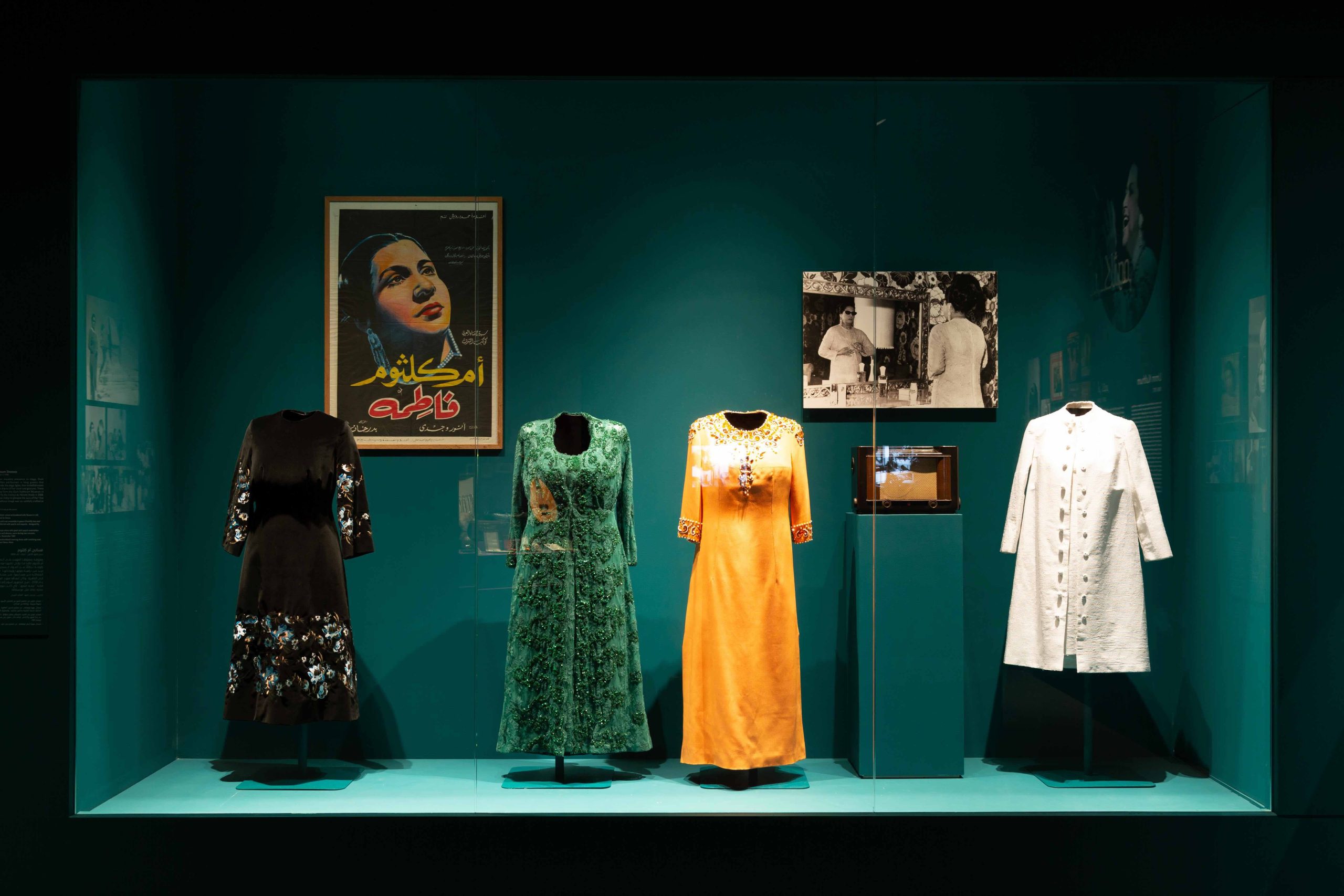
The Sursock Museum hosts Divas: From Oum Kalthoum to Dalida, a multimedia exhibition that has captivated audiences in Paris, Amsterdam, and Amman. Celebrating the lives and legacies of the Arab world’s most iconic singers, actresses, and dancers, the show explores their enduring artistic impact and cultural significance. From shaping modern notions of womanhood to contributing to political and artistic renewal across the Arab world, these divas stand as symbols of resilience and creativity. We spoke with Karina El-Helou (K.H), Director of the Sursock Museum, about presenting this exhibition in Beirut and its relevance to contemporary audiences.
The exhibition celebrates divas who shaped Arab popular culture and modern identity. How does presenting this show in Beirut, a city central to this musical history, reshape or deepen its meaning compared to previous editions abroad?
K.H: Well, in Beirut, because it’s a city that played an essential role in promoting music and cinema, and in creating those women who were behind this industry. And actually, it’s one of the places where I think Arab women feel the most freedom in the Arab world. Our women have been, since the early 1920s, pioneering in writing, like Rose al-Youssef, and production and business in this industry.
So, they are not only stars in front of the screen – they are also the makers of this industry. And our country still has the only diva who is still alive, Fairuz. So, we thought this is a moment for this heritage to remain alive and not celebrated as a relic from the past, but to say that we are still here as a platform – even after five years of despair. That we still have the potential of this Beirut, a narrow city that still shines, thinks, writes, performs, and celebrates the freedom of women.
These divas mean different things to different generations. How does the museum balance celebrating the golden age of Arab divas with engaging younger generations who experience these divas and icons in different ways?
K.H: The icons of the Arab diva are very well engaged with the younger generations through the beat-makers. Beat-makers have, for over twenty years now, created remixes of Umm Kulthum in club culture. So all the youth have danced to a remix of Umm Kulthum, a remix of Asmahan. So, I don’t think there’s a problem for this legacy to stay alive.
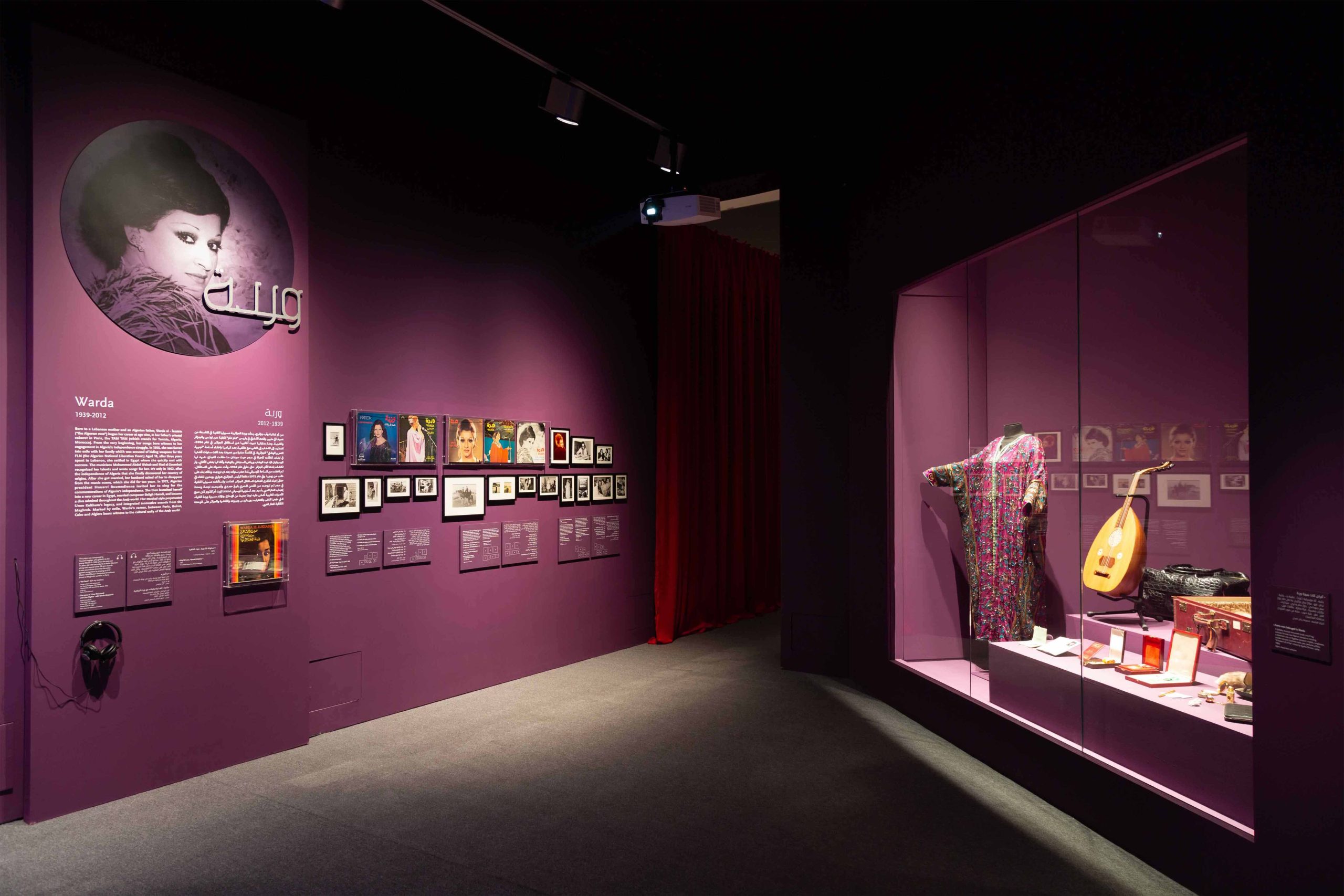
In the exhibition we saw posters, personal belongings of certain divas, photographs, and also video installations. How do these different mediums influence the narrative of the exhibition?
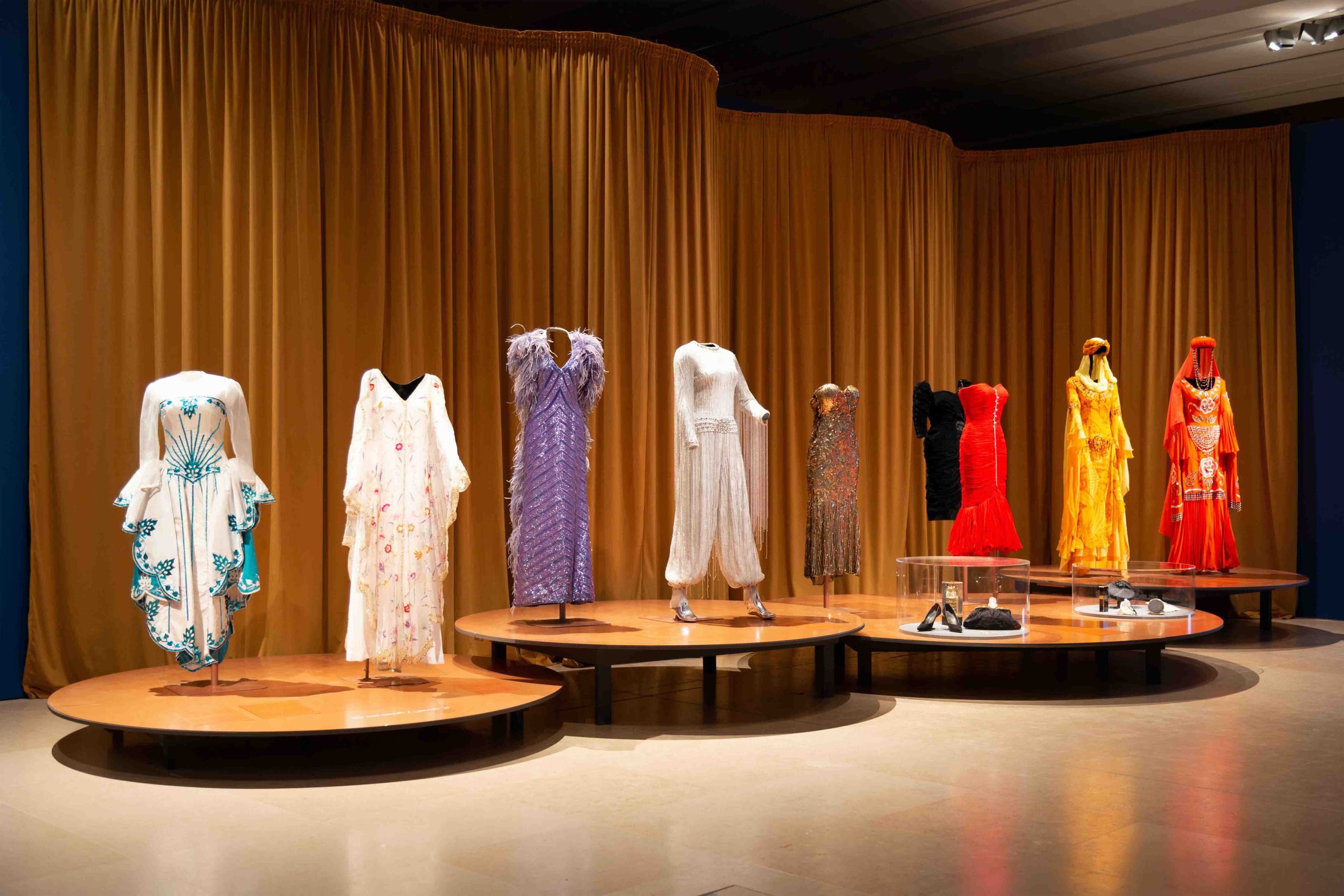
K.H: When you want to represent a woman, it’s not just her clothes. I mean, a star, a diva – whether male or female – today, that distinction doesn’t really matter anymore. But I think a female diva, through her clothing and her presence, also expresses part of her art. These divas created a public persona; they crafted it. So it’s very important to remember that this is truly an art in itself – to create a persona, to become a diva. You are not born a diva, you become one. And this exhibition is about that process – about how you become a diva.
Sursock Museum has long been a space for cultural reflection and dialogue. How does Divas fit into the museum’s broader vision of connecting Beirut’s artistic legacy with global narratives?
K.H: Actually, it’s quite different. It’s a special edition because we are not specialised in those grand, thematic, social, or political subjects like the Institut du Monde Arabe – we are very different from them. So it doesn’t really fit within Sursock’s regular programme; it’s an exceptional one. And it is, because this exhibition is very joyful and glamorous, while we are more specialised in visual art and modern art. That’s why I believe it’s quite an exceptional event for Sursock.
However, it does fit within our cycle of revival and our need to put Beirut back on the international scene, to recreate international partnerships. And this is why I believe that through this exhibition – and the next – there is once again the possibility to create meaningful cultural exchanges.
Location: Sursock Museum, Lebanon.
Date: 17 October 2025 until 11 January 2026