
Art Basel Miami Beach 2025 was less about overarching claims of global dominance and more about how individual works demand thought. Yes, we go to Art Basel every year, and with unfocused eyes it can feel all so familiar. Yet as the eye sharpens, so does the ability to dive into the welcoming labyrinth that fine art allows for: amongst the glitz and glamour, here comes DEPTH. The fair feels alive in its density, and remarkably varied in approach, offering moments that are quietly commanding rather than performatively dramatic. This was a Basel experienced in the details; the brushstroke, the fold of metal, the negative space.
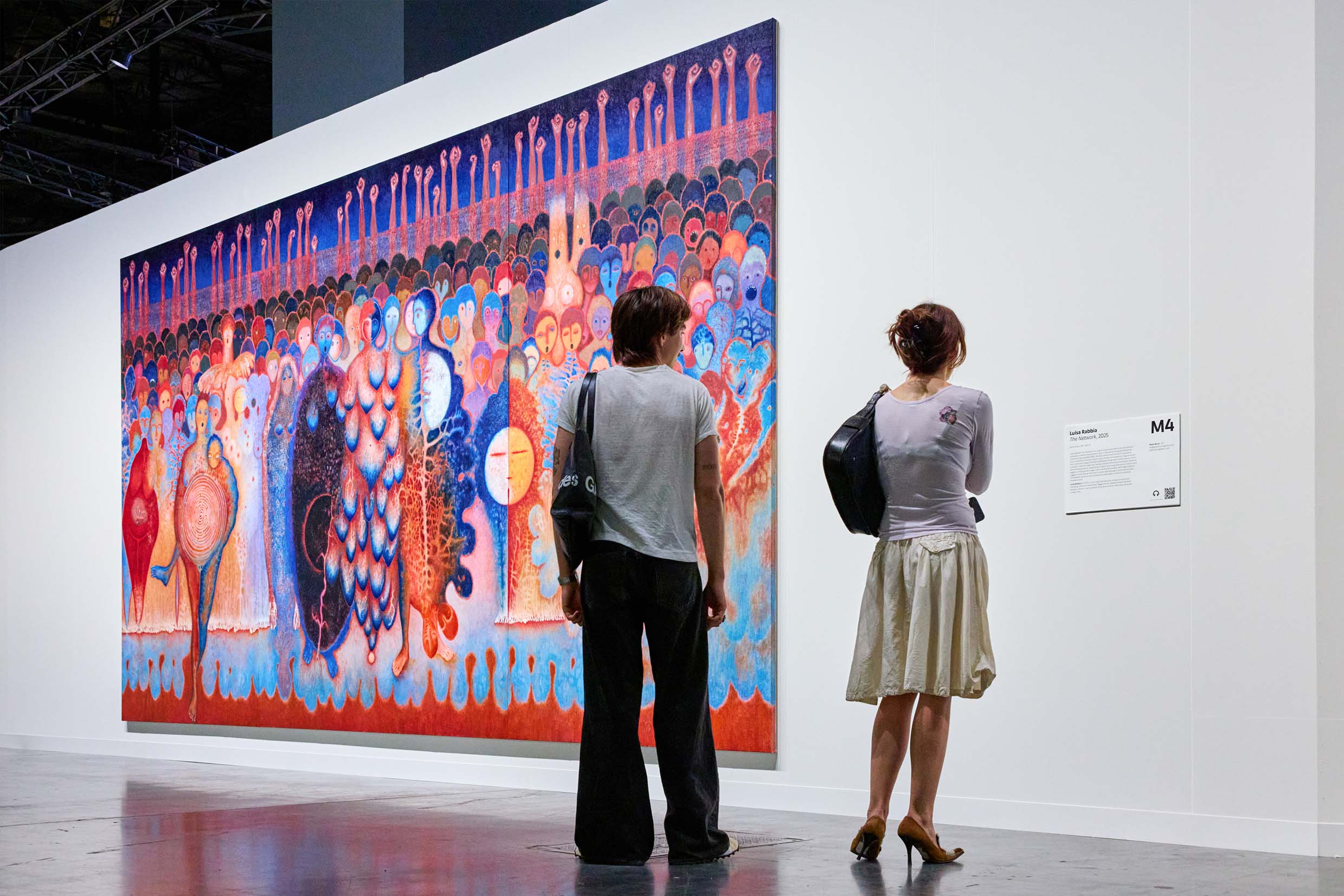
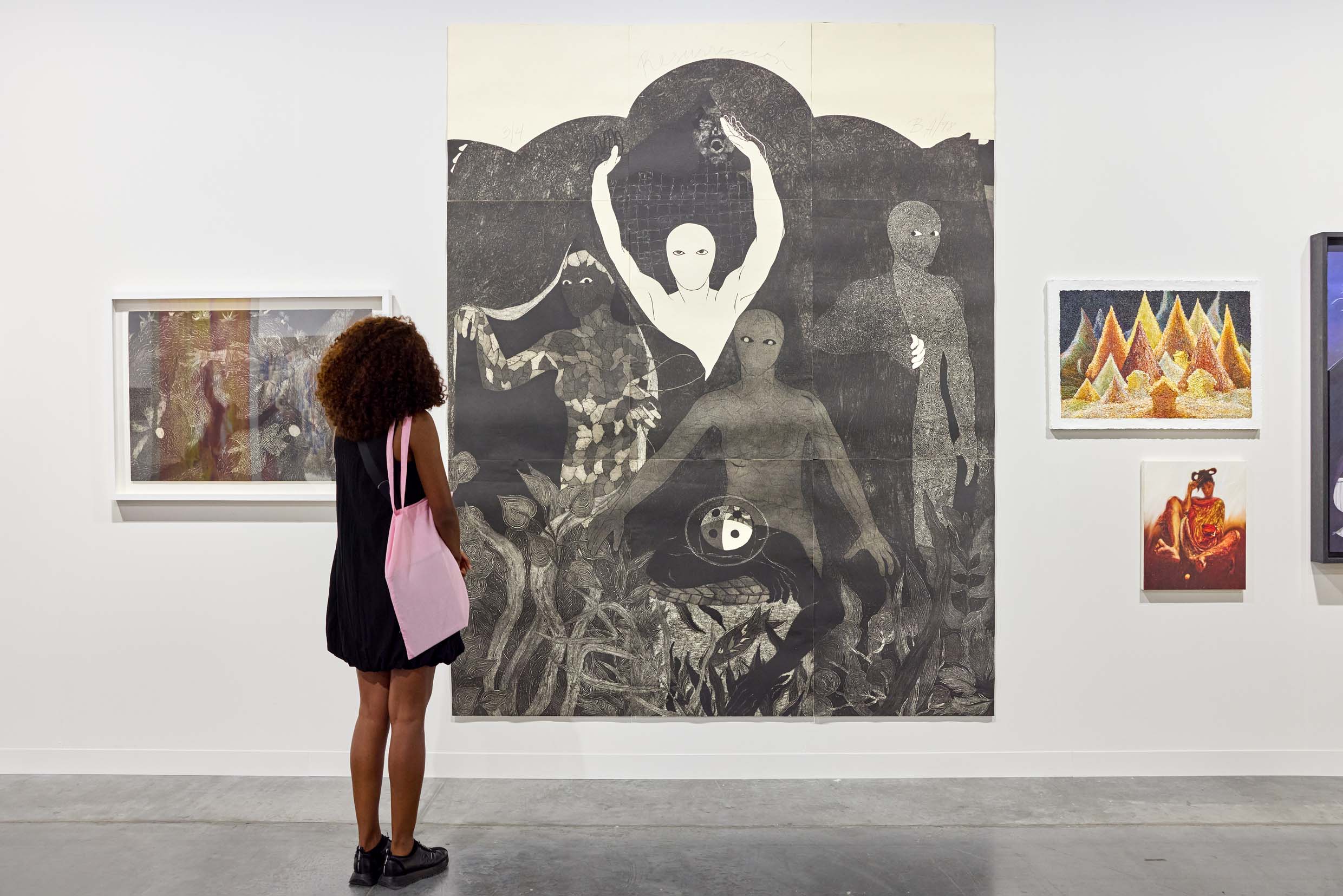
Luisa Rabbia’s The Network (Peter Blum Gallery) illustrated this insistence on engagement. Her interlacing marks trace tension and connection, dense in some areas, sparse in others, forcing the eye to navigate and to consider the relationships between figure and void; the voids within the piece an the void between the spectator and the spectated. Kennedy Yanko’s Intimacy of Throes (Library Street Collective) transformed industrial scrap into forms that feel simultaneously heavy and liminal, with surfaces that seem to fold light and shadow. The late Cuban printmaker Belkis Ayón (David Castillo Gallery) used collagraph to balance silhouettes and negative space with remarkable economy, producing work that is immediate, baring the raw mechanics of a dream.
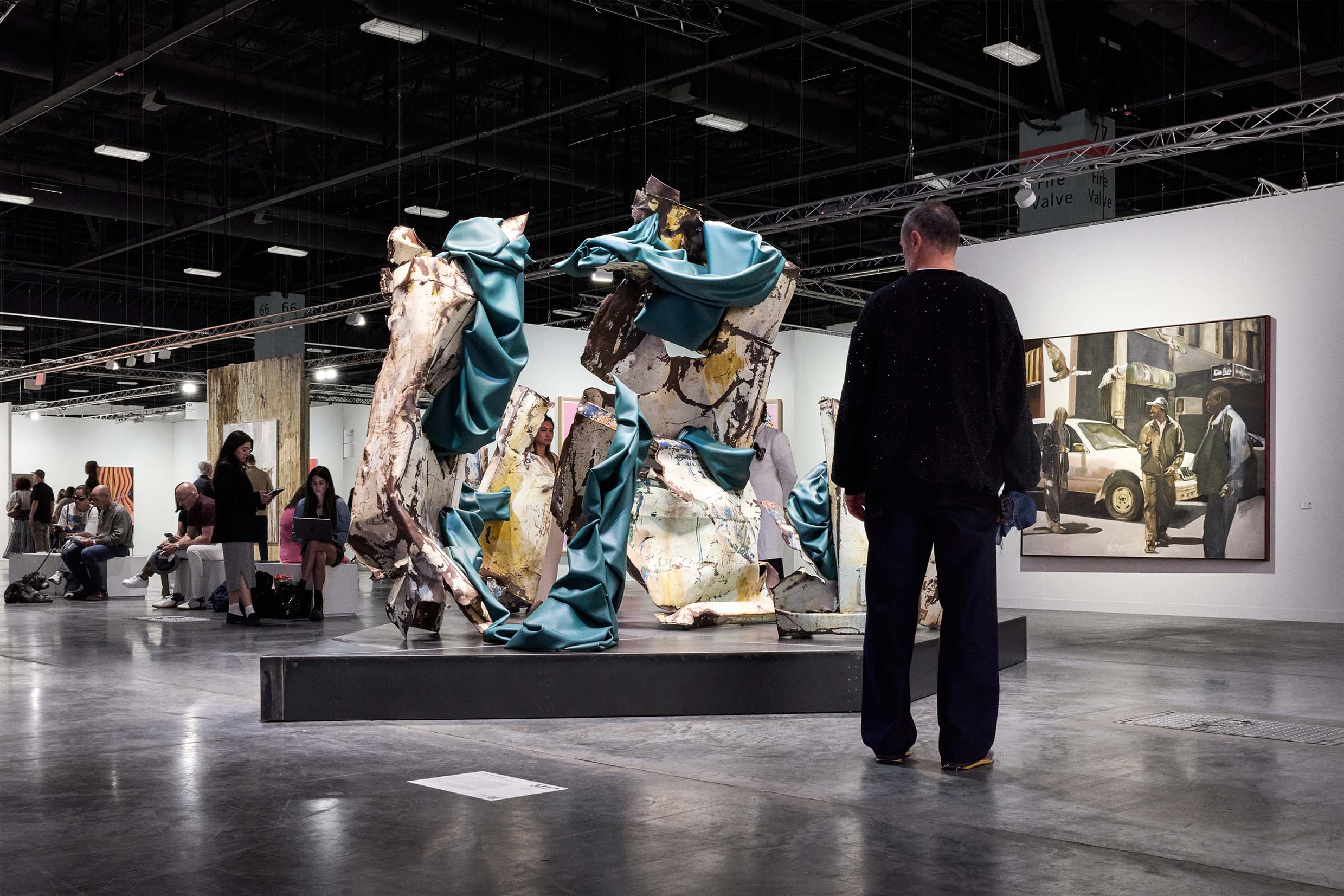
Across the fair, a quiet rigour prevailed. Whether in Meridians’ ambitious installations, the digital experiments of Zero 10, or smaller gallery presentations, the interplay of material, scale, and perceptual nuance created a measured flow. Artworks were not simply displayed; they negotiated their own presence, asserting weight and subtlety in equal measure.
Viewed as a whole, Basel 2025 felt cohesive not because of spectacle or market headlines, but because of the cumulative experience of the work on view. The fair rewarded curiosity and attention. It was a reminder that contemporary art’s vitality lies not in hype, but in the rigour and presence of the works themselves and in the way they compel the viewer to measure their own attention against what is in front of them.