UNITED ARAB EMIRATES
This week at Alserkal Avenue, several January openings continue across painting, installation, and photography, offering a snapshot of the district’s early-year rhythm. Gallery Isabelle extends Are You Human Enough by artist duo :mentalKLINIK (until 20 March), while Third Line presents Remember the Future by Spanish-Moroccan painter Anuar Khalifi (until 1 March 2026), featuring new large-scale paintings and works on paper. Nearby, Ayyam Gallery shows Remnants by Syrian artist Kais Salman (until 18 March 2026), a recent body of work built through layered, fragmentary imagery.
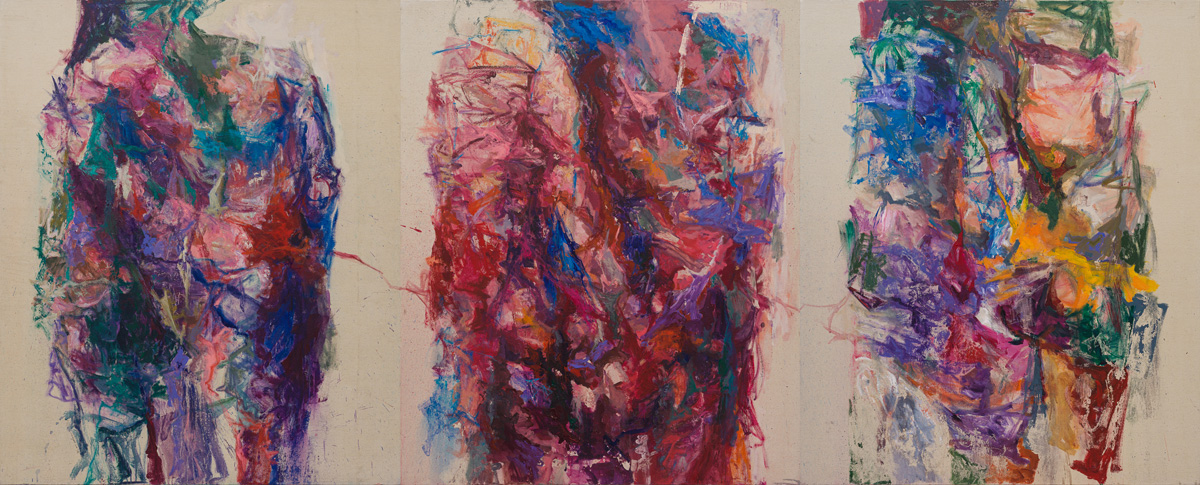
Elsewhere in the district, Taymour Grahne Projects continues its dual presentation with Sarah McEneaney’s autobiographical paintings in Creative Non-Fiction and John Dilg’s Found and Lost, where landscape becomes a quiet register of memory and latent unease.
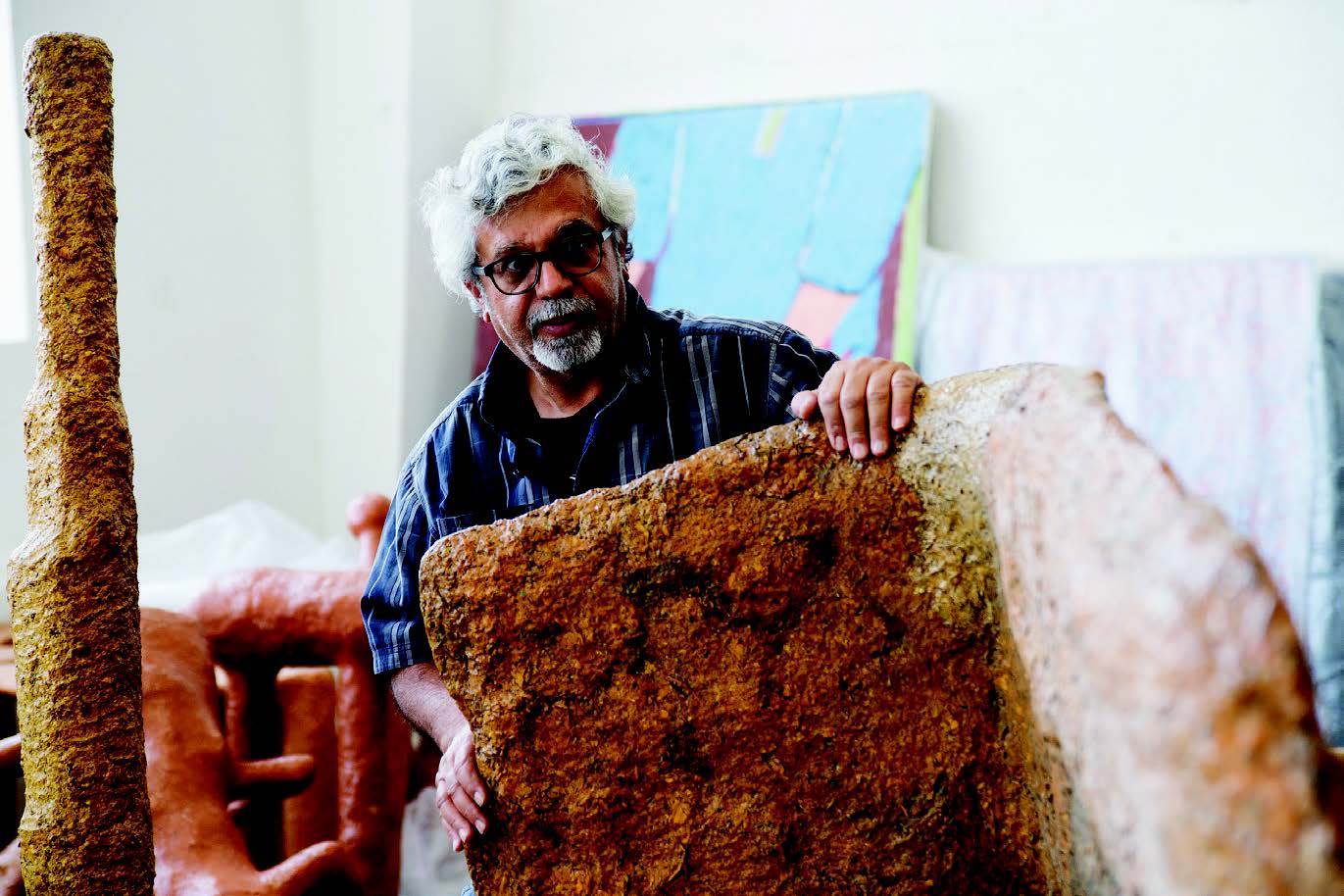
At Ishara Art Foundation, Urdu Worlds, the UAE’s first exhibition dedicated to the Urdu language, remains on view through May, bringing together works by Zarina and Ali Kazim and marking Kazim’s first institutional presentation in West Asia.
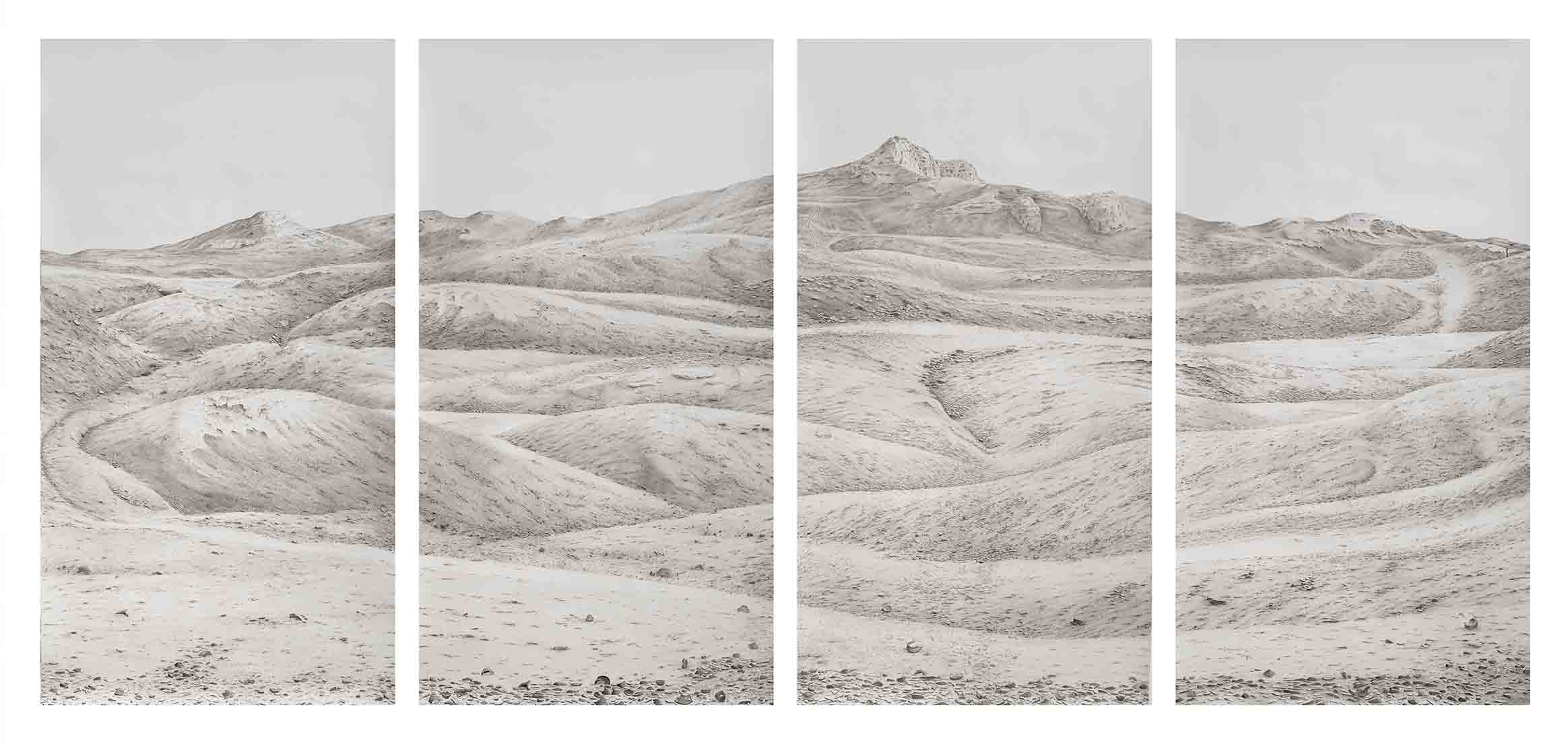
At Lawrie Shabibi, Saif Azzuz’s Invisible Fish (until 3 April) traces the UAE’s ecological and cultural landscape before urbanisation, marking the artist’s first solo exhibition in the Middle East.
Beyond Alserkal Avenue, Efie Gallery presents Aïda Muluneh’s second solo exhibition, This Bloom I Borrow, introducing new photographic works combining silkscreen printing and hand-finishing by UAE artisans.
In Abu Dhabi, the Cultural Foundation continues Mohamed Ahmed Ibrahim’s Two Clouds in the Night Sky (until 22 February), a forest-like installation revisiting the spirit of his 1991 debut. The presentation brings early experiments into dialogue with a new commission, Time | Place | Void (2025), underscoring the artist’s enduring relationship to landscape and material. In the current monographic issue, Selections explores his early years and artistic journey. Readers can delve into Being Mohamed Ahmed Ibrahim via the link here.
In Sharjah, a major retrospective of Jorge Tacla’s work opens 8 February at the Sharjah Art Foundation. Jorge Tacla: Time the Destroyer Is Time the Preserver traces the evolution of his practice in relation to human rights and political visual culture. A third-generation Chilean of Palestinian and Syrian descent, Tacla explores connections between Latin America, West Asia, and the United States.
Meanwhile at Maraya Art Centre, students from the American University of Sharjah co-curate Past Through Here (opening 1 February), showcasing works from the Barjeel Art Foundation collection that examine how personal and collective narratives are shaped in modern and contemporary Arab art.
KINGDOM OF SAUDI ARABIA
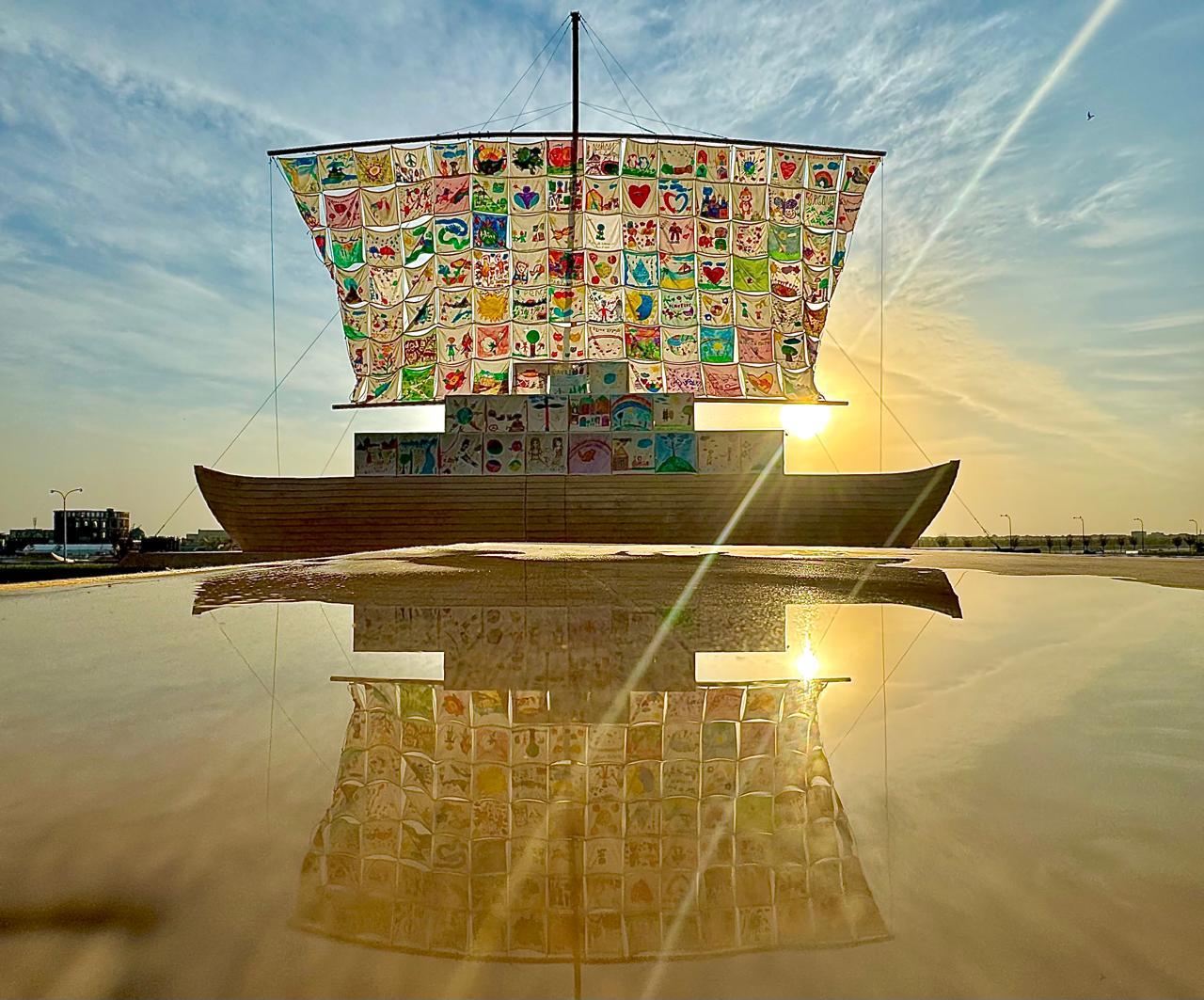
In Jeddah, ATHR Foundation, in partnership with the Ilya and Emilia Kabakov Foundation, continues preparations for The Ship of Tolerance, set to be unveiled on the shores of the historic Al-Balad district during Ramadan under the theme Rooted in Our Values. Connected to the World. Initiated in 2005 by Ilya and Emilia Kabakov, the long-running international project features sails adorned with children’s drawings exploring coexistence and diversity, bringing a globally recognised work into a local urban and cultural context.
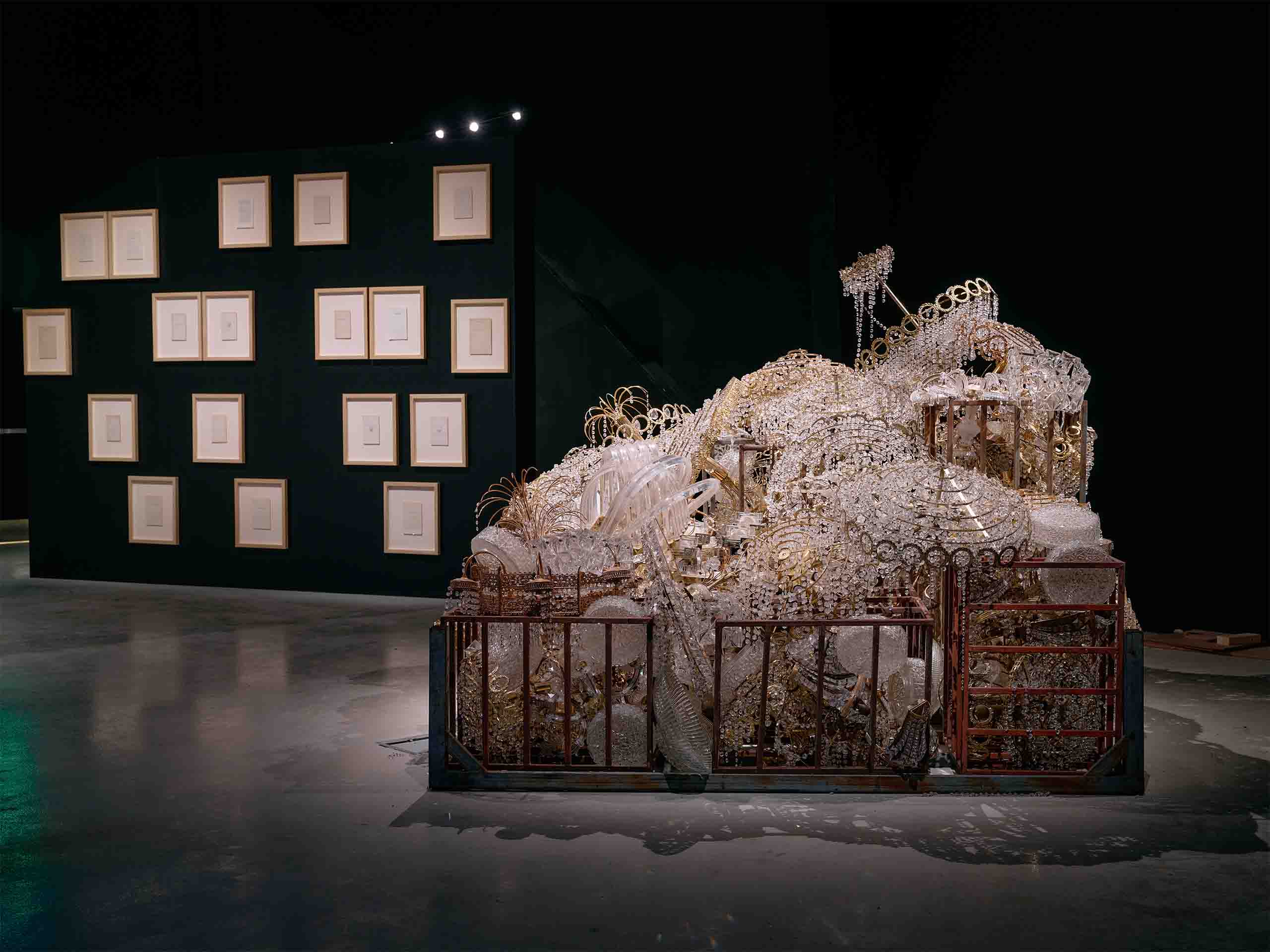
In Riyadh’s JAX District, ATHR Gallery JAX opens I Stay, in Pieces by Saudi artist Sarah Abu Abdallah on 28 January, curated by Alaa Tarabzouni. Presented during the Diriyah Contemporary Art Biennale, the exhibition reflects on the force of remaining, physically and emotionally, through the subtle weaving of fragile materials. Tarabzouni also co-curates A Night of a Lifetime (until 18 April) at SAMoCA, alongside Philippe Castro, bringing together over 30 local, Arab, and international artists to examine marriage and wedding rituals through contemporary art.
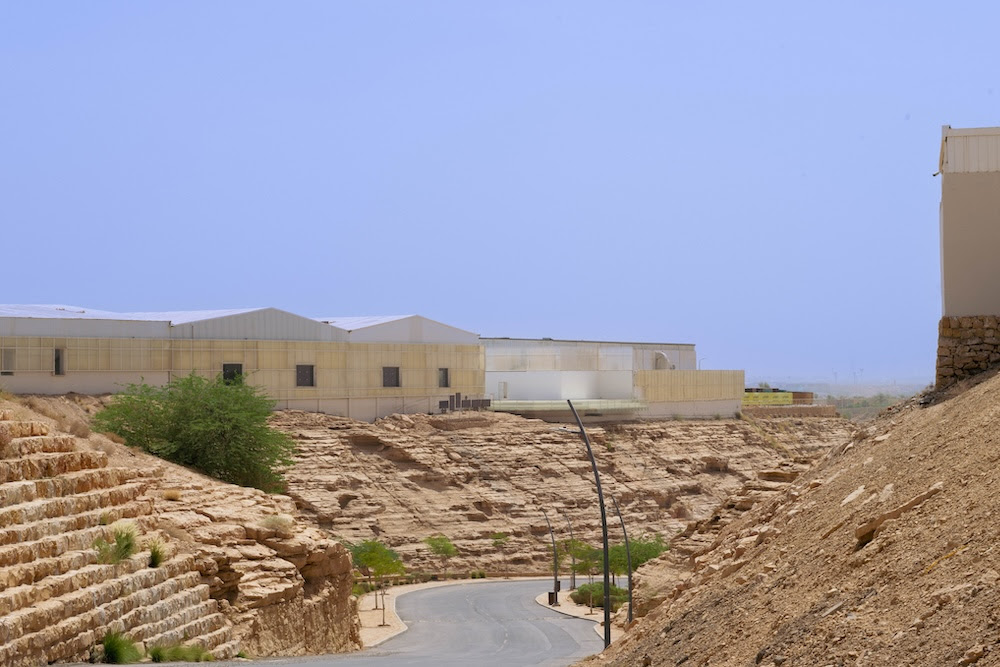
Also in JAX, La Fabrique officially opened on 22 January as a new Saudi–French multidisciplinary arts platform, developed by Riyadh Art in collaboration with the French Institute in Saudi Arabia, further cementing the district’s role as a growing cultural hub.
Coinciding with these openings, the Diriyah Contemporary Art Biennale 2026 opens to the public on 30 January under the title في الحِلّ والترحال / In Interludes and Transitions. Set across the district’s vast warehouse spaces, the Biennale explores a condition of being “in between”, between tradition and hyper-modernity, and the local and the global, activating monumental architecture with large-scale, site-specific installations. With scenography by Formafantasma, the exhibition unfolds as a choreographed encounter shaped by histories, ancestors, dreams, and premonitions.
In Diriyah, Sotheby’s public exhibition at Bujairi Terrace continues this week ahead of the Origins II auction on 31 January. Highlights range from: Safeya Binzagr’s Coffee Shop in Madina Road (1968), estimated at USD 150,000–200,000; Mohammed Al Saleem’s Untitled (1989), estimated at USD 150,000–200,000; Mahmoud Sabri’s Demonstration(1968), estimated at USD 400,000–500,000; Pablo Picasso’s Paysage (1965), estimated at USD 2–3 million; and Anish Kapoor’s Untitled (2005), estimated at USD 600,000–800,000.
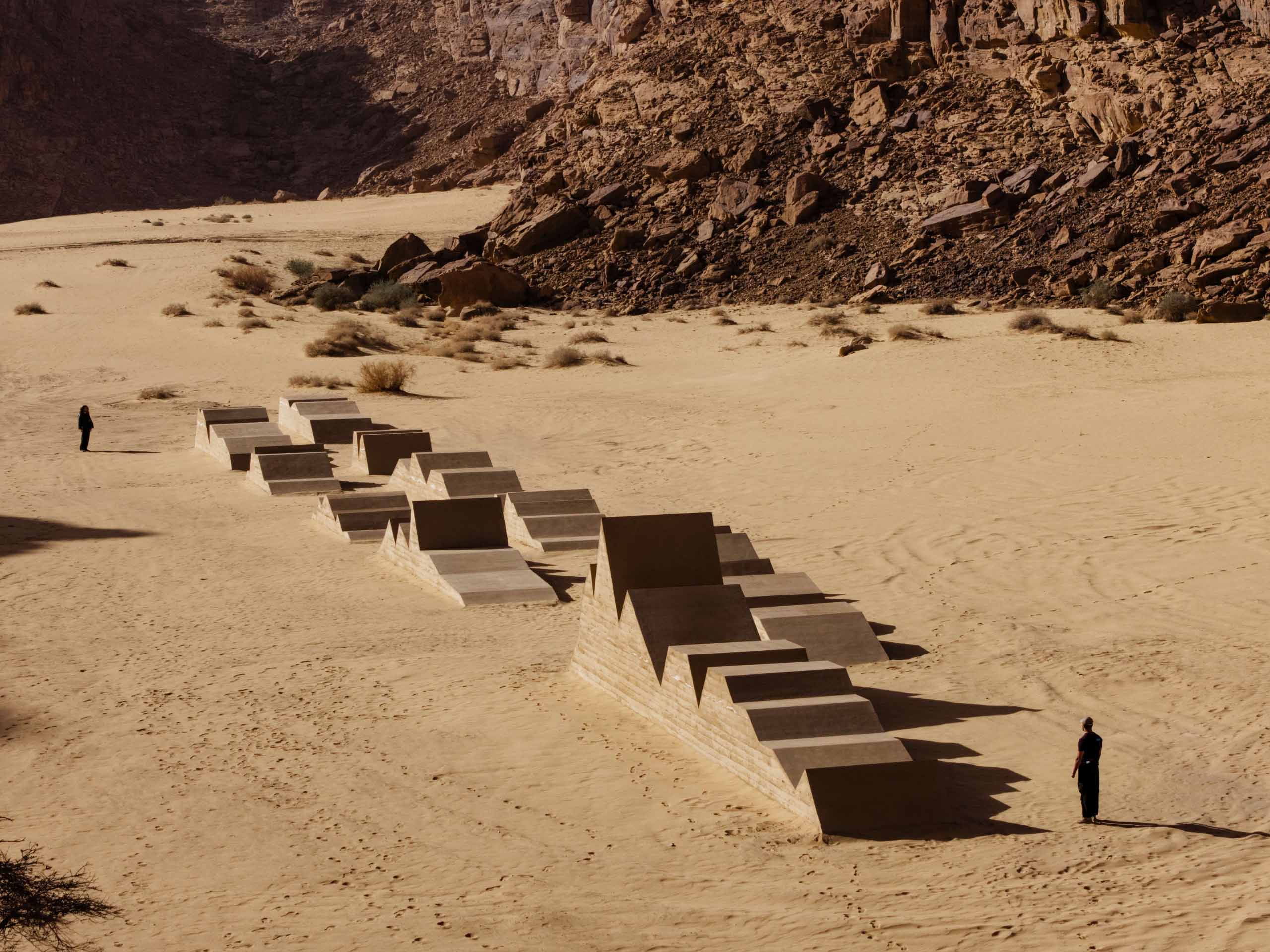
In AlUla, Desert X AlUla continues its fourth edition (until 28 February 2026) as part of the AlUla Arts Festival. Titled Space Without Measure and inspired by Kahlil Gibran, the exhibition presents 11 site-specific commissions responding to AlUla’s valleys, canyons, and oases. Since its launch, Desert X AlUla has realised over 45 commissions, many of which remain embedded in the landscape, extending the project’s presence beyond its seasonal frame.
LEBANON
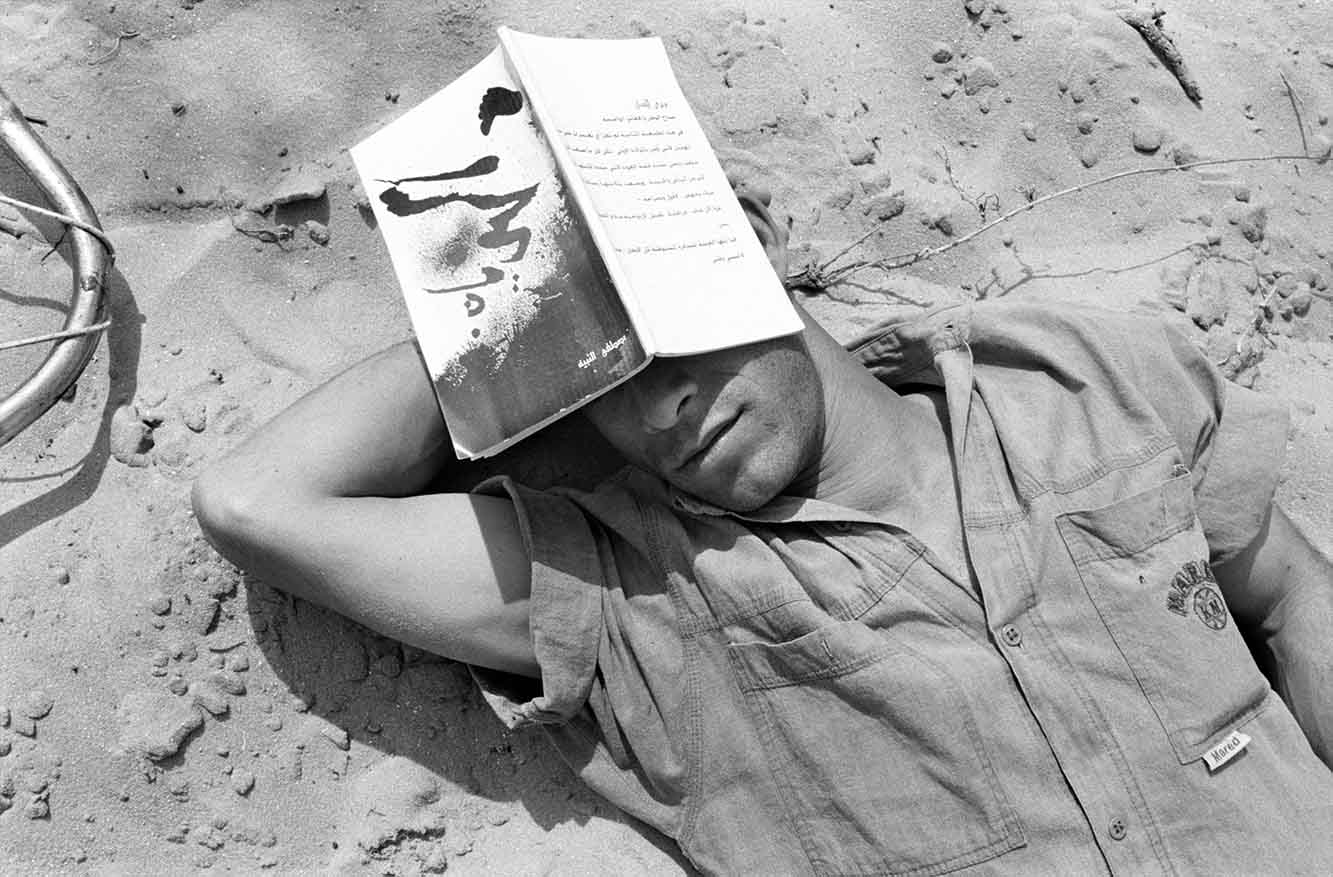
In Beirut, Galerie Tanit opens Le Cerf-Volant (29 January–5 March 2026), a joint exhibition by Fouad Elkoury and Jeremy Peacock, presenting large-format photographs taken in Gaza in 1994–95. Known for documenting cities and conflicts he has lived through, Elkoury revisits this pivotal body of work alongside Active Spaces of Absence by Cristiana de Marchi, which considers political violence and absence as sites of “poethical” engagement.
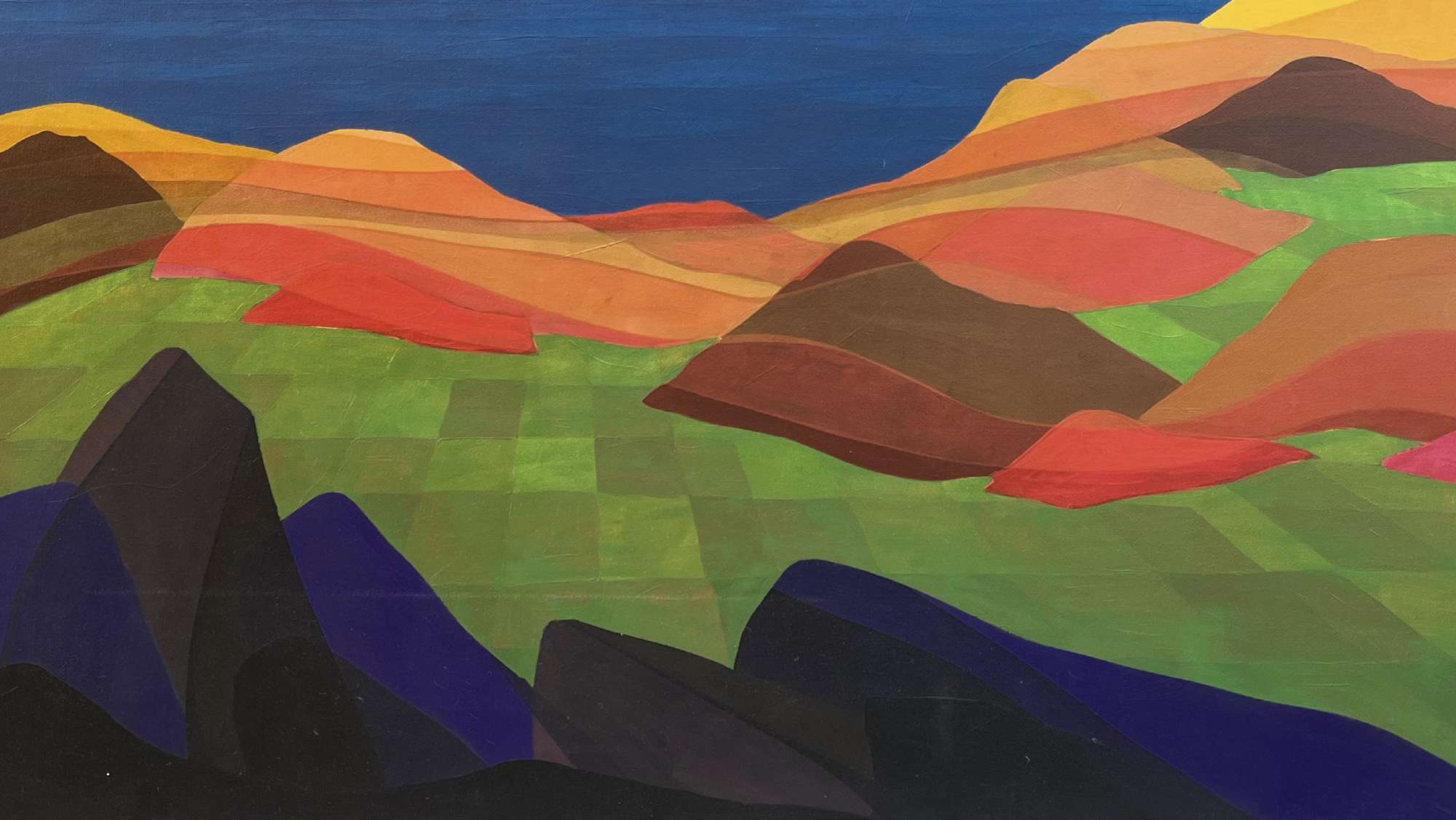
At Galerie Janine Rubeiz, Ombres et Abris, a solo exhibition by Diana Bou Salman (until 28 February) reflects on shelter and fragility through Lebanon’s topography. A participant in the gallery’s Encounters 2023 programme, the Paris-based artist examines the tension between urban and natural environments through architectural and intuitive forms.
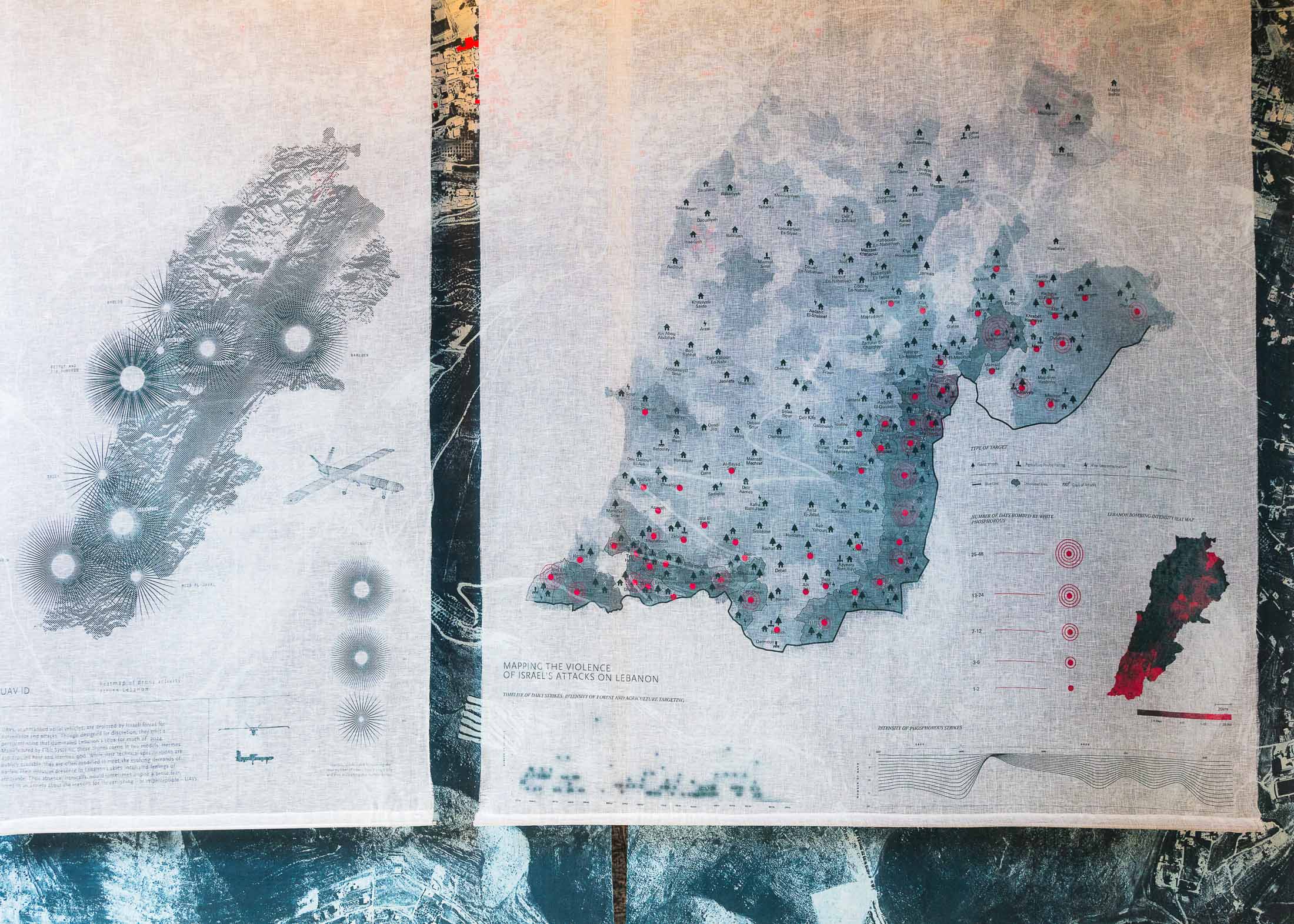
As part of the From Venice to Beirut programme, the Nuhad Es-Said Pavilion for Culture hosts The Land Remembers, Lebanon’s pavilion from the 19th International Architecture Exhibition 2025, curated by Collective for Architecture Lebanon (CAL). Commissioned by the Lebanese Ministry of Culture, the project reflects on war’s impact on landscapes while gesturing toward healing and renewal.
At Villa Audi, BeMA hosts Zig Zag Zoom (until 24 February), Lebanon’s first interactive exhibition for children. The exhibition offers students between the ages of 8 and 12 the opportunity to engage with the work of Helen Khal – American painter of Lebanese descent whose work can be found in the National Collection under BeMA’s care.
At Saleh Barakat Gallery, Bassam Kahwagi’s Paintings 23–24–25 (until February 7). Kahwagi is a painter defined by a practice that explores detachment from experiences and revels in the idea of letting life wash over us, redefining the meaning of order.
Lebanese-German visual & performance artist Mazen Khaddaj’s fascination with Lebanon’s luscious landscapes manifests in his new body of work, As If I Built a Planet on display at The LT Gallery (January 27 – February 10). By deconstructing nature into its raw elements, Khaddaj reinvents new landscapes that emerge by reorganising these same elements.
QATAR
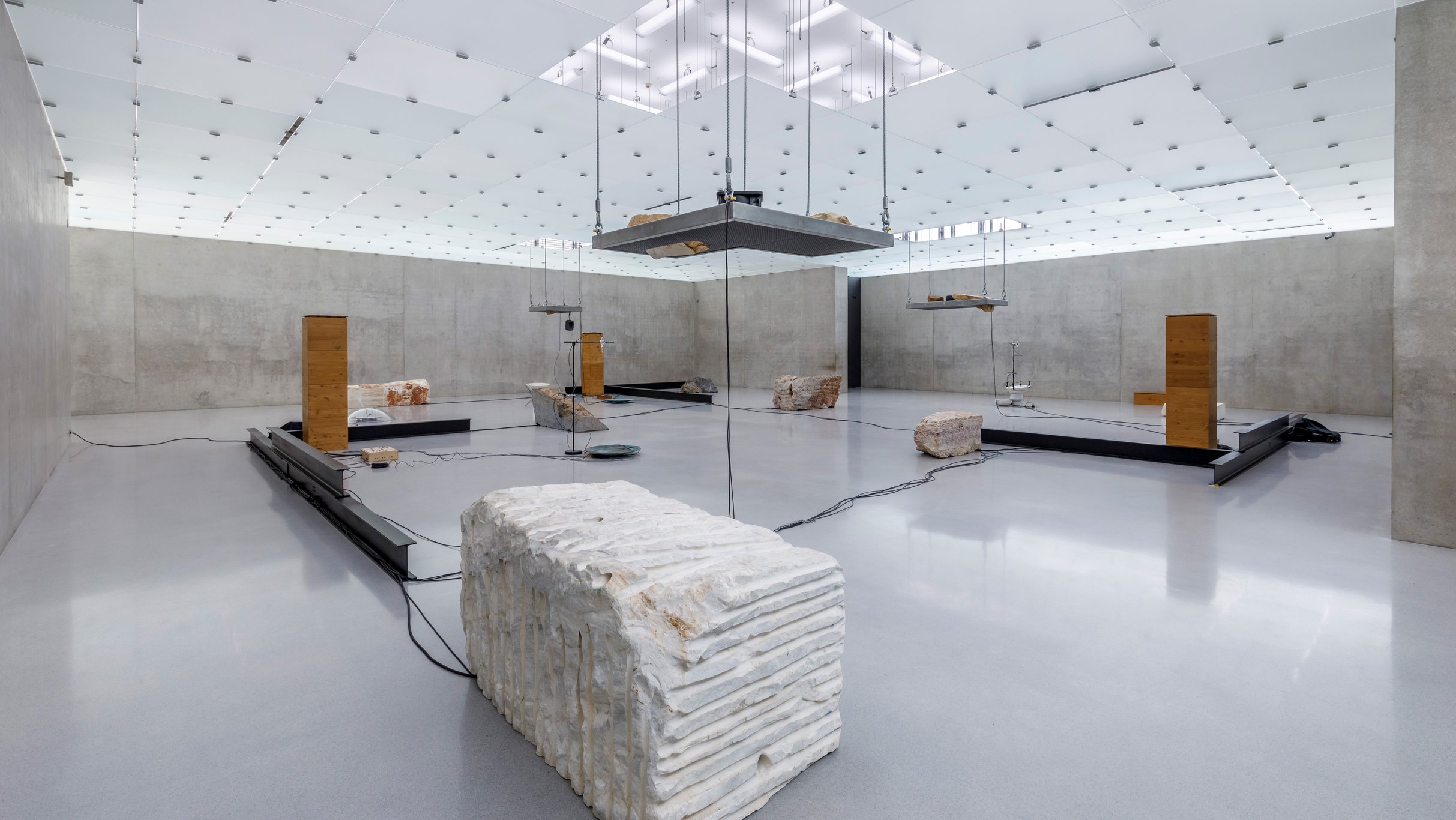
Lebanese artist and composer Tarek Atoui continues his exploration of new modes of interacting with sound in Waters’ Witness (until May 18), currently on view at Mathaf. Part of the museum’s 15-year anniversary celebrations, the exhibition examines the intersections of sound, water, and urban life, forming an acoustic portrait of maritime communities across global port cities and their water infrastructures. This week marks the early phase of a new chapter focused on Qatar’s coastline, expanding the project’s sound-based investigation of port cities and coastal environments.
In Doha, preparations are underway for the inaugural edition of Art Basel Qatar (5–7 February 2026), curated by Wael Shawky, marking a significant expansion of the fair into the Gulf. Presented alongside a citywide programme by Qatar Museums, the edition activates institutions across Doha with exhibitions, performances, and public projects, including works by Tarek Atoui and Rirkrit Tiravanija, new presentations at the Fire Station, and major exhibitions at the Museum of Islamic Art, National Museum of Qatar, and ALRIWAQ, including two landmark shows dedicated to I. M. Pei. Bringing together 87 galleries from 31 countries, alongside a Special Projects programme featuring artists such as Hassan Khan, Rayyane Tabet, Khalil Rabah, Nalini Malani, and Bruce Nauman, the fair foregrounds practices from West Asia, North Africa, and beyond, positioning Doha as a central site for contemporary art, historical inquiry, and cross-cultural exchange.
KUWAIT
CAP Kuwait presents IN SITU: Art, Research, and Practice on Failaka Island – FIKAR Seasons I–II from 28 January to 11 February, showcasing a selection of interdisciplinary projects developed across the programme’s first two seasons. The exhibition brings together artists, researchers, architects, and designers who have engaged with Failaka Island’s layered histories, landscapes, and ecological conditions, using the island as a site for artistic research and experimentation. Through film, installation, archival material, and spatial practices, the projects explore questions of memory, displacement, environmental change, and the relationship between cultural heritage and contemporary life. contemporary life.
THE WORLD
At the Institut du Monde Arabe in Paris, Photographier le patrimoine du Liban, 1864–1970 continues through April, presenting a rare selection of historical photographs that trace the visual documentation of Lebanon’s architectural and cultural heritage from the late nineteenth to the mid-twentieth century. Running alongside it is Tenter l’art pour soigner, which opened on 24 January and examines artistic production emerging from social therapy workshops in late-1960s Algeria, highlighting the intersections of art, psychiatry, and decolonial thought.
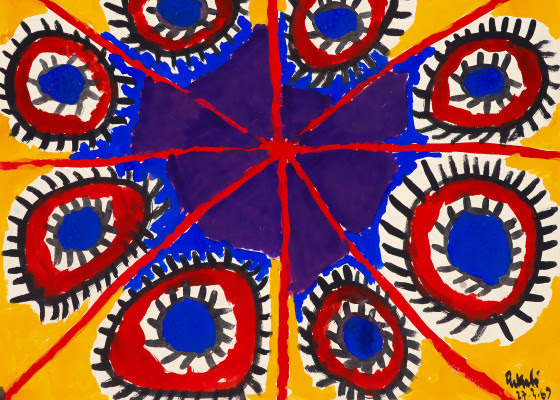
Internationally, the London Art Fair concludes this week (20–25 January), with galleries reporting strong interest in modern British painting and post-war works, alongside an expanded focus on cross-generational presentations pairing established names with emerging artists. Meanwhile, Art Cairo wraps up its seventh edition at the Grand Egyptian Museum (22–26 January), bringing together a broad selection of Egyptian and regional contemporary artists, with a particular emphasis on painting and mixed-media practices.
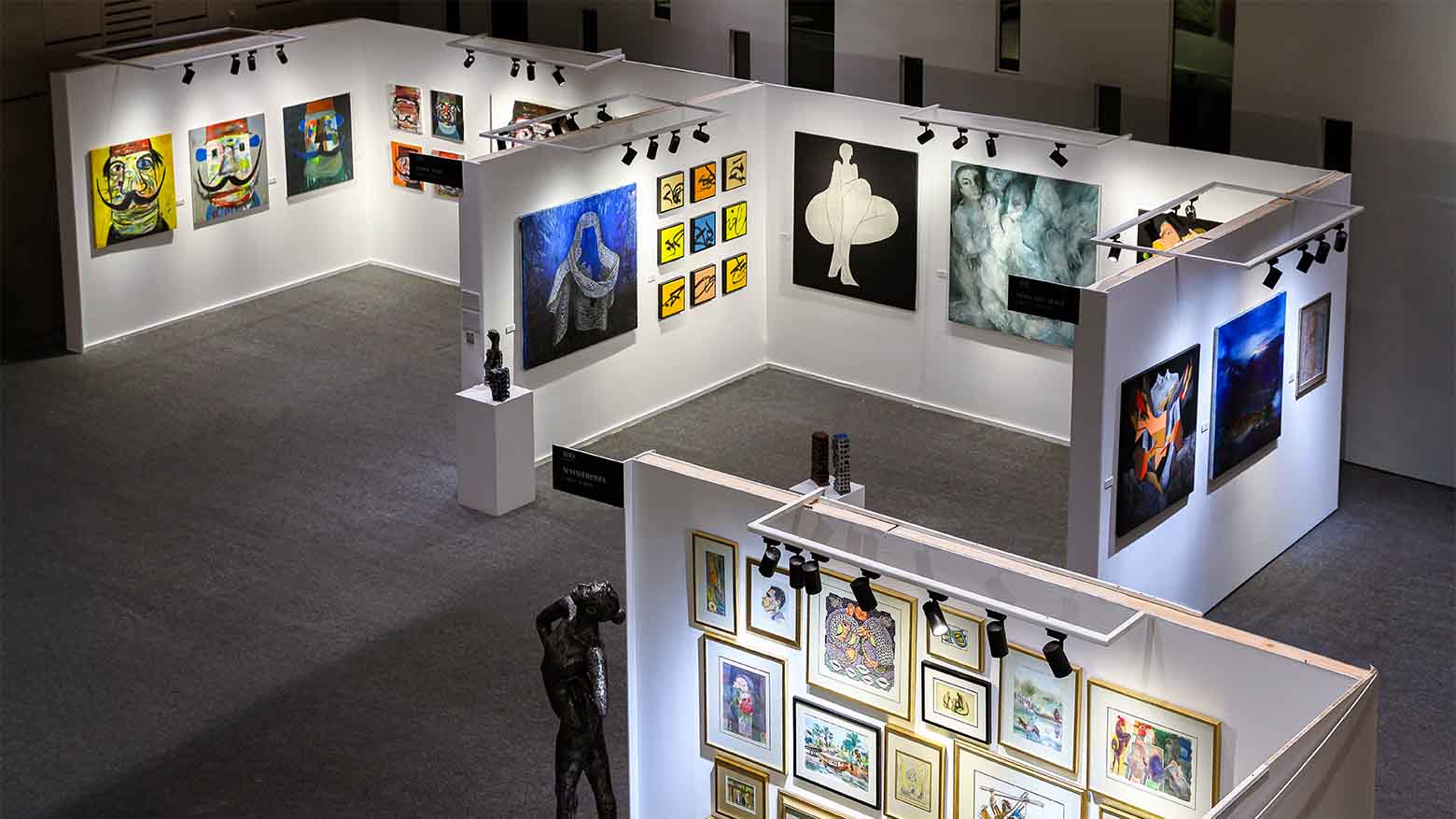
In Brussels, Bahraini artist Rashid Al Khalifa presents Spectrum XXIV at BRAFA Art Fair (25 January–1 February), now in its 71st edition. Presented with Boon Gallery and initiated by Triyad, the work marks Al Khalifa’s first participation in BRAFA, situating contemporary abstraction from the Gulf within a fair defined by dialogue across artistic periods. Shown alongside works by Joan Miró, Richard Diebenkorn, Henry Moore, and Antony Gormley, Al Khalifa’s practice engages with modernist and post-war abstraction within a layered art-historical context.
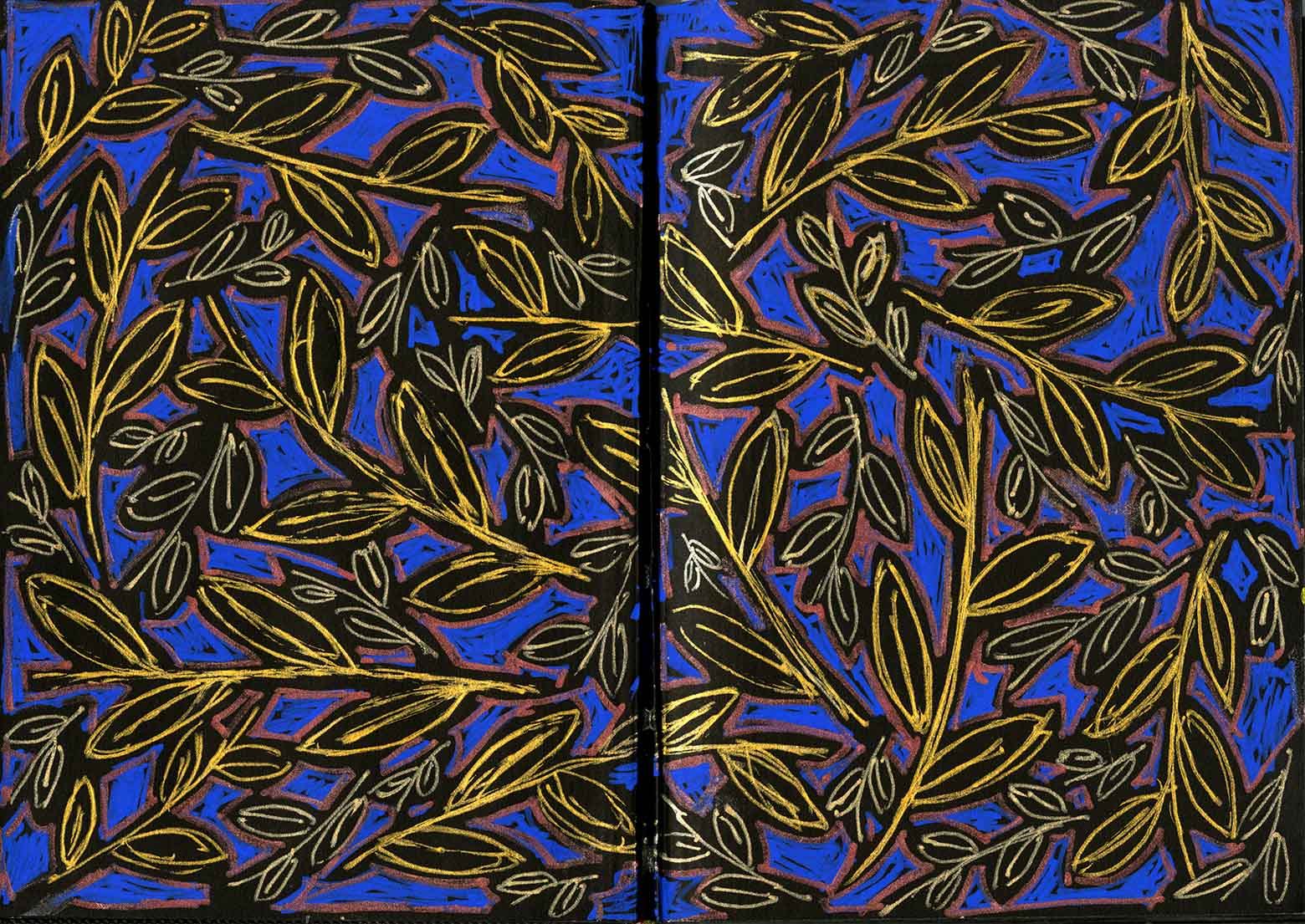
In Egypt, Difaf Gallery opens Scent of Light by Sabah Naim on 31 January, running through March. The exhibition presents a body of oil paintings that meditate on light and memory, with Naim’s practice characterised by luminous surfaces and soft abstraction, shaped through subtle chromatic shifts and gestural mark-making.