On the occasion of its 20th anniversary, Gallery Isabelle is holding a 20-day exhibition Move, Pause, Return, running until 26 May 2026. Reflecting two decades of collaboration with artists across the region, the exhibition brings together 20 artists, with artworks revealed gradually, one per day, culminating on 11 April in a collective moment where all artworks – and the community surrounding them – come together. Each accompanied by a short text written by emerging curators, independent writers, and practitioners. Selections talked with Isabelle de Caters (I.C) to reflect on the 20-years journey of the gallery.
The gallery was founded in 2006 with a commitment to supporting artists and creating a platform reflective of the region’s art scene. How would you describe the art scene and cultural environment in the UAE when the gallery was founded in 2006, and how has that landscape evolved over the past two decades?
I.C: When I founded the gallery in 2006, the landscape was almost a blank canvas. There were very few galleries operating within a “white cube” model, and institutional support was limited, with the Sharjah Art Foundation being a notable exception. There was little of what we would today call an ecosystem—no established art districts, very few platforms for visibility, and minimal infrastructure to support artists’ careers.
Over the years, this has transformed profoundly. We have seen the emergence of a dynamic network of galleries – some of which I had the privilege to help launch – alongside the arrival of auction houses, the development of major art fairs in Dubai and Abu Dhabi, and the rise of cultural hubs such as Alserkal Avenue. Today, the UAE is home to a fully formed and interconnected art ecosystem.
Importantly, this growth has not only been structural but also intellectual and cultural. The region has become a critical centre for the SWANA art scene, where ideas are exchanged, challenged, and redefined through exhibitions in gallery spaces and initiatives such as Art Jameel and platforms like March Meetings. These developments have evolved in parallel with a maturing art market, reinforcing both creative and commercial dimensions.
One of the most significant achievements of this journey is that the region has moved beyond seeking validation from the West. Coming from Belgium, I was initially influenced by established formats and models. However, it quickly became clear to me that it was essential to listen – deeply and radically – to the context we were in, and to build something authentic. What mattered was independence, and the courage to nurture voices that did not require external validation to be meaningful.
At a time when the international community did not yet recognise the possibility of a vibrant art scene in the UAE, artists here were already producing powerful, nuanced, and globally relevant work. Today, those voices are not only heard but are actively contributing to global cultural conversations.
Over the years, Gallery Isabelle has built a diverse roster of artists. How have collectors’ tastes evolved during this time, and has this influenced how you define and select the artists you work with? In curating the 20th anniversary exhibition, what guided your choice of artists and works?
I.C: My journey really began with my first trip to Iran in 2003. The artists I met there were foundational – they shaped my understanding of what a practice could be. Their work was deeply rooted in context and carried a form of courage that came from isolation. When I opened my first space, B21 Gallery, in 2006, it was a former artist studio I rented in Al Quoz – an empty warehouse with white walls. At the time, as an expat, I was simply driven to explore and experiment with the artists, hoping to engage with an audience we had not yet met. I had no idea I would still be here 20 years later, and that gave me a great deal of freedom.
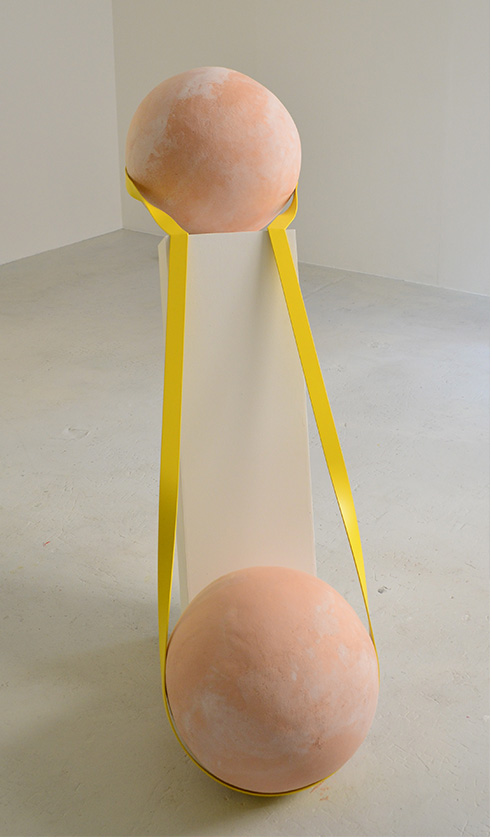
From that moment on, I began to think beyond simply hanging works, becoming more attentive to how exhibitions could be experienced. It opened up a way of working that allowed for more daring propositions. This also shaped how the audience evolved. In the beginning, there was a certain hesitation. Over time, that shifted. Today, there is a real appetite to engage with conceptual practices and more challenging formats.
Some exhibitions pushed this much further and remain very present in people’s memory. With Rokni Haerizadeh, Ramin Haerizadeh and Hesam Rahmanian, we literally moved their living room, kitchen and garden into the gallery. With Bita Fayyazi, the space was taken over by an entire neighbourhood of figures, almost caricatures of Iranian society. Vikram Divecha plunged visitors into darkness, where the work unfolded through reading and imagination. And with Hassan Sharif, images and shredded prints were cascading from the ceiling, overwhelming the space.
(The only proposal I ever refused was Vikram’s idea to remove the roof.)
For the 20th anniversary exhibition, I wasn’t interested in a retrospective. The idea was to stay true to that same energy – bringing together works that reflect a way of working grounded in freedom, experimentation, and trust in the artists.
Could you take us back to the gallery’s first exhibition? Which artists were presented, and how does the level of engagement with the arts compare to today?
I.C: It’s terrible – I actually can’t remember which show was the very first one. It might have been in Bastakiya, at XVA Art Hotel, where we showed sculptures by Bita Fayyazi – figures of children at play – paired with photographs by Souheil Seeman. The proceeds went to support a charity in Pakistan following a devastating earthquake.
Or it might have been a presentation of Farhad Moshiri’s pop jars at the Fairmont Hotel, in collaboration with Maliha Tabari… I honestly can’t remember which came first. I remember every work, every exhibition – but not the chronology.
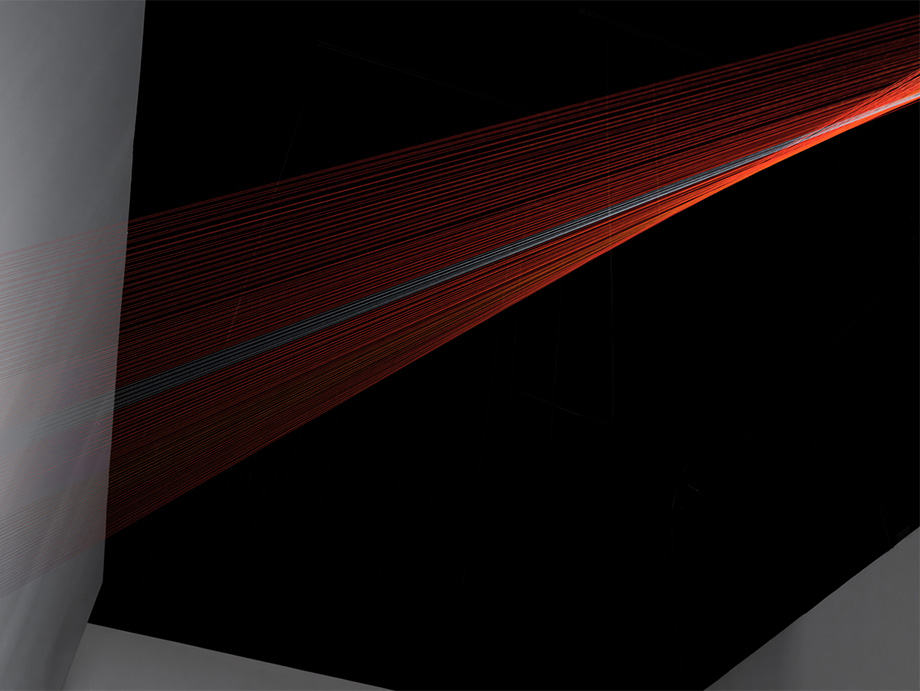
Looking back, was there a particular moment you would identify as a turning point in the gallery’s journey?
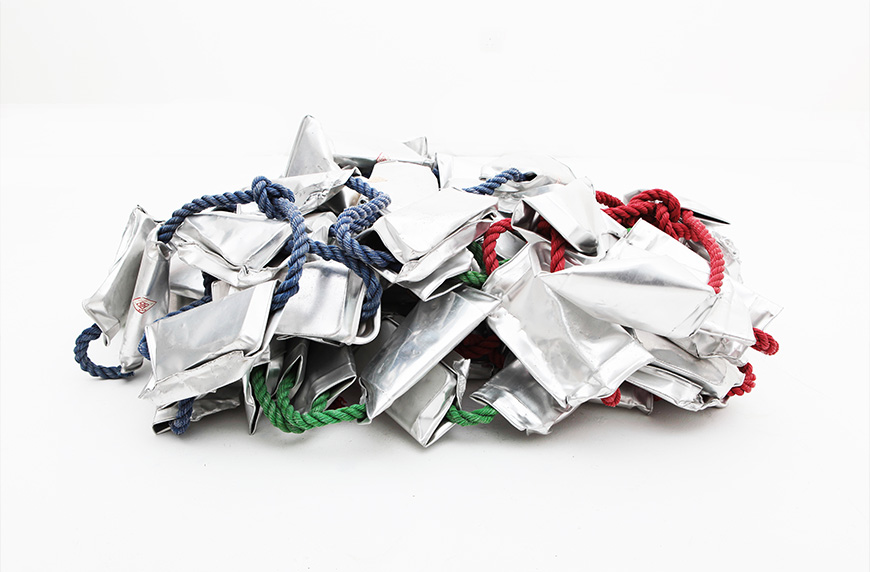
I.C: A very important turning point was my encounter with Hassan Sharif. The first time I came across his work, in 2008, I didn’t quite know what to make of it. The piece— 555, Four Bright, made in China, which is also in the 20th anniversary exhibition —was a pile of everyday, disposable aluminium food trays, bent, pierced, and weaved together with big used red and green rope. I remember hesitating.
A few years later, I met him, and everything shifted. What struck me was his way of thinking – there was ambiguity, irony, something very gentle, but also very bold. He embraced what might seem absurd to most people, but at the same time, he was incredibly generous when you engaged with him.
Each conversation would open a different way of understanding the work. He could describe the same piece in multiple ways, never fixing it into one meaning, always keeping it alive and open.
I began to understand his work as a space of freedom—where repetition, simple gestures, and the most ordinary materials could open something much larger.
Even today, when I feel stuck, I go back to his writings. They don’t give answers, but they shift your perspective just enough to move again.