
Milan Design Week 2026 unfolded from 21 to 26 April, once again transforming the city into a dispersed landscape of design encounters. Anchored by the Salone del Mobile.Milano at Fiera Milano Rho, the week extended far beyond its central fairgrounds into a network of installations, exhibitions, and temporary interventions across Milan. This year’s edition foregrounded circularity, inclusivity, and the visibility of emerging practitioners, while maintaining a balance between industry and experimentation. What emerged was a city-wide dialogue in which design operated not only as object-making, but as a tool for thinking through material futures, collective practices, and new forms of living.
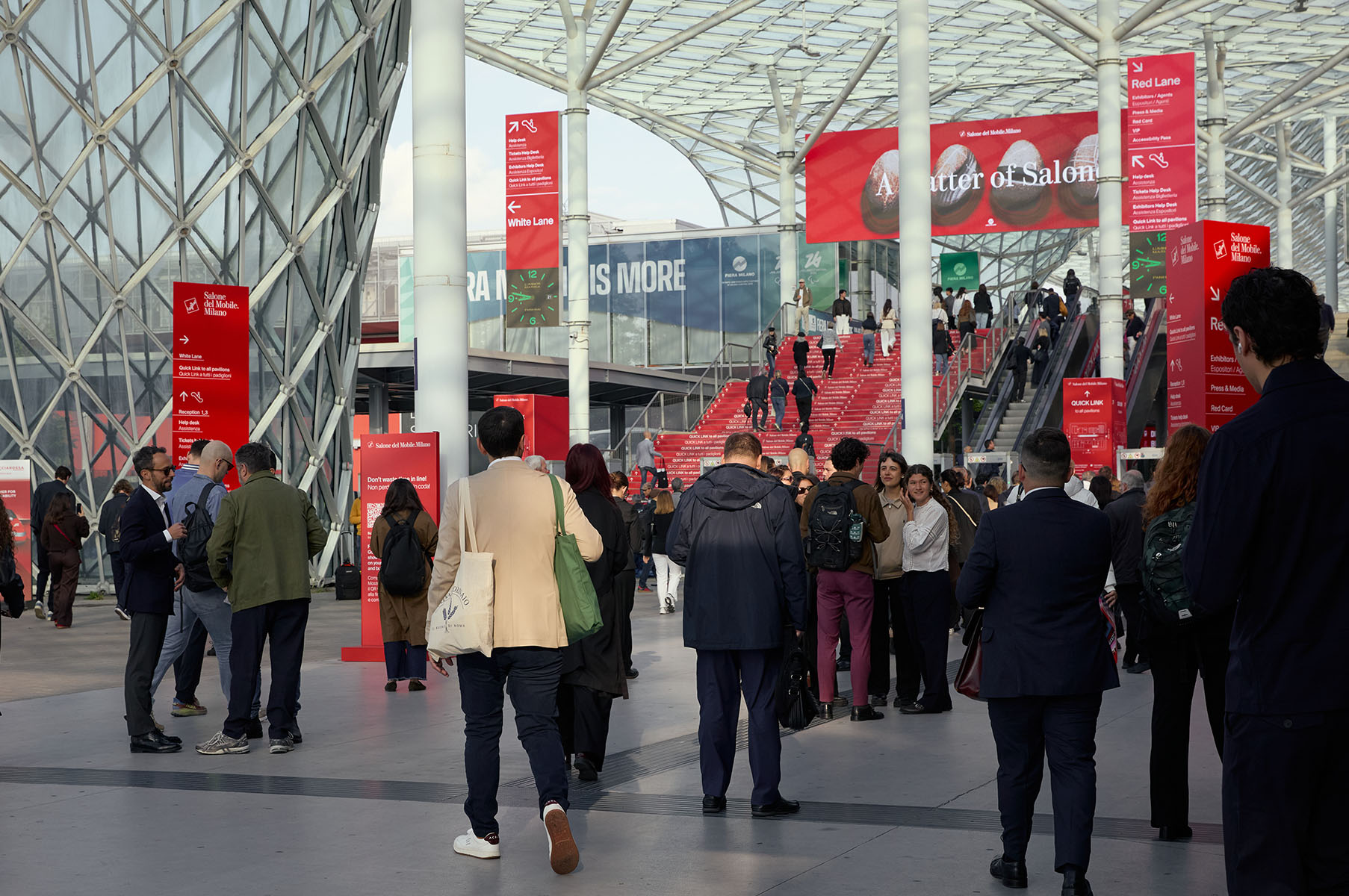
The fair welcomed over 316,000 visitors from 167 countries, marking a steady increase from the previous year. China remained the leading source of international attendance, while European participation continued to grow, alongside notable rises from the United States and United Kingdom.
Beyond the fair, Milan shifted into a decentralised constellation of projects, with districts such as Brera, Tortona, and Isola hosting a wide spectrum of interventions.
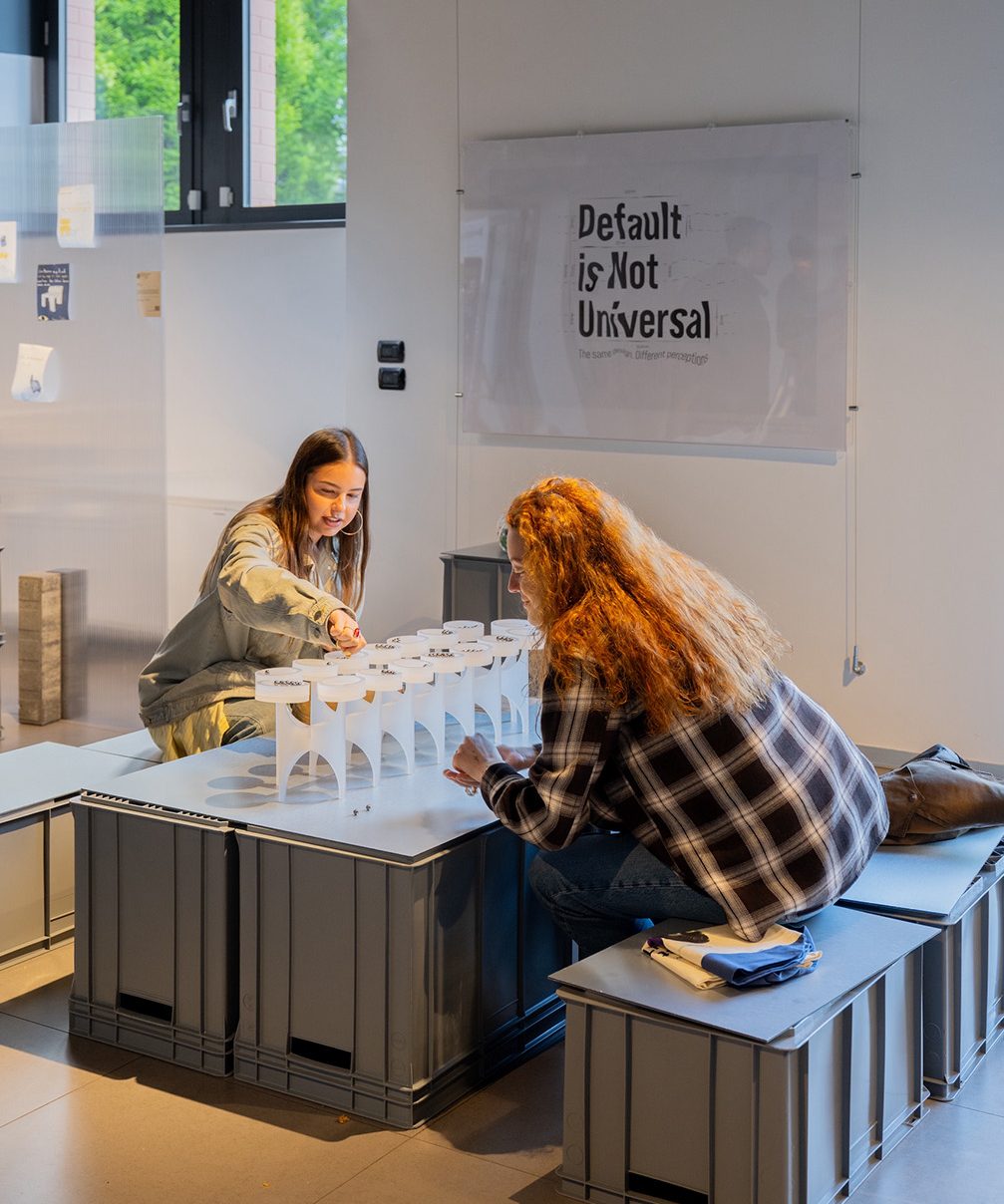
At the Isola district, King Abdulaziz Center for World Culture presented Default is Not Universal, an exhibition that examined how design assumptions are shaped by cultural frameworks. Conceived as a first manifestation of Ithra Design Week, the project brought together designers from across the MENA region in an interactive environment structured around seven participatory stations. Visitors engaged with installations that translated gesture, memory, and perception into data, later mapped to reveal cognitive differences across geographies. Works ranged from modular seating shaped collectively over time to sensory compositions built from regional materials. Developed in collaboration with Isola Design Festival, the exhibition positioned design as a site of exchange, where regional narratives entered into dialogue with global audiences while resisting the idea of a universal default.
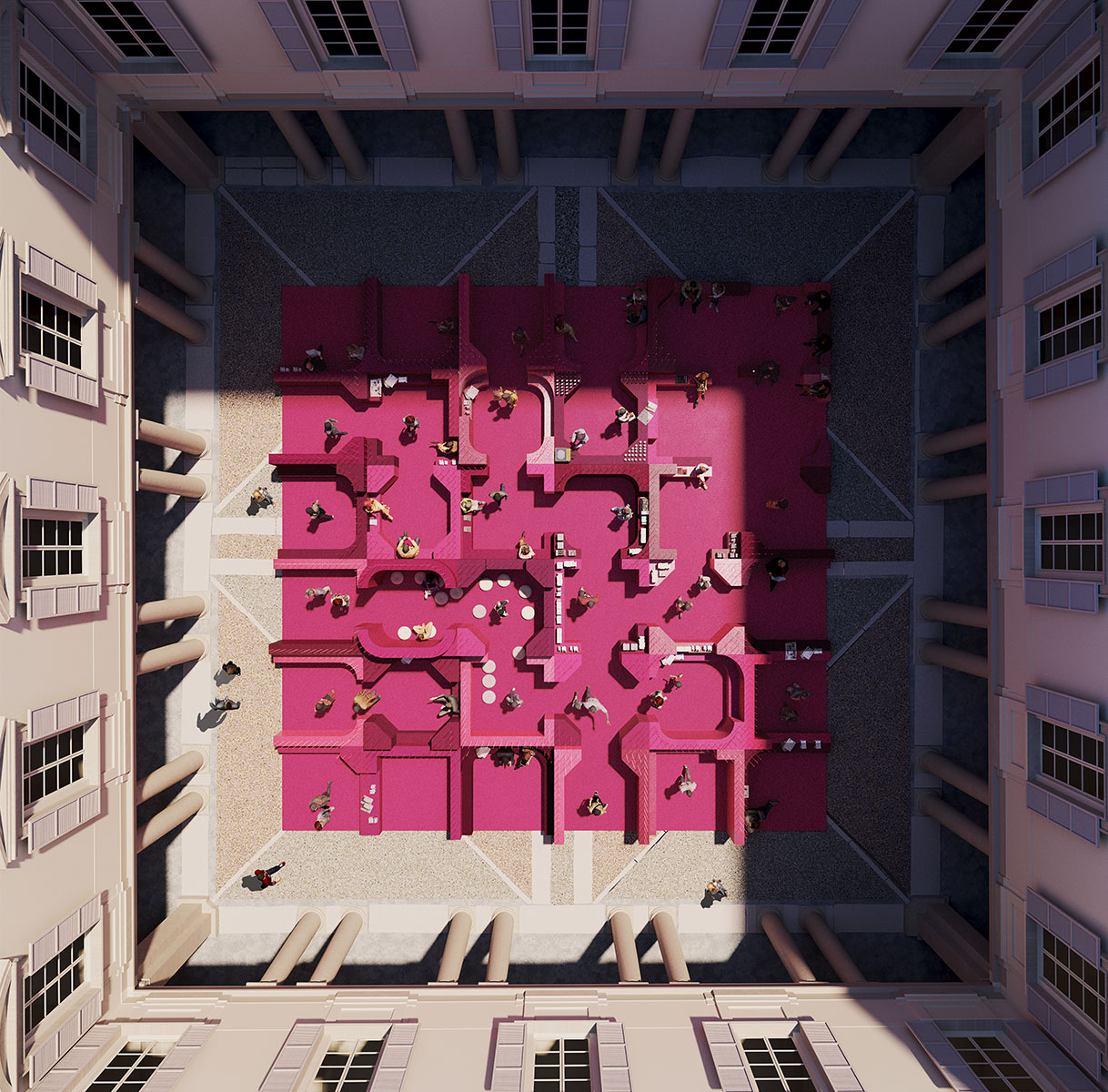
At Palazzo Litta, Lina Ghotmeh’s Metamorphosis in Motion anchored the MoscaPartners programme. Installed within the courtyard, the project unfolded as a labyrinthine structure that guided visitors through a sequence of shifting perspectives. Rather than altering the architecture, the intervention activated it, using curved pathways and layered spatial rhythms to reframe the courtyard as a site of movement and encounter. The installation reflected Ghotmeh’s interest in what she describes as an “archaeology of the future,” where memory and spatial experience intersect. As she noted, “The installation is a playful labyrinth that activates the courtyard without altering its structure.” Surrounding rooms extended this reflection, hosting a broader exhibition that explored transformation across design practices.
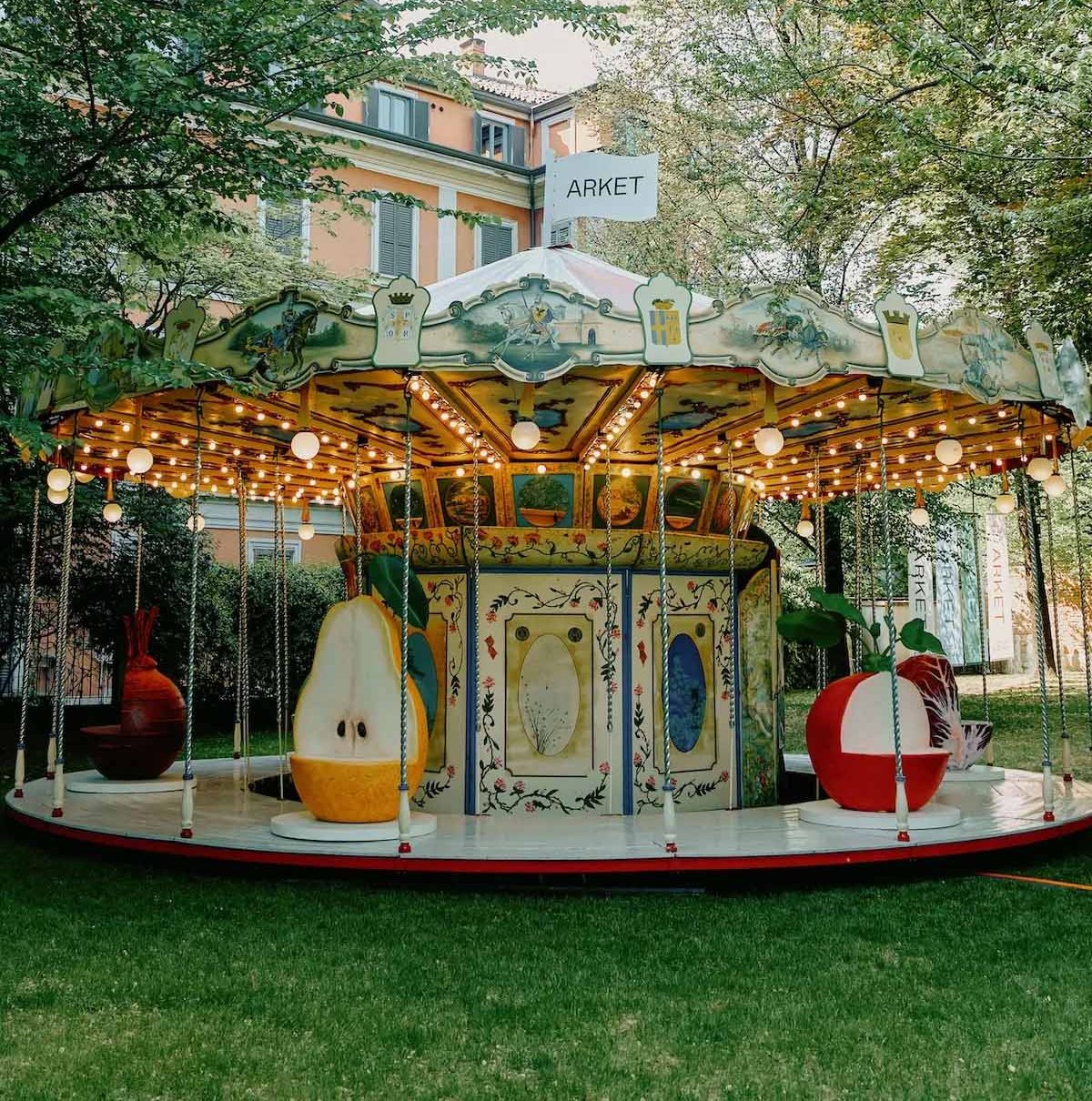
In the city’s gardens, Laila Gohar collaborated with ARKET on a reimagined carousel composed of oversized fruits and vegetables. Installed at Giardino delle Arti, the work translated Gohar’s long-standing engagement with food as medium into a public, participatory structure. Rooted in an antique fairground mechanism, the installation replaced traditional figures with familiar produce, emphasising scale and tactility. The project accompanied the launch of her first ready-to-wear collection, extending her practice into design while maintaining a focus on accessibility, play, and shared experience.
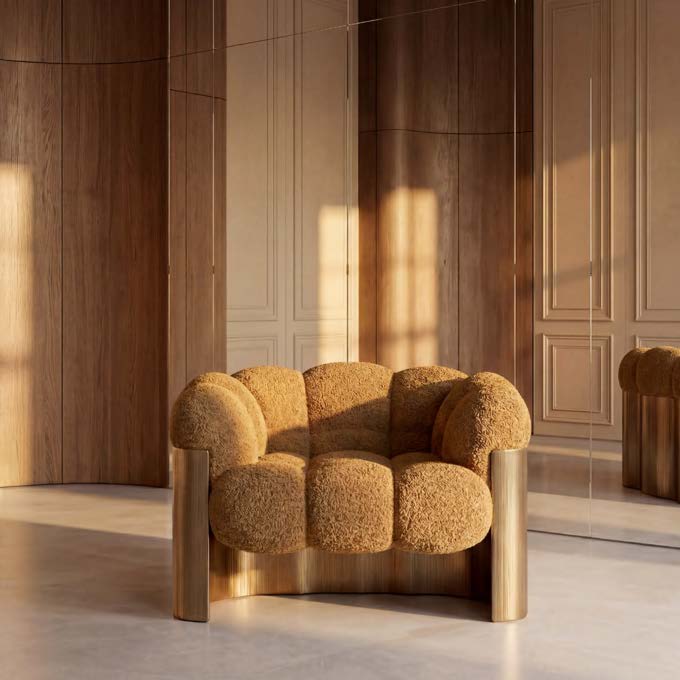
Within a more interior register, Elie Saab Maison presented The Milanese House, a scenographic environment shaped in collaboration with Carlo Colombo. Conceived as a lived-in space rather than a staged display, the installation unfolded through a sequence of rooms defined by material nuance and atmospheric shifts. Furniture pieces such as the ONDA armchair and MANZONI sofa operated as sculptural anchors within the narrative, balancing precision with softness. The project articulated a vision of domestic space grounded in Italian craftsmanship, where design is experienced through use, rhythm, and inhabitation rather than observation.
Meanwhile, Miu Miu expanded its engagement with cultural programming through the fourth edition of its Literary Club at Circolo Filologico Milanese, a homage to European literary salons. Titled Politics of Desire, the programme combined talks, lectures, and readings centred on questions of consent, subjectivity, and representation. Drawing from the writings of Annie Ernaux and Ama Ata Aidoo, discussions unfolded across two days before opening into a public reading space. A curated library extended the installation dimension of the project, transforming the venue into a site of reflection where literature functioned as both framework and material.
Elsewhere, Kelly Wearstler presented a new collaboration with H&M Home at Palazzo Acerbi. The installation introduced a modular furniture collection within a historic setting, staging a dialogue between contemporary design and architectural heritage. Structured as an immersive sequence, the presentation emphasised adaptability, proposing furniture as a system that evolves through use while remaining accessible to a broader audience.
Across these projects, Milan Design Week 2026 revealed a shared shift: design moved beyond display into experience, emphasising participation, process, and context. Whether through data-driven installations, spatial interventions, or narrative environments, the week traced how design continues to expand its field, operating across disciplines while remaining closely tied to the rhythms of everyday life.