As the 61st International Art Exhibition of La Biennale di Venezia prepares to open to the public on 9 May, Venice has already entered its annual state of artistic intensity through a series of previews, inaugurations, and gatherings unfolding across the Giardini, Arsenale, and the city beyond. Curated this year under the title In Minor Keys, the exhibition brings together artists, collectives, and national pavilions that reflect on coexistence, memory, fragility, and forms of relation shaped through sound, material, and lived experience. Alongside the official exhibition, a dense constellation of collateral and coinciding events expands the Biennale into palazzos, foundations, and temporary sites across Venice. Here are Selections’ picks.
National Pavilions at the Giardini
QATAR
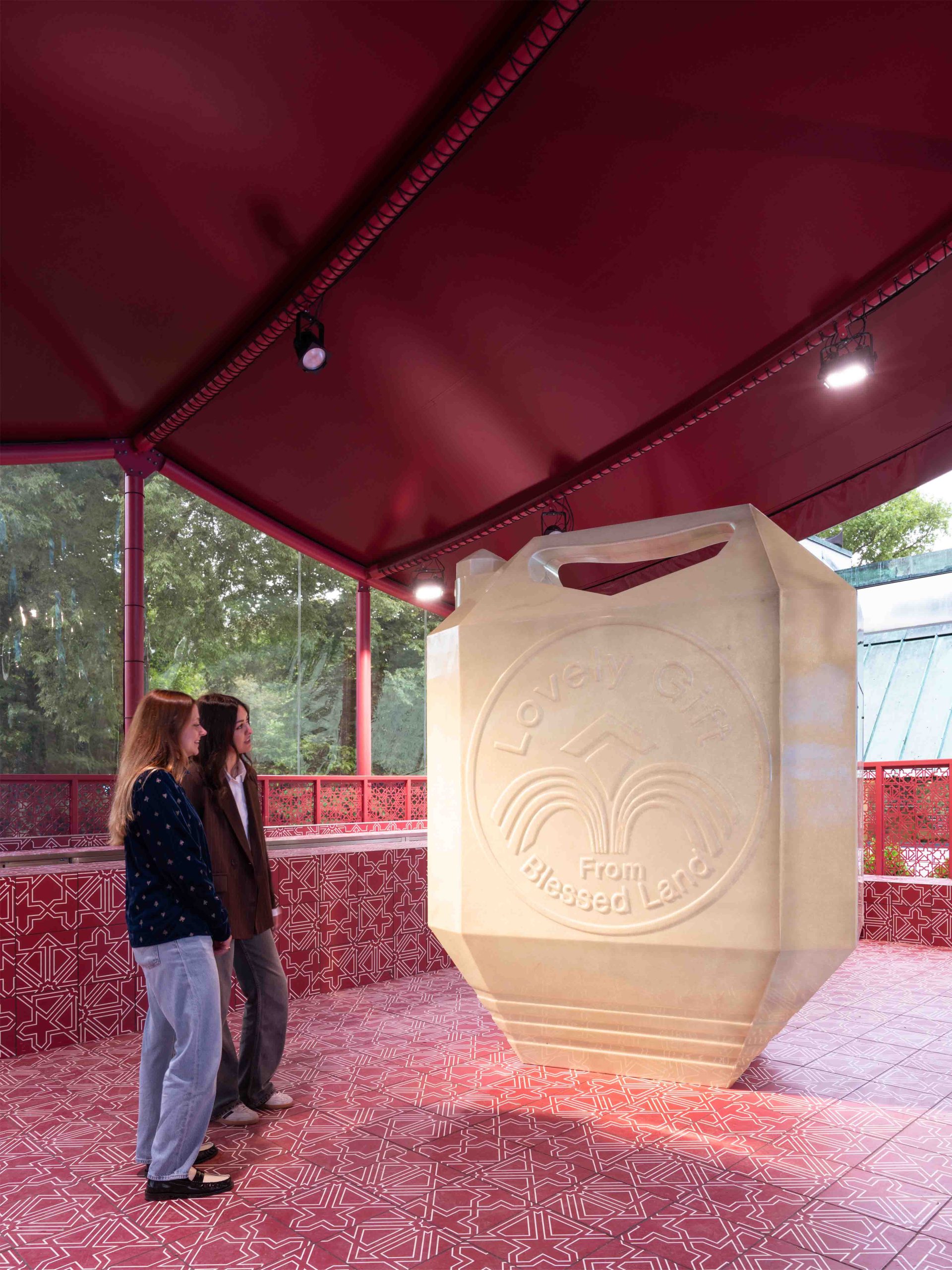
At the future site of the permanent Qatar Pavilion in the Giardini, Her Excellency Sheikha Al Mayassa bint Hamad bin Khalifa Al Thani inaugurated untitled 2026 (a gathering of remarkable people), Qatar’s first official participation in the International Art Exhibition. Organised by Qatar Museums and presented by Rubaiya Qatar, the exhibition unfolds within a maroon structure designed by Rirkrit Tiravanija, whose role extends beyond architecture into shaping the pavilion itself as a communal gathering space inspired by Qatari social traditions. During the opening, performances by Lebanese artist Tarek Atoui activated the space through live music rooted in the structures of the takht and wasla, while Palestinian chef Fadi Kattan curated a culinary programme alongside regional collaborators. “Culture connects what conflict tries to break apart,” remarked Sheikha Al Mayassa during the ceremony. Across the exhibition, Sophia Al-Maria presents DAMAR TV (2026), an experimental narrative film, while Alia Farid contributes Jerrican (2022–2026), a large-scale sculptural work engaging histories of extraction, movement, and survival.
CANADA
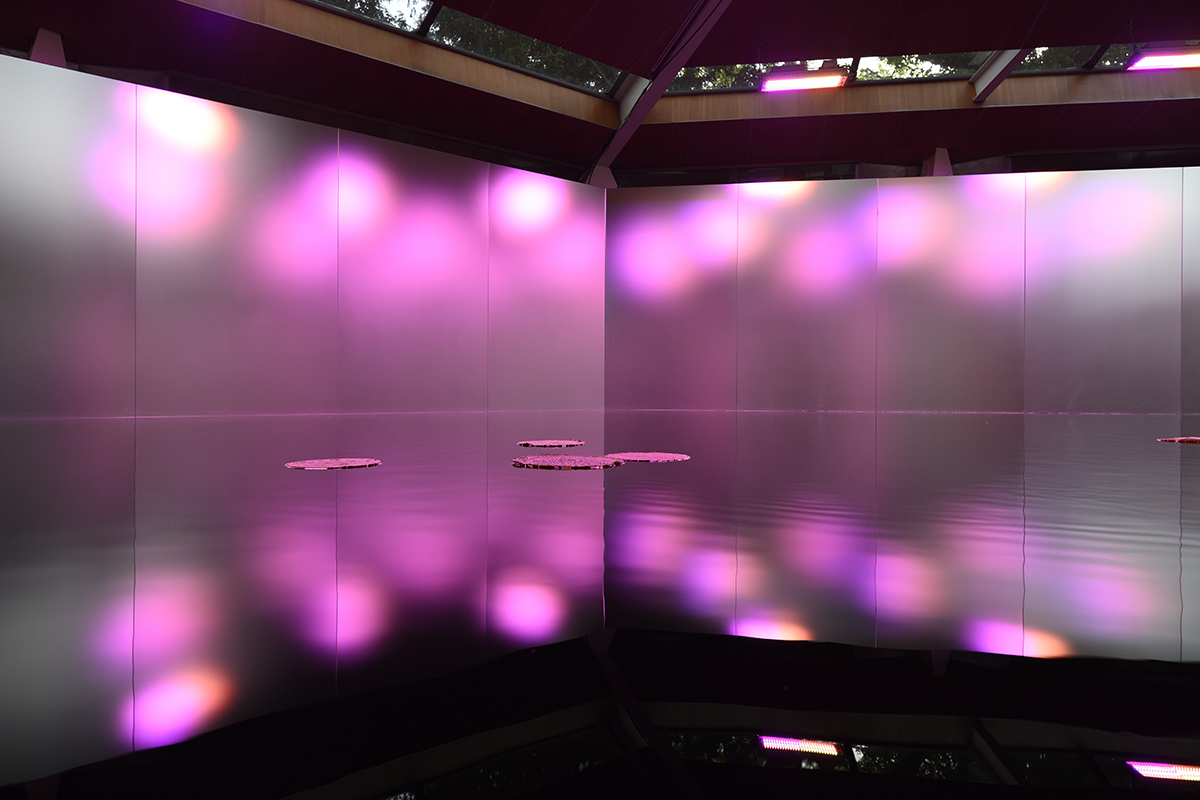
Representing Canada at the Biennale, Abbas Akhavan transforms the Canada Pavilion into a monumental greenhouse in Entre chien et loup. Reimagining the pavilion as a nineteenth-century Wardian case once used to transport plants across empires, the installation centres on Victoria water lilies cultivated in collaboration with the Royal Botanic Gardens, Kew and the Orto Botanico di Padova. Akhavan’s practice often examines the fragile relationship between landscape, architecture, and political memory, and here the water lily becomes both botanical specimen and imperial symbol. Referencing the plant’s display during London’s 1851 Great Exhibition, the project reflects on how natural forms are absorbed into national narratives and systems of representation. The title, translating to “between dog and wolf,” evokes twilight as a state of uncertainty where distinctions begin to dissolve. Through this suspended atmosphere, Akhavan considers the instability of borders, histories, and belonging itself.
National Pavilions at the Arsenale
UNITED ARAB EMIRATES
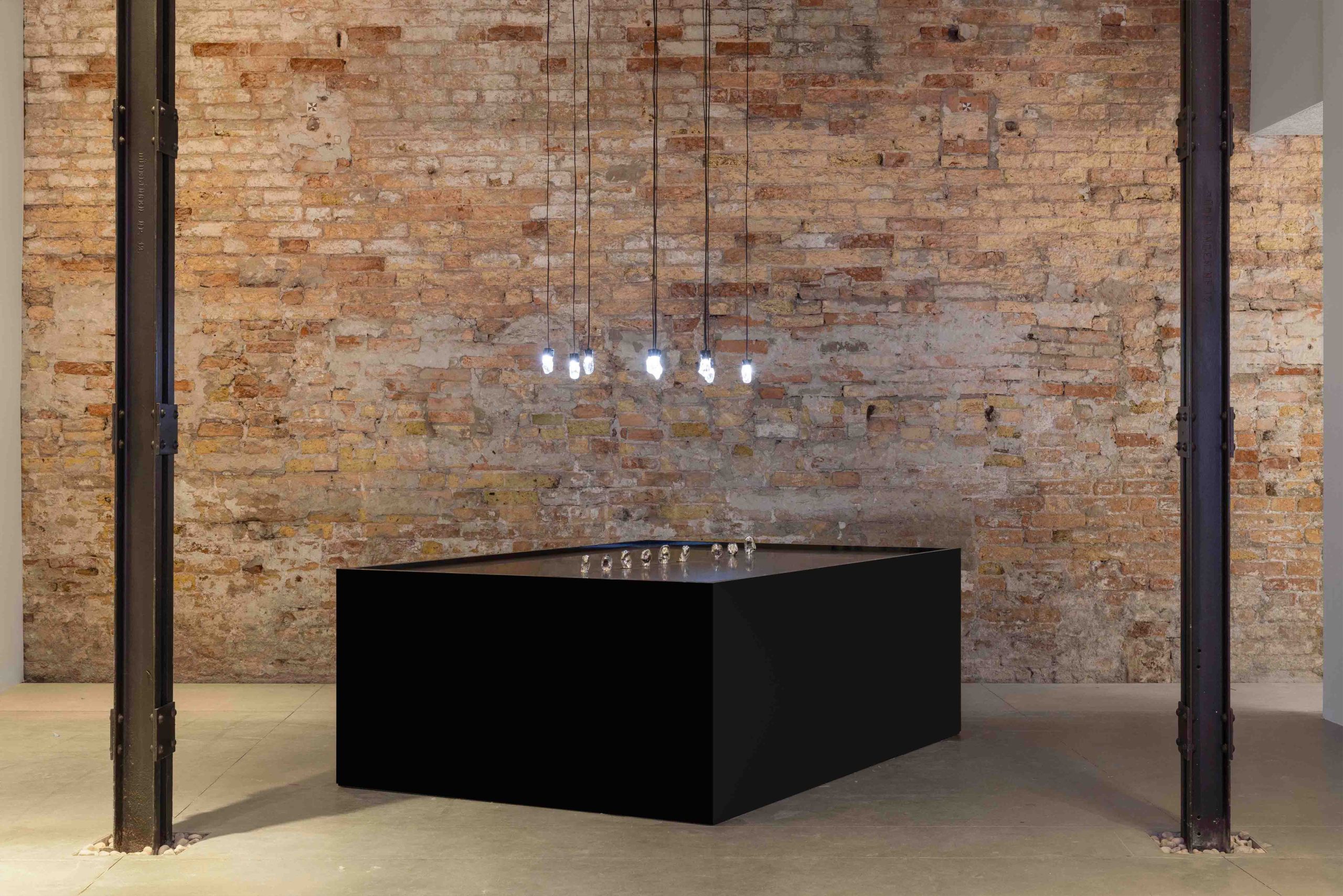
Curated by Bana Kattan with Assistant Curator Tala Nassar, the UAE National Pavilion presents Washwasha, an exhibition that approaches sound as a space of memory, migration, and embodied experience. Meaning “whispering” in Arabic, the title reflects the exhibition’s movement between intimacy and sonic overflow through works by Mays Albaik, Jawad Al Malhi, Farah Al Qasimi, Alaa Edris, Lamya Gargash, and Taus Makhacheva. Developed with Büro Koray Duman Architects, the pavilion unfolds through shifting acoustic environments moving from oral storytelling toward technological noise and hyperconnectivity. Among the featured works, Al Malhi’s Naiman revisits wedding rituals through recorded testimonies, while Albaik’s glass sculptures preserve the fragile moment before speech fully emerges. Gargash’s photographic series Majlis examines gathering spaces as sites of listening and exchange, and Al Qasimi’s installation The Curse reflects on communication, guilt, and misunderstanding through multimedia narrative.
LEBANON
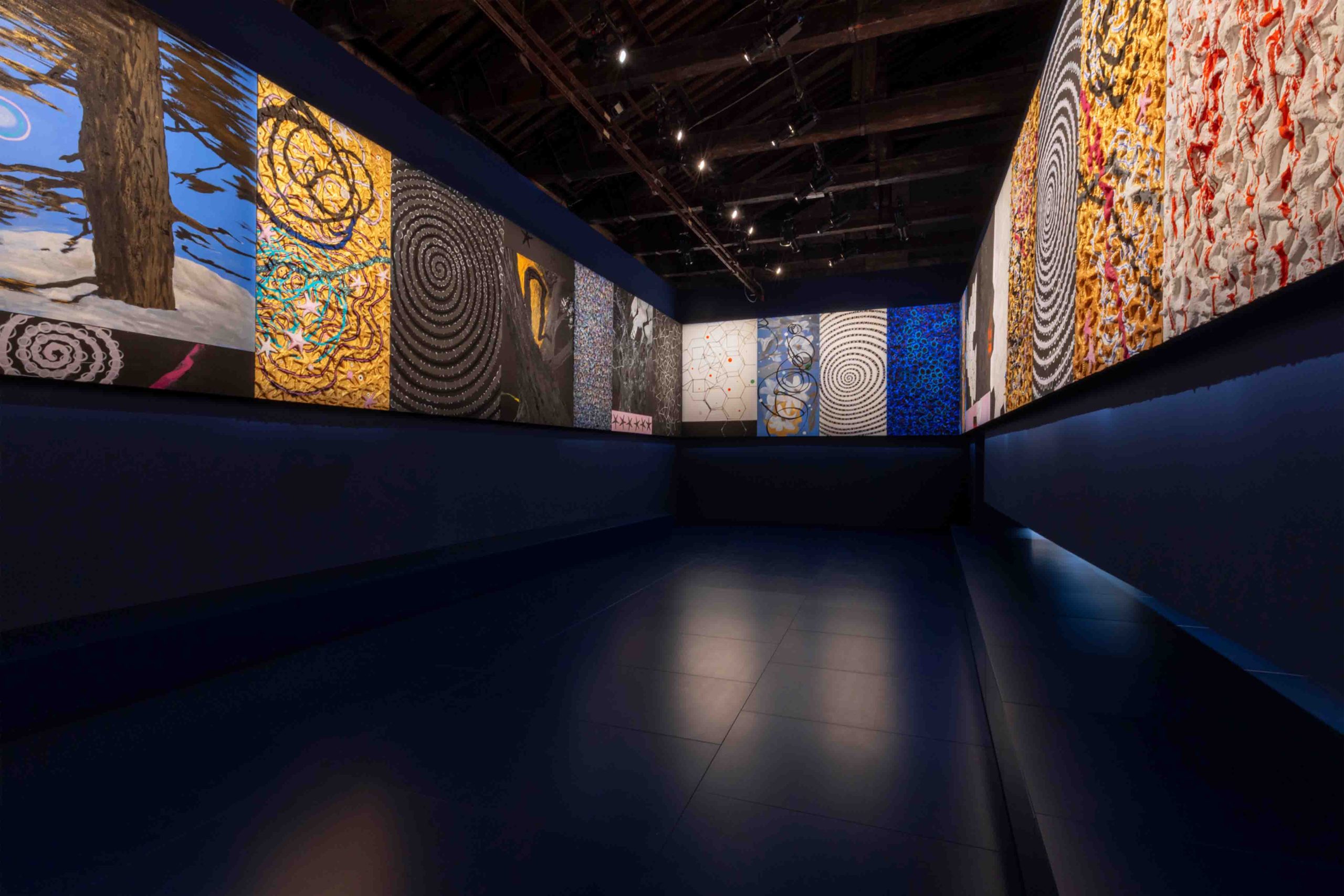
The Pavilion of Lebanon opened on 6 May at the Arsenale with Don’t Get Me Wrong, an immersive installation by Nabil Nahas curated by Dr Nada Ghandour. Organised by the Lebanese Visual Art Association under the auspices of the Ministry of Culture, the inauguration gathered cultural figures and officials including Minister of Tourism Laura El-Khazen Lahoud and Ambassador Carla Jazzar. “My artistic practice is deeply rooted in the country’s rich and layered heritage,” Nahas remarked during the opening. Spanning forty-five metres, the installation consists of twenty-six monumental acrylic-on-canvas panels forming an enveloping frieze within the Arsenale space. Drawing from Islamic geometry, fractal systems, Persian miniature traditions, and Mediterranean visual histories, the work moves between abstraction and figuration to consider plurality as a lived cultural condition. Trees, spirals, polygons, and cosmic forms recur across the paintings, linking microcosm and macrocosm within a continuously shifting visual language.
MEXICO
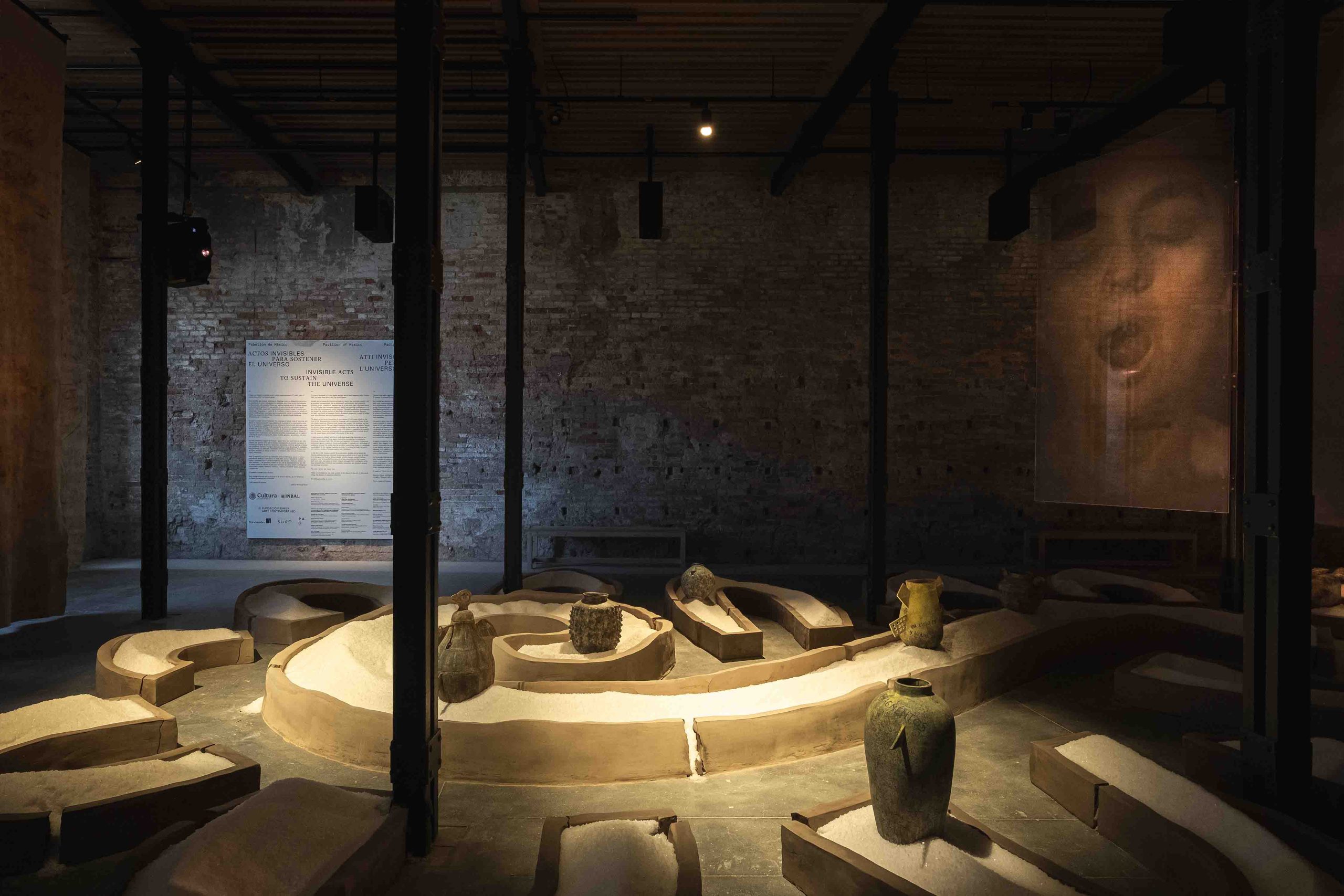
At the Mexican Pavilion, the collective RojoNegro – formed by María Sosa and Noé Martínez – presents Actos invisibles para sostener el universo, curated by Jessica Berlanga. Conceived as a sensorial environment of sound, clay, salt, gesture, and breath, the project examines ritual knowledge and decolonial forms of perception amid the saturation of contemporary life. A line of salt shaped as a Mesoamerican vírgula guides visitors through the pavilion, where ceramic vessels, tobacco references, and audiovisual works unfold as interconnected acts of care and remembrance. Rather than reconstructing ancestral systems, the installation approaches material itself as a carrier of memory and cosmology. Through shifting textures and rhythms, the work proposes listening as both political and spiritual practice, foregrounding forms of knowledge that persist beyond colonial systems of classification and control.
What to See at the Central Exhibition: In Minor Keys
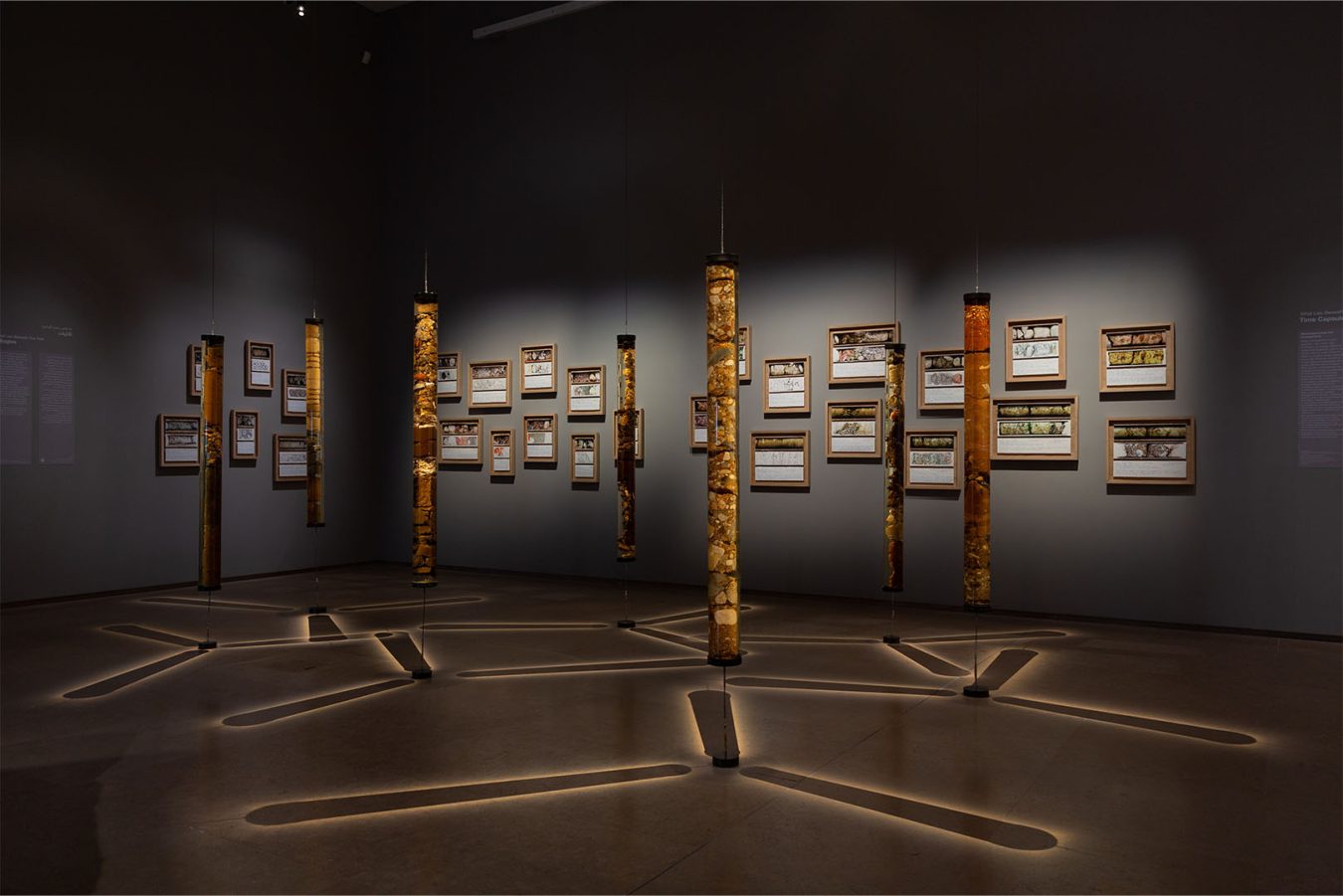
Curated by Koyo Kouoh, In Minor Keys unfolds through relational encounters between artists, geographies, and practices shaped by resonance rather than fixed categories. Among the participating artists are Lebanese figures Walid Raad and Hala Schoukair. While Schoukair’s intricate paintings echo mosaic-like structures and layered abstraction, Raad’s street-art approach flirts with the urbanisation of spaces. Palestinian artist Mohammed Joha presents delicate watercolour landscapes of Gaza painted between 2025 and 2026, while María Magdalena Campos-Pons contributes a monumental portrait pairing Kouoh with novelist Toni Morrison in an almost devotional composition. Lebanese artist and musician Raed Yassin presents staged family portraits recalling celebratory studio photography of the 1990s, suspended between intimacy and constructed memory. Elsewhere, the collaborative duo Joana Hadjithomas and Khalil Joreige engage geological time through installations developed alongside geologists, tracing sediment, excavation, and the layered histories embedded within the earth itself.
Official Collateral Events
Marina Abramović: Transforming Energy
At the Gallerie dell’Accademia, Marina Abramović becomes the first living woman artist to receive a major exhibition at the institution. Opening during the Biennale and marking her eightieth birthday, Transforming Energy places Abramović’s performances in dialogue with Venetian Renaissance masterpieces across both permanent and temporary galleries. Curated by Shai Baitel, the exhibition centres on the body as a site of endurance, transformation, and spiritual transmission through iconic works including Rhythm 0, Balkan Baroque, and Imponderabilia. Interactive “Transitory Objects” invite visitors into states of contemplation, while the presentation of Pietà (with Ulay) beside Titian’s Pietà creates a charged conversation across grief, ritual, and transcendence.
‘______’ *Gaza – No Words – See The Exhibit
Within the eighth edition of Personal Structures – exhibition organised by European Cultural Centre Italy – the Palestine Museum US presents Gaza – No Words – See The Exhibit at Palazzo Mora. The exhibition brings together one hundred Palestinian tatreez embroideries produced by women across refugee camps and communities in Lebanon, Jordan, and the West Bank. Each work records scenes from Gaza through meticulous stitching, transforming embroidery into testimony, archive, and witness. Through these collective gestures of labour and remembrance, the exhibition insists on visibility amid ongoing destruction and displacement.
Aghrab Idrāk: Thresholds of Perception
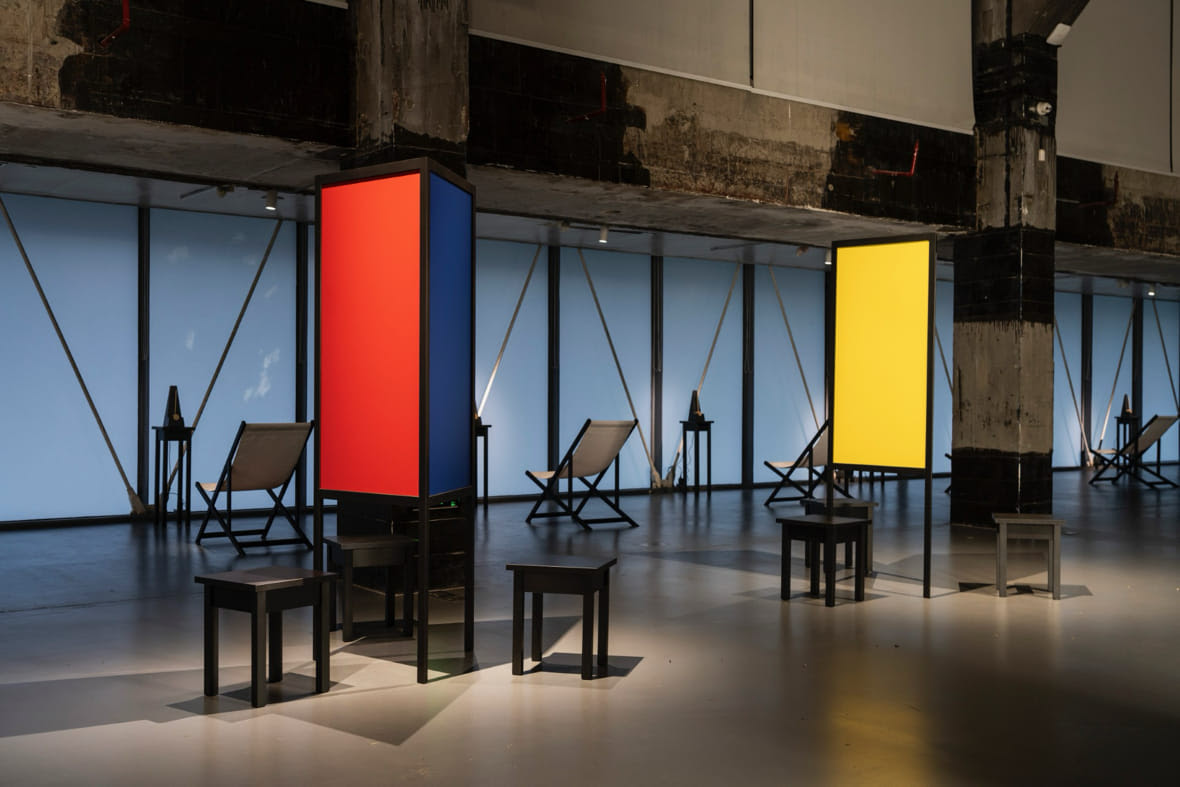
Opening in June at Palazzo Cavanis, (أغرب إدراك) Aghrab Idrāk: Thresholds of Perception is presented by VCUarts Qatar as an official Collateral Event of the Biennale. Bringing together projects from ten research labs within the Institute for Creative Research, the exhibition explores perception as a relational mode of knowing through environments shaped by sound, light, movement, and material presence. The participating artists and researchers examine mobility, collective memory, and embodied forms of experience rooted in Gulf histories of exchange and encounter. A symposium titled Relational Ecologies will accompany the exhibition in June.
Coinciding Events
Erwin Wurm: Dreamers
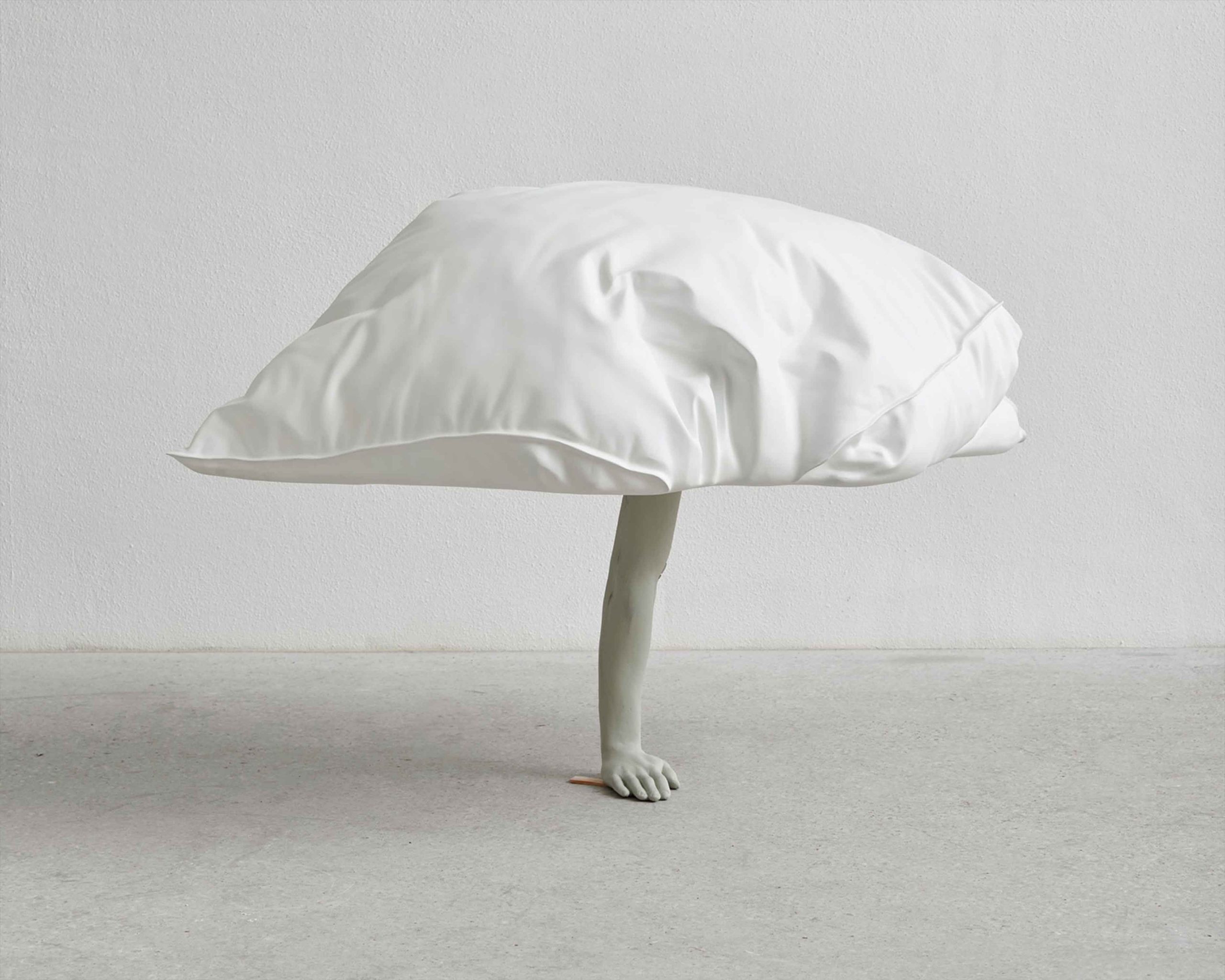
At Museo Fortuny, Austrian sculptor Erwin Wurm receives his first major exhibition in Italy. Curated by Elisabetta Barisoni and Cristina Da Roit, Dreamers traces Wurm’s longstanding expansion of sculpture beyond static form through his celebrated One Minute Sculptures, distorted architectural objects, and anthropomorphic everyday materials. Humour and absurdity operate throughout the exhibition as tools to examine social pressure, consumerism, and the instability of reality itself.
Jenny Saville
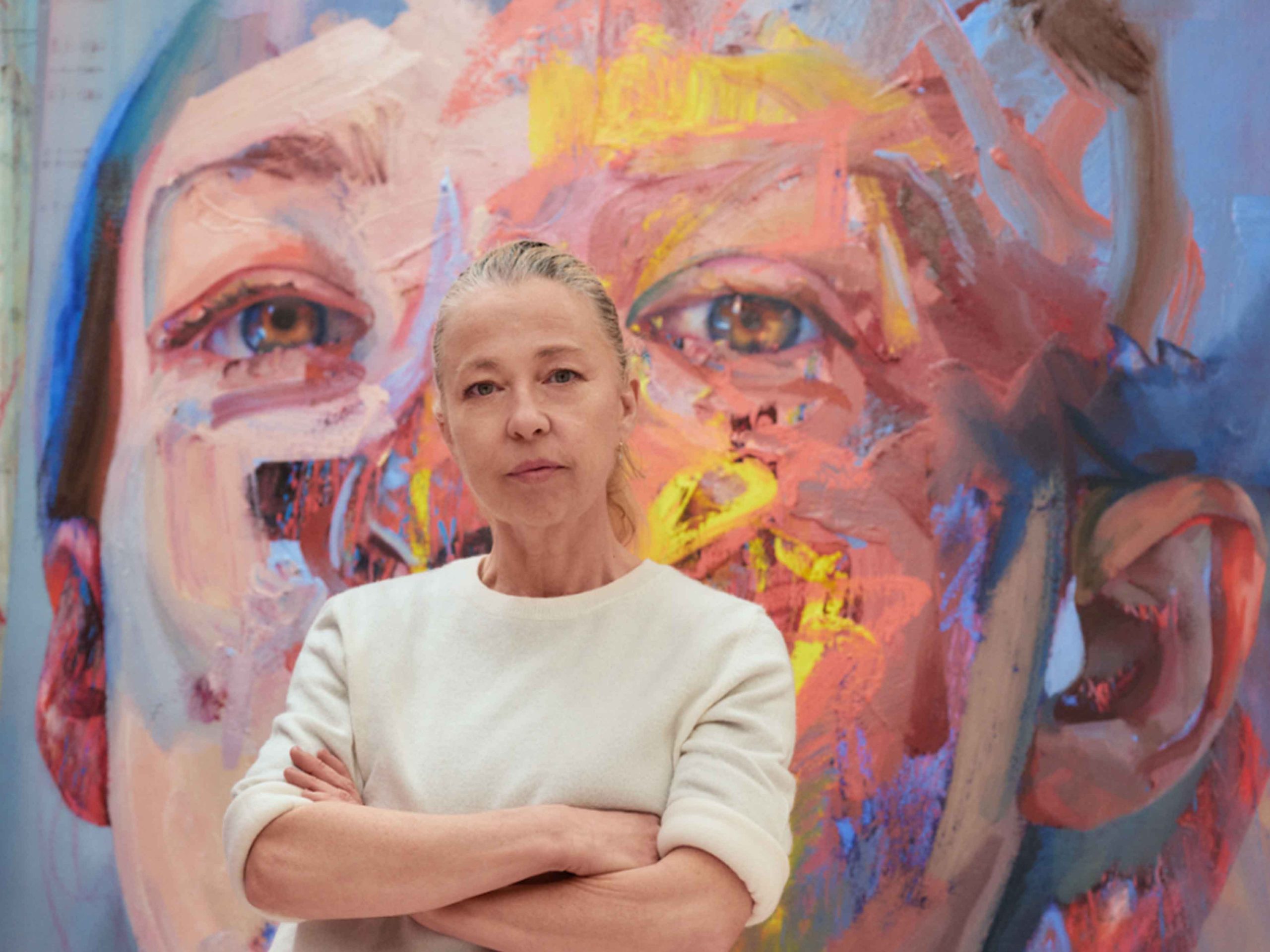
The International Gallery of Modern Art at Ca’ Pesaro presents the first major Venetian exhibition dedicated to British painter Jenny Saville. Bringing together over thirty paintings and drawings spanning the 1990s to the present, the exhibition traces Saville’s transformative role within contemporary figurative painting. Known for monumental depictions of flesh, gesture, and bodily presence, Saville engages the traditions of Venetian painting while interrogating contemporary perceptions of the body. A final room of newly created works pays homage directly to Venice, positioning the city itself as both subject and historical interlocutor.
Amar Kanwar: Co-travellers
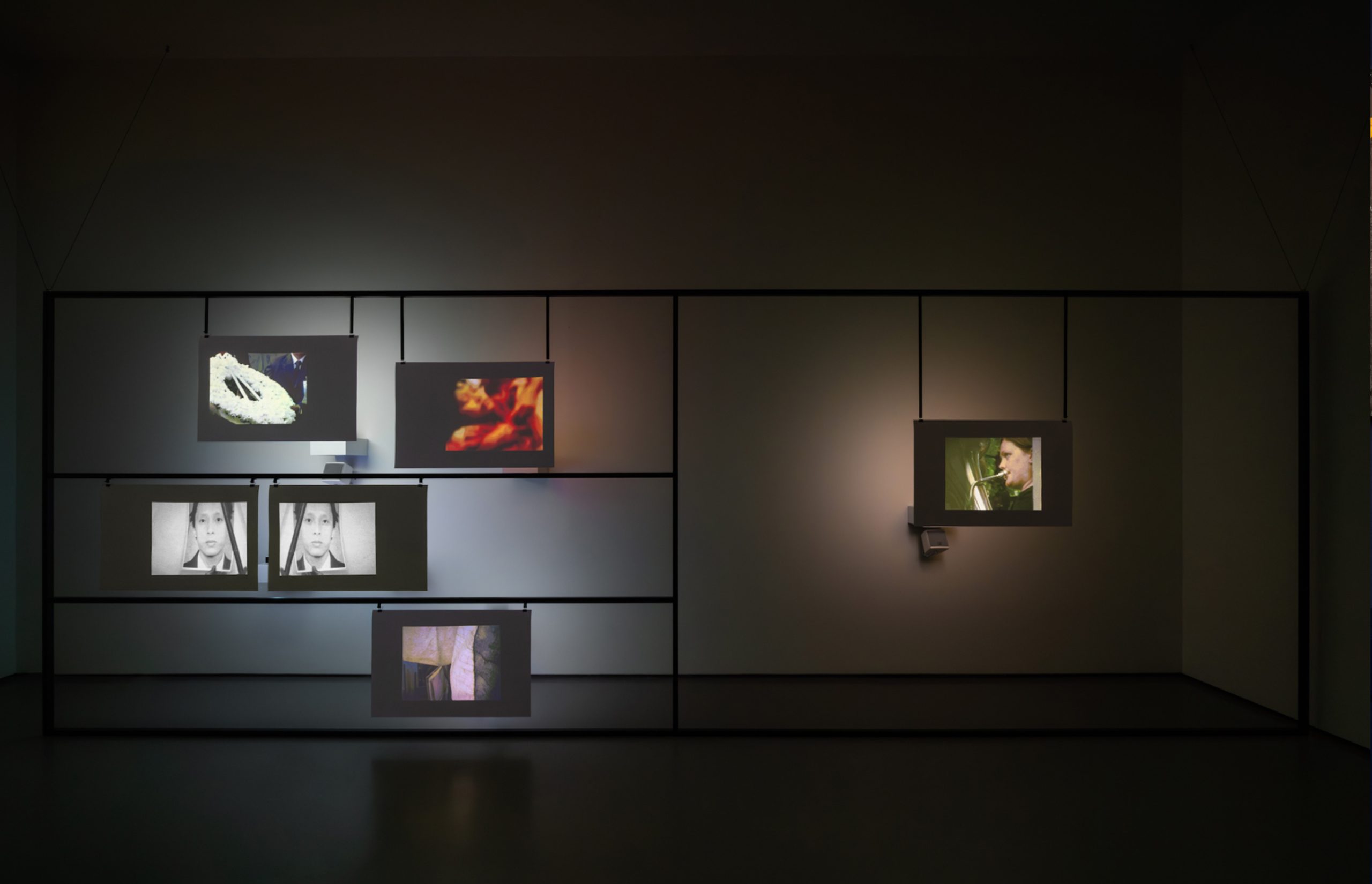
At Palazzo Grassi, Indian filmmaker and artist Amar Kanwar presents two large-scale multimedia installations curated by Jean-Marie Gallais for the Pinault Collection. Known for his poetic engagement with politics, resistance, and memory, Kanwar brings together The Torn First Pages and The Peacock’s Graveyard in a meditation on violence, justice, and fragility across South Asia. Through layered archives, projected texts, moving images, and sound, the exhibition constructs spaces where political testimony and metaphysical reflection converge.
Michael Armitage: The Promise of Change
Also at Palazzo Grassi, Kenyan-British painter Michael Armitage presents a major exhibition bringing together forty-five paintings and over one hundred preparatory studies. Curated by Jean-Marie Gallais in collaboration with Hans-Ulrich Obrist, the exhibition considers migration, political violence, social instability, and collective memory through Armitage’s lush figurative language. Painted on Ugandan bark cloth, his works merge East African visual culture, literature, mythology, and global art histories into layered dreamlike compositions where political reality and hallucination remain inseparable.
A Necessary Fiction: Maps, Art, and Models of Our World
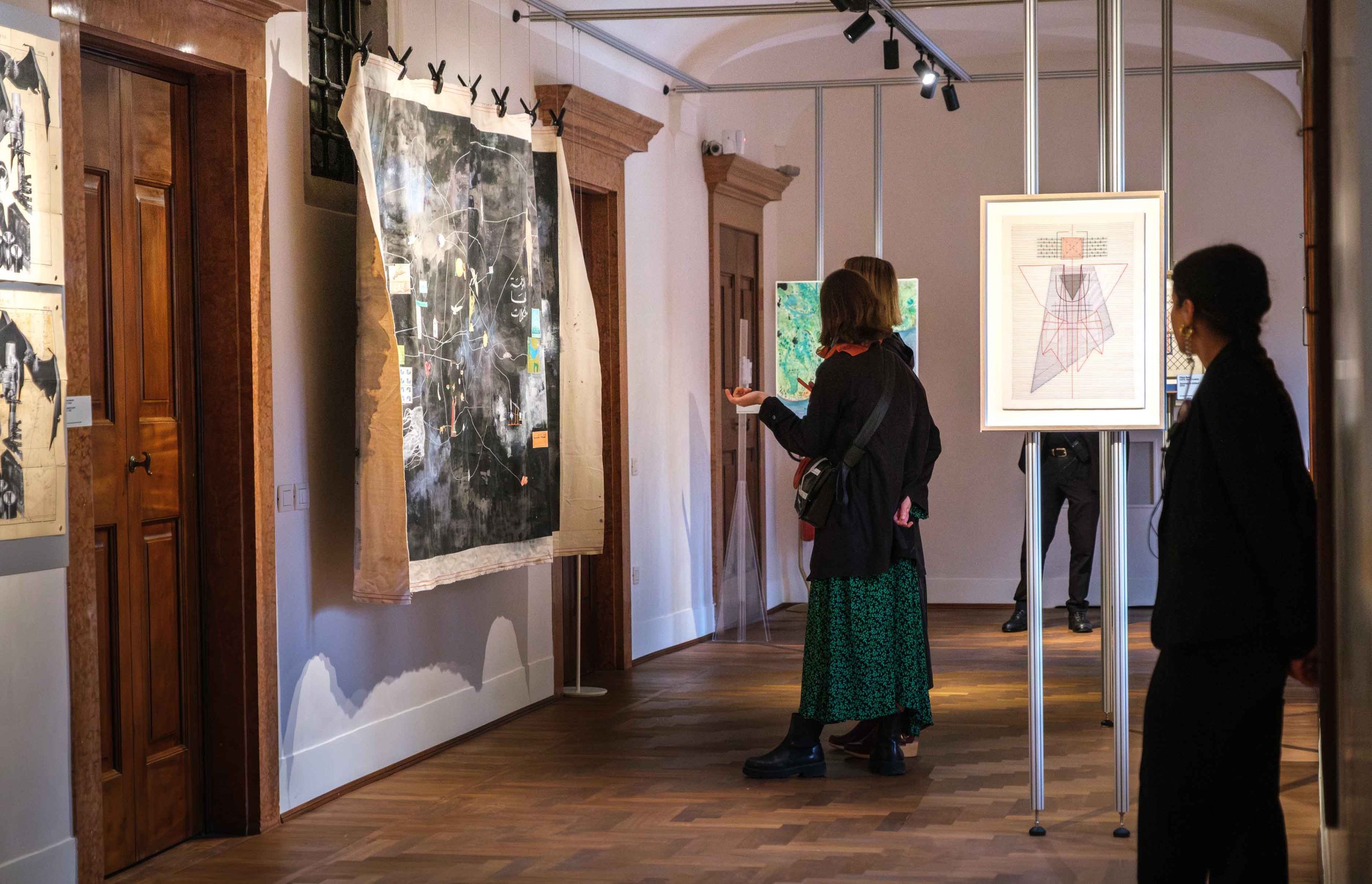
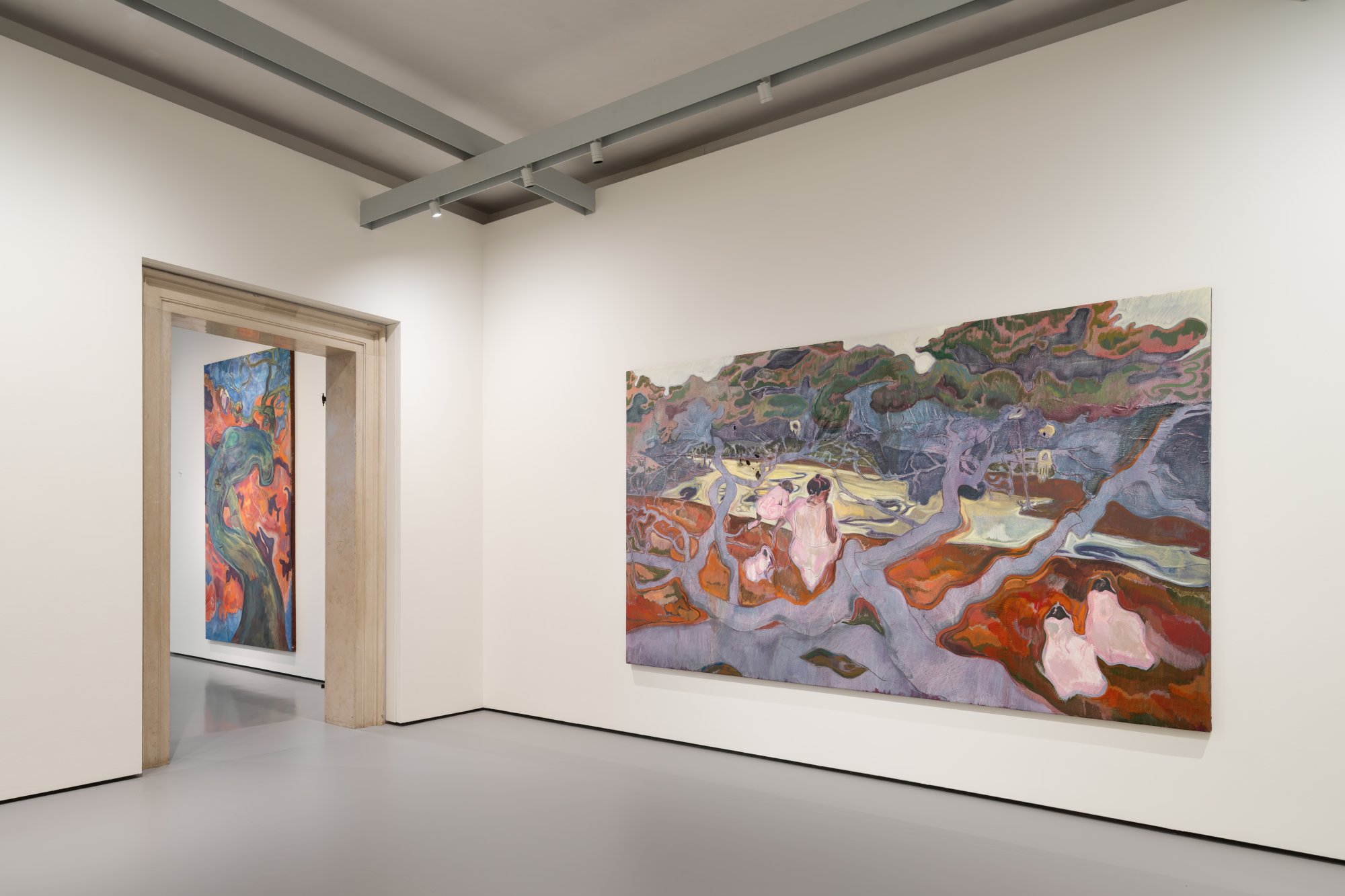
Presented by the Saudi Ministry of Culture at the Abbazia di San Gregorio, A Necessary Fiction unfolds as a coinciding exhibition rather than an official Collateral Event. Curated by Sara Almutlaq and Aurora Fonda with associate curators Zaira Carrer and Amina Diab, the exhibition brings together historical cartographic material alongside contemporary works by artists including Manal AlDowayan, Trevor Paglen, Yoko Ono, Wael Shawky, and Monira Al Qadiri. Through manuscripts, globes, speculative geographies, and installations, the exhibition examines cartography not as neutral description but as a system shaped by imagination, ideology, and belief.