Art Dubai welcomes Dunja Gottweis as its new Director. Amid regional turmoil and as the fair celebrates its 20th anniversary, this special edition rises above a multitude of challenges. In this piece, Selections asks Dunja Gottweis (D.G) about navigating these unprecedented times while honouring the fair’s legacy and vision.
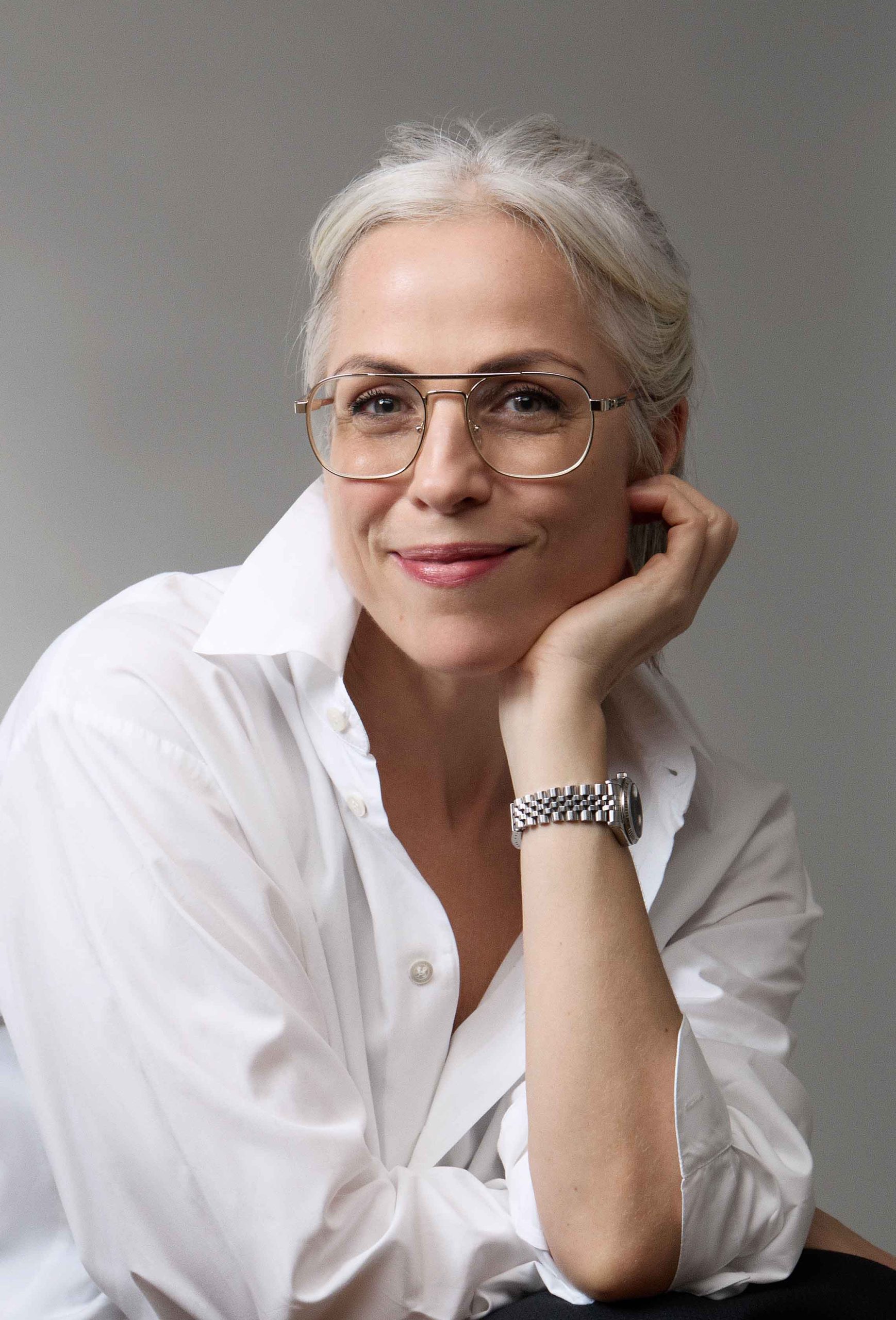
You step into leadership during the fair’s 20th anniversary, and amidst troubling times in the Arab region. This marks a significant responsibility to take on in your first year as director. How did you balance celebrating the fair’s milestone and navigating the entire team through uncertainty?
D.G: Stepping into this role at the fair’s 20th anniversary was a particular kind of responsibility. The fair I inherited has been shaped over two decades by a genuine commitment to curiosity, responsiveness and discovery. These qualities have consistently informed how Art Dubai operates, which galleries it works with, what sections it creates, how it commissions and what it chooses to challenge.
Art Dubai’s legacy was never meant to be fixed. Its most defining constant has been precisely its capacity to change, to ask, at each moment, what the fair needs to be now and where it wants to go next. That instinct allowed the fair to launch as an early platform for Global South artistic practices, to create Art Dubai Digital in 2022 as the first dedicated digital section at any international art fair, and to keep its curatorial framework aligned with how artists actually work. It has also defined this special edition. When circumstances meant our long-planned anniversary edition could not unfold as originally envisioned, we entered into extensive consultation with our community, and what came back was a clear shared conviction that coming together mattered.
With a view to the fair’s thoughtful evolution, I want to ask questions like, how do we deepen Art Dubai’s commitments, how do we maintain the kind of curatorial clarity that makes a fair genuinely useful to artists and galleries, and how do we build on what has already been established – the year-round programmes, long-term partnerships, the trust we hold with regional and international communities – while making room for the next generation of voices and ideas? Art Dubai’s third decade will, I hope, be defined by the depth of what has been built and the ambition of what comes next.
The fair took on a new format for its revised date, what guided your decision to scale back certain elements of the programme while maintaining others?
D.G: When circumstances meant our long-planned anniversary edition could not go ahead in its original form, we spoke at length with galleries, partners and the wider cultural community. What came through most clearly was a shared conviction that coming together still mattered, and that the strength of the fair lies in its core commitments to our community.
The gallery programme remains at the centre, with over 45 presentations across contemporary, modern and digital practices, drawn from nearly 20 countries, with around 60% from the region. Long-standing Dubai-based galleries such as The Third Line, Tabari Artspace, Lawrie Shabibi and Carbon 12 are participating alongside international galleries who have been committed to this region for many years and several first-time exhibitors, among them galerie frank elbaz from Paris, whose presentation is offering a distinctive perspective on the dialogue between East and West, LABOR from Mexico City and SOLO, a contemporary art project space from Romania.
While, understandably, not all galleries from the originally planned edition were able to participate in this revised format, the programme remains distinctly international, with strong global representation alongside long-standing and newly participating galleries. At the same time, the institutional programme has expanded, with collaborations across Dubai Collection, Sharjah Art Foundation, Alserkal Avenue, Art Jameel, Barjeel Art Foundation, the National Pavilion UAE and others. The 20th edition of the Global Art Forum, the fair’s flagship talks programme, will take place under the direction of Shumon Basar with the title ‘Before and After Everything’, alongside a wider programme of large-scale commissions, performances, screenings and talks across the Madinat Jumeirah campus.
While this is a more concentrated programme, bringing together around 75 presentations across four days, it remains a clear expression of Art Dubai’s long-held values of independence, strong regional roots and a global outlook. The calibre and intent of the presentations mirrors the depth of that commitment, and the strength of the ecosystem that has developed around the fair.
Having spent much of your career shaping gallery relations and fair strategy globally, what new priorities are you setting for Art Dubai’s next phase of growth?
D.G: My background has given me a particular appreciation for what art fairs mean to galleries in practice, as commercial platforms, but also as moments in which practices become visible, relationships are formed, and longer trajectories begin to take shape. That perspective is central to how I am thinking about Art Dubai’s next phase.
My priority is to ensure that the fair feels genuinely useful to the galleries and artists it works with, particularly as a platform that supports long-term engagement. The innovative risk-sharing model we are launching at this special edition, where booth costs are payable based on success, is one expression of that thinking. It directly responds to the realities galleries are currently navigating, and reflects the kind of partnership-led approach that, in the long run, defines whether a fair is genuinely useful to its participants.
Beyond that, I am focused on continuing to deepen the fair’s engagement with scenes that are increasingly central to global artistic conversations, including the African continent and Latin America, alongside our long-standing commitment to South and West Asian practices. Foundationally, we will also continue to nurture our long-term partnerships and maintain the curatorial rigour that makes Art Dubai’s presentations possible in the first place.
Anniversaries often invite reflection. Looking back at the fair’s evolution, what do you see as its most important achievements – and where do you believe there is still work to be done?
D.G: Perhaps the most meaningful development has been the year-round ecosystem that has built up around the fair over the past two decades. Art Dubai is now part of the cultural infrastructure of the city, woven into how galleries operate, how collectors develop and how artists build careers. When the fair launched in 2007, there were around 10 commercial galleries in Dubai. Today there are more than 40, with the city hosting around 90% of the UAE’s commercial galleries. That change reflects sustained investment in the conditions that allow a cultural scene to put down roots.
Much of that work has come through programmes that operate continuously, well beyond the days of the fair. The A.R.M. Holding Children’s Programme has reached over 30,000 students across the UAE, building audiences and engagement from an early age. The Global Art Forum has brought together close to 650 voices over two decades, consistently addressing themes such as AI, automation and digital futures long before they became standard art-world conversations. That forward-looking quality reflects something essential about Art Dubai’s spirit of innovation and inquisitiveness.
Through all this, we want to ensure that our institutional development keeps pace with commercial growth. The infrastructure that supports artists over the long term, from scholarship to critical writing, residencies and engagement beyond the market, needs to align with an expanding scene. Making sure that institutional and commercial growth move together is, I think, one of the central questions for the next phase of Art Dubai and the wider ecosystem it is part of.