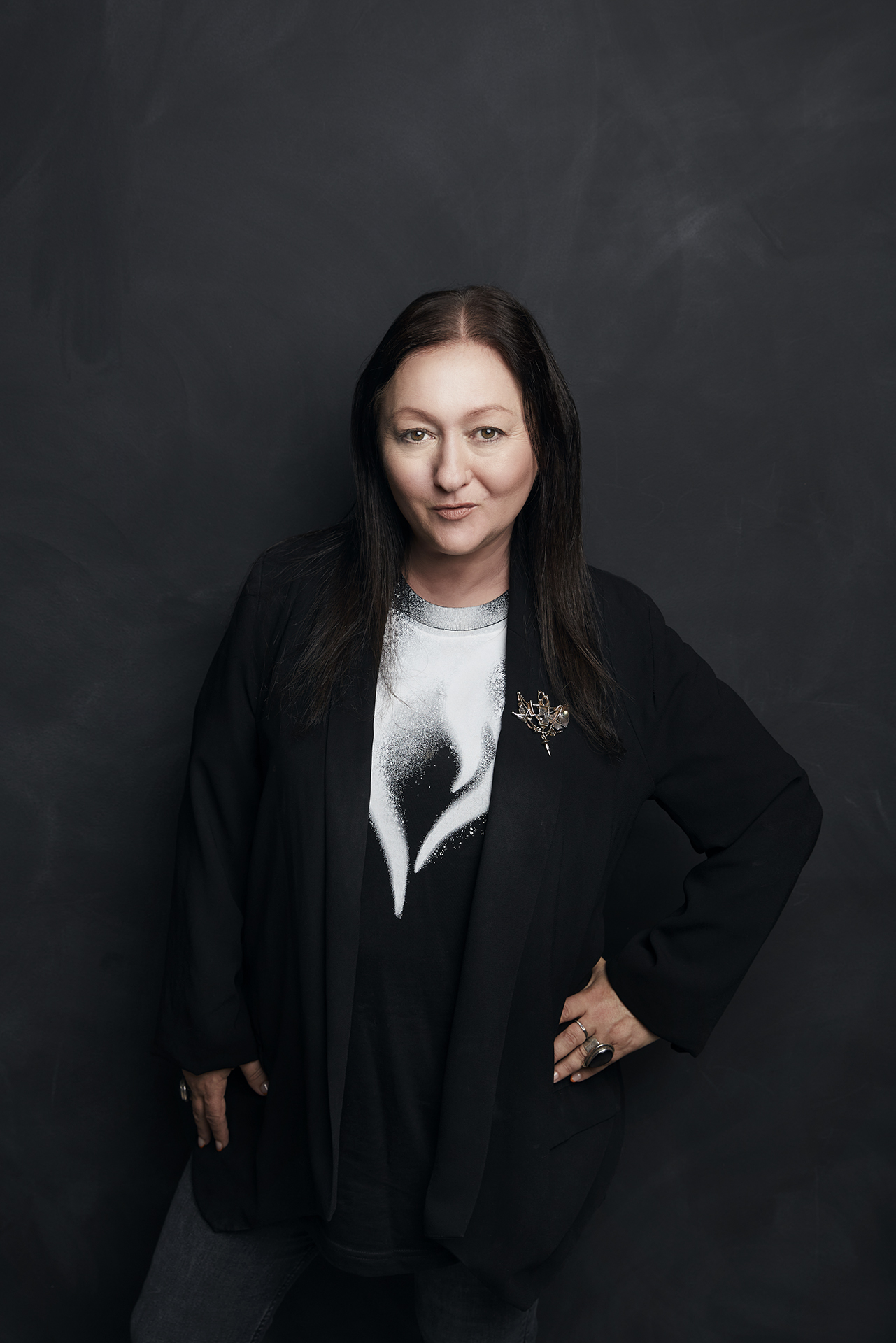
Alexie Glass-Kantor (A.G.K), Executive Director Curatorial, speaks with Selections about curating the 20th edition of Art Dubai.
The fair has adopted a revised format, scaling back significantly from its previously announced structure. Could you walk us through this new approach? Did it open up new ways of thinking about exhibition-making within the context of an art fair?
A.G.K: The revised format is less about scaling back and more about reconfiguring the fair in response to the moment. Once we made the decision to reschedule, it required us to reimagine the edition quite quickly, but we were not starting from zero. Many of the ideas we had been developing around year-round programming, institutional collaboration and work beyond the booth were already in motion.
From the outset, we were guided by the idea of “things we do together” not as a theme, but as a way of working. It became a framework for thinking about how galleries, artists and institutions could come into closer relationship, and how the fair could operate as a cultural gathering as much as a commercial platform.
The gallery presentation is more focused this year, but the programme has expanded in ambition within the fair itself. Across the site, large-scale installations, exhibitions, moving image, performance and architectural interventions are integrated into the experience rather than sitting alongside it. Projects such as Ahmed and Rashid bin Shabib’s Manameh Pavilion create spaces for gathering and exchange, while works like Hashel Al Lamki’s Maat and Neda Razavipour’s Silk Road extend the fair into material, spatial and sensory encounters.
What this has opened up is a different way of thinking about exhibition-making within an art fair. It is less about a series of discrete sections and more about a connected environment, where visitors move through different forms of practice and spend time within the work. That shift has been one of the most valuable outcomes of this process.
As you guide the artistic vision of the fair, how did you balance the distinct perspectives of multiple curators into a coherent framework under these conditions? What curatorial principles informed decisions around what to retain, adapt, or let go within the programme?
A.G.K: Under normal conditions, the fair operates through a number of distinct curatorial perspectives. Working closely with the Art Dubai team, this year the conditions required a different approach, one that was more collective, responsive, and open-minded.
Rather than maintaining separate curatorial structures, we worked through a shared framework grounded in collaboration. “Things we do together” became a practical methodology, listening, staying adaptable, and allowing different curatorial voices to align without flattening them into a single position.
The guiding principle was clarity. We retained what felt essential: strong gallery presentations, ambitious works, and meaningful institutional collaborations, and let go of elements that required a scale or infrastructure that was not appropriate for this moment.
This also meant rethinking how the programme operates within the fair. Projects such as the moving image programme developed with Alserkal and the performance programme with Sharjah Art Foundation introduce different temporal and spatial dimensions, while institutional exhibitions and commissions were expanded or newly conceived. These are not add-ons, but integral to how the fair unfolds. What has emerged is not a reduced version of the fair, but a more precise and ambitious one, reflecting the strength of relationships that already exist across the region.
How has the revised format reshaped the relationship between the fair’s commercial and non-commercial sections?
A.G.K: The distinction between commercial and non-commercial has become much more fluid in this edition. The galleries remain at the heart of Art Dubai. The fair is still fundamentally a platform for artists and for the market. But the programme surrounding them has been designed to support and extend that, rather than operate as a separate layer.
Institutional exhibitions such as the Dubai Collection presentation Made Forward and Barjeel Art Foundation’s Pulse sit alongside gallery presentations, creating a broader context for how works are understood. Large-scale installations by artists such as Khalid Al Banna and Kevork Mourad introduce a sense of scale and presence that shapes how visitors move through the fair.
At the same time, performance, moving image and gathering spaces, including the Cultural Commons, shift the rhythm of the experience. They encourage visitors to pause, to return, and to engage more deeply with the art. Alongside this are spaces for makers and creatives, hospitality, music and gathering. So it is less about two parallel strands and more about an interconnected system, where commercial and non-commercial elements operate in dialogue. That relationship strengthens both.
Looking ahead, do you see elements of this adapted format informing future editions of the fair?
A.G.K: I think some of the most important lessons from this edition relate to integration, flexibility and the value of working across boundaries. What we have seen is that an art fair can operate as a more fluid and responsive environment, one where galleries, the programme, institutions and public engagement are brought into closer alignment. That creates a stronger sense of coherence and allows for different forms of artistic production to sit alongside one another more naturally.
There are also practical learnings. The ability to adapt quickly, to work collaboratively across a wide network of partners, and to build a programme that holds together under pressure has reinforced the importance of agility as a core value.
At the same time, this is a very specific moment, and we are careful not to generalise too quickly. But it has expanded how we think about what the fair can hold, and how it can evolve. More than anything, it has reinforced that the strength of Art Dubai lies in its relationships, with galleries, artists, institutions and the wider cultural community.
That is what will continue to shape its future.