UNITED ARAB EMIRATES
In the UAE this week, exhibitions gather around a shared preoccupation of giving form to memory and spirit, as though art were less an object than a conduit.
At Leila Heller Gallery, three concurrent exhibitions are unfolding as variations on how experience becomes a very human reflection. Iranian-born, multidisciplinary artist Darvish presents Enrapture (from 27 Jan – 1 Mar 2026), a practice that merges painting and performance into contemplative visual fields structured by spiritual inquiry; the works stage states of suspension where gesture, colour, and symbolic form evoke transcendence and the dissolution of imposed identities.
Iraqi-American painter Ayad Alkadhi, long concerned with the psychic residues of conflict, exhibits Sunken Republic (from 26 Jan – 1 Mar 2026), a series of densely layered canvases in which human figures, organic matter, and atmospheric pigment collapse into unstable compositions that articulate survival of displacement, and the material pressure of history on the body.
Iranian artist Bahar Sabzevari’s Ancestral Algorithms (from 27 Jan – 1 Mar 2026) situates communication itself as medium, assembling organic motifs and machinic structures to examine how mythic knowledge and technological systems function as parallel architectures of belief and continuity.

Beyond the gallery space, the Sharjah Light Festival (from 29 Jan – 22 Feb 2026) converts architecture into surface, projecting narrative light compositions across public landmarks while extending its programme through Light Village installations that frame illumination as both spectacle and spatial experience.
At NYU Abu Dhabi Art Gallery, All Manner of Experiments: Legacies of the Baghdad Modern Art Group (from 12 Feb – 7 Jun 2026), curated by Nada Shabout, historicises artistic transmission itself, presenting painting, sculpture, and archival material that trace how the Baghdad Modern Art Group – founded by Jewad Selim (1919–1961) and Shakir Hassan Al Said (1925–2004) – synthesised local visual traditions with global modernism from the 1950s onward.
QATAR
In Qatar this week, exhibitions revolve less around revelation than around structure; how meaning is built, layered, and held in tension between material and system.
At Liwan Design Studios and Labs, Ade’nnsãda!, Where Night Never Falls… Initiating Contemporary Pan-African Dialogues Around Tapestry and the Masterpiece (until 28 Feb 2026) positions textile as an organising principle rather than ornament. Curated by the Foundation for Contemporary Art–Ghana (FCA-Ghana) and TM Projects in collaboration with Liwan Design Studios, ARAK Collection and VCUArts Qatar, the exhibition convenes thirteen contemporary artists from five African countries whose practices engage fibre, cloth, and weaving methodologies across installation and performance. Their works employ collage, appliqué, batik-derived processes, and material assemblage to examine how indigenous techniques function as frameworks for transmitting knowledge and negotiating identity across regions. Textile emerges here as a conceptual architecture through which histories are bound, contested, and reconfigured.
At Fire Station Garage Gallery, South Korean artist Chung Seoyoung presents Endless Facts (from 5 Feb – 20 Apr 2026), her first solo exhibition in the Middle East. Born in 1964, Chung is known for an interdisciplinary practice spanning sculpture, installation, drawing, sound, and performance, developed in response to the social transformations of South Korea in the 1990s. The exhibition assembles works from across her career, including Untitled (1993), There is Nothing Left to Add nor Take Away (2008), and a new site-specific installation produced for the Fire Station. Through carefully staged spatial relationships, commonplace materials and industrial objects enter temporary constellations that foreground process over resolution. Chung’s sculptural environments propose that meaning does not reside in the object itself but in the system of relations that surrounds it, an order continuously assembled, observed, and revised.

LEBANON
In Lebanon this week, exhibitions turn toward persistence, not as declaration but as condition, something enacted quietly through attention to process.
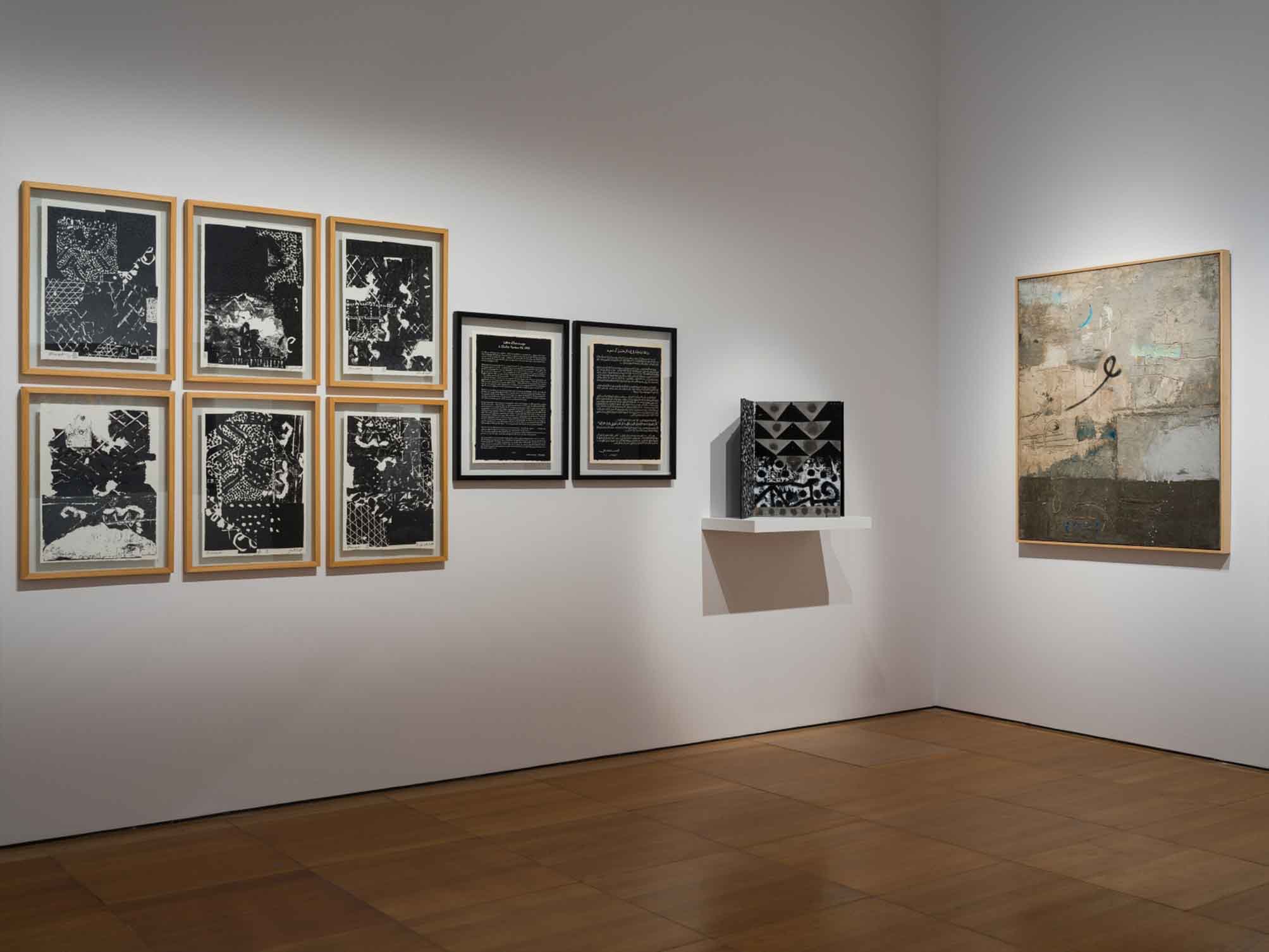
In Beirut, Saleh Barakat Gallery presents Envol (from 12 Feb – 14 Mar 2026), a body of large-scale paintings shaped through the fusion of abstraction and mineral matter by Lebanese artist Youssef Aoun. Aoun, known for integrating acrylic with sand and marble powder, constructs surfaces in which contrast operates structurally rather than symbolically; dense blacks and expansive whites form fields of tension where texture carries emotional weight. His practice, informed by an inward, migratory sensibility, approaches painting as a space in which the body dissolves into elemental form, producing compositions that oscillate between solidity and atmospheric dispersion.
In South Lebanon, Zefta Arthouse inaugurates its programme with Shared Presence (from 31 Jan – 28 Feb 2026), a collective exhibition bringing together twenty-four artists from the region across approximately eighty works. Conceived as a platform for decentralising cultural production, the Arthouse positions artistic practice as spatial and social participation. The exhibition resists thematic cohesion, instead allowing multiple generations and mediums to coexist through proximity, where meaning emerges relationally through craft, contrast, and duration. The project establishes the institution’s broader framework of residencies, community programmes, and public engagement oriented toward sustaining artistic visibility beyond metropolitan centres.

Process itself becomes exhibitionary form in Slow Burn: Encounters (until 28 Feb 2026) at Beirut Art Center, where participating artists occupy the gallery as a working environment, presenting research, experimentation, and conversation as integral components of display. Here, the artwork is encountered not as a resolved object but as evolving conditions shaped through time and interaction.
Memory assumes documentary precision in Remaining (until 3 Mar 2026) at Union Marks, a project of the Lokman Slim Foundation featuring photography by Edouard Elias and curated by Katia Jarjoura. Developed through sustained engagement with families of victims of political assassination since 2005, the exhibition assembles portraits, personal objects, and images of sites of violence, articulating remembrance as an active resistance to erasure.
Elsewhere, in no/mad utopia, Imagined Terrains (until 28 Mar 2026) by artist Carel Marso constructs contemplative environments through pastel drawing and painting. Using restrained chromatic fields and organic forms to examine perception as a fluctuating psychological state. Her compositions unfold across three spatial sequences that move between intimacy and distance, proposing stillness as a deliberate mode of attention.

KINGDOM OF SAUDI ARABIA
This week in Jeddah, attention finds its shape in two distinct but quietly resonant exhibitions. At Hafez Gallery, Saudi artist Donia Alshetairy presents Suspended Presence (from 24 Feb – 1 Apr 2026), a solo exhibition that traces the thresholds of perception and memory. Alshetairy, born in Yafaa, Yemen (1983) and based in Saudi Arabia, works across media. Her practice is characterised by works that deploy light as material, manipulating shadow and reflection to render abstract concepts like consciousness and parallel perceptual worlds. In earlier works, she has created installations in which light, suspended objects, and kinetic shadows interact to evoke states of adaptation, gesturing toward ungraspable places. In Suspended Presence, these concerns manifest in compositions that slow the act of looking itself, inviting prolonged attention that resists compression into easy explanation.
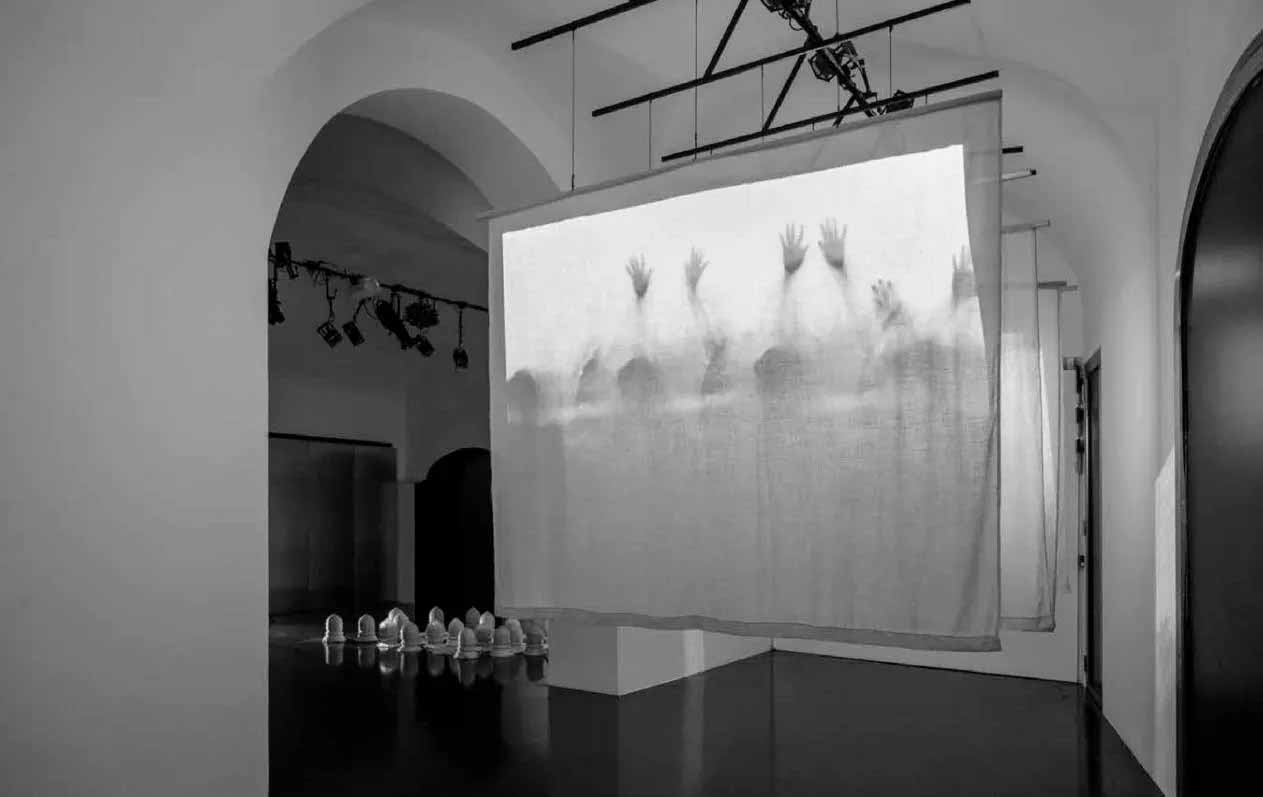
At Athr Gallery this week, Saudi artist Sultan Bin Fahad offers Thresholds (from 7 Jan – 30 Apr 2026), a solo exhibition that moves between sculpture, projection, and graphic form. Central to the show is If Stone Could Speak 1 (2020), an ensemble of 16 marble domes, 3 marble stars, and 6 square stone groves enlivened with video projection, not monumental, but resonant, as if the stone itself holds a slow archive of ritualistic gesture. Two time‑based works, The Verse of the Throne and Possession (both 2020), extend his sculptural language into temporal form, presenting moving imagery and structured visual patterns across projection surfaces. Alongside these, graphic pieces like Frequency Hand 1 and its diptych translate form into mark‑making, while Confessional (2020), a refined metal installation with binoculars, implicates the viewer’s own body in the act of perception. Bin Fahad’s practice consistently foregrounds material and form as repositories of meaning rather than signposts, and in Thresholds, the works do not so much explain as invite sustained attention, creating encounters that unfold slowly through presence, repetition, and the gentle activation of memory.
THE WORLD
This week on the wider art world stage, two exhibitions open international conversations about the idea of belonging. Dubai-based RARARES Art Gallery opens its debut exhibition of Arab contemporary artists in Moscow, at 3L Gallery, from 13 Feb – 4 Apr 2026. Habitat. Hortus Conclusus assembles a constellation of voices: Elnaz Javani from Iran, Zeina Abdullah from Egypt, Asma Yousef Al Ahmed from the UAE, and Alymamah Rashed from Kuwait, among others. Al Ahmed transforms landscapes, both natural and culturally marked, into sculptural compositions using folded and stitched fabrics, creating terrains that reflect human intervention and environmental change. Rashed situates the body within layered canvases that blend folklore and personal experience, crafting a “third space” where tradition and contemporary life intersect. The exhibition, a curatorial project by Marina Baisel and Elena Belolipetskaia, explores identity through the metaphor of the garden as both a personal and cultural landscape, emphasising the inner habitat where socio-cultural selfhood and heritage are carried within.
