UNITED ARAB EMIRATES
Presented at Tashkeel’s Nad Al Sheba 1 Gallery, Unfolding (15 May – 26 June 2026) marks Emirati artist Moza Al Falasi’s first solo exhibition and the culmination of her participation in Tashkeel’s Critical Practice Programme. Developed through a year of mentorship and research, the exhibition considers grief, memory, and the instability of domestic space through photography, sound, painting, plaster, and fabric. Rather than reconstructing a lost home, Al Falasi traces what remains through textures, impressions, and fleeting sounds. Paintings depicting women alongside olive trees suggest endurance amid absence, while sculptural elements dissolve between abstraction and figuration. “My art has become a means to navigate both the emotions of loss and the complexities of life,” the artist notes.
Presented at Abu Dhabi’s Cultural Foundation, Skin of Dreams (9 April – 20 September 2026) is the first mid-career retrospective dedicated to British-Pakistani artist Shezad Dawood. Curated by Jessica Cerasi, the exhibition spans more than fifteen years of interdisciplinary work across painting, film, sculpture, textiles, sound, and virtual reality. The project examines architecture, ecology, migration, and speculative futures through references drawn from science, literature, and South Asian craft traditions. Highlights include the final chapters of Dawood’s Leviathan Cycle, a long-running film series imagining climate-altered futures, alongside installations such as Encroachments and Night in the Garden of Love. Many paintings incorporate Pakistani ralli textiles, carrying traces of domestic histories and collective memory into contemporary visual languages.
At Maraya Art Centre, curator Cima Azzam brings together concurrent exhibitions by Emirati artists Noor Al Suwaidi and Salmah Al Mansoori, each exploring memory and material transformation through distinct visual approaches.
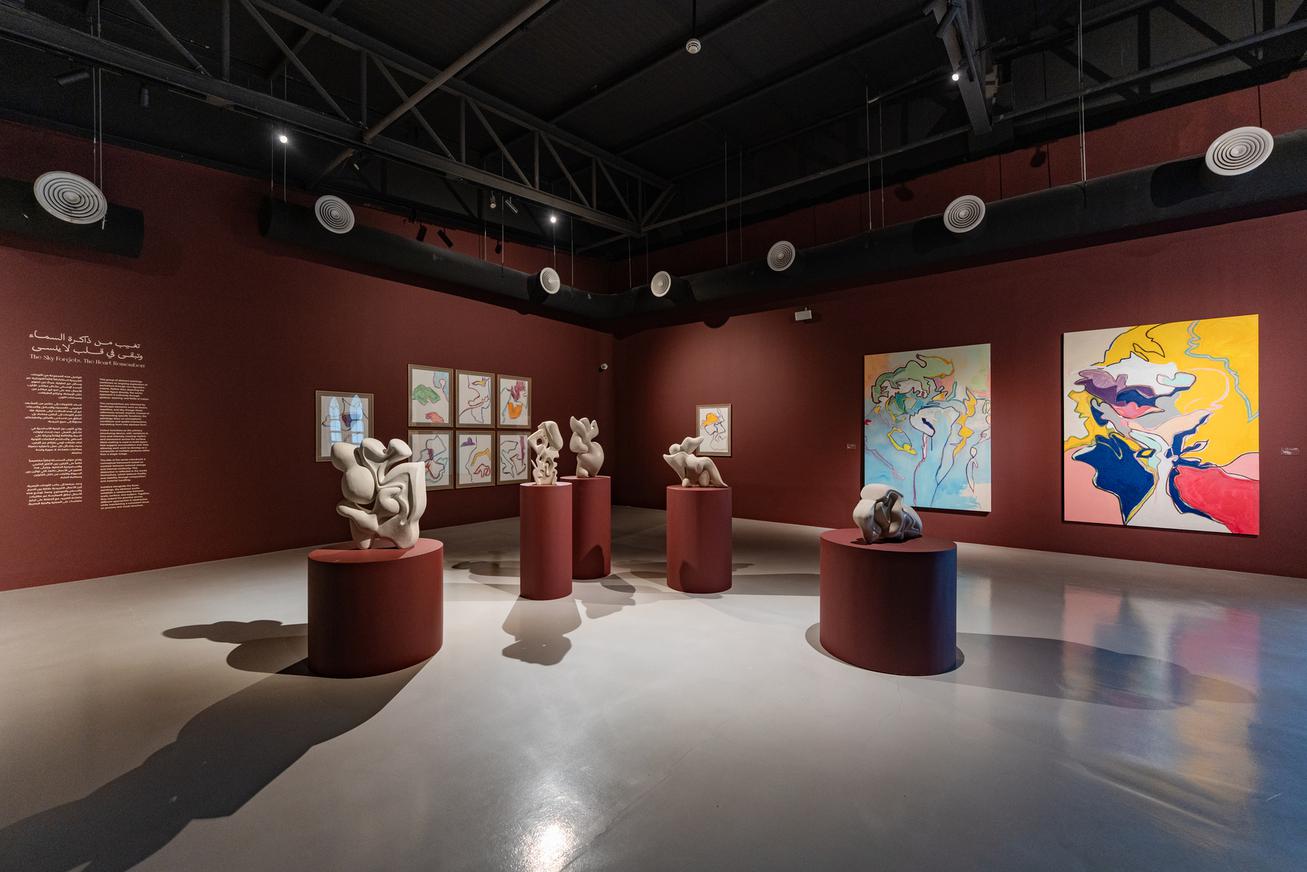
In The Sky Forgets, And the Heart Remembers (26 April – 30 July 2026), Noor Al Suwaidi presents paintings and sculptural works that move between abstraction and figuration. Through shifting colour fields, softened architectural interventions, and marble-like sculptures draped in flowing folds, the exhibition examines perception, intimacy, and emotional residue. Forms emerge gradually before dissolving again, resisting fixed narratives and inviting viewers into an atmosphere shaped by gesture, absence, and recollection.
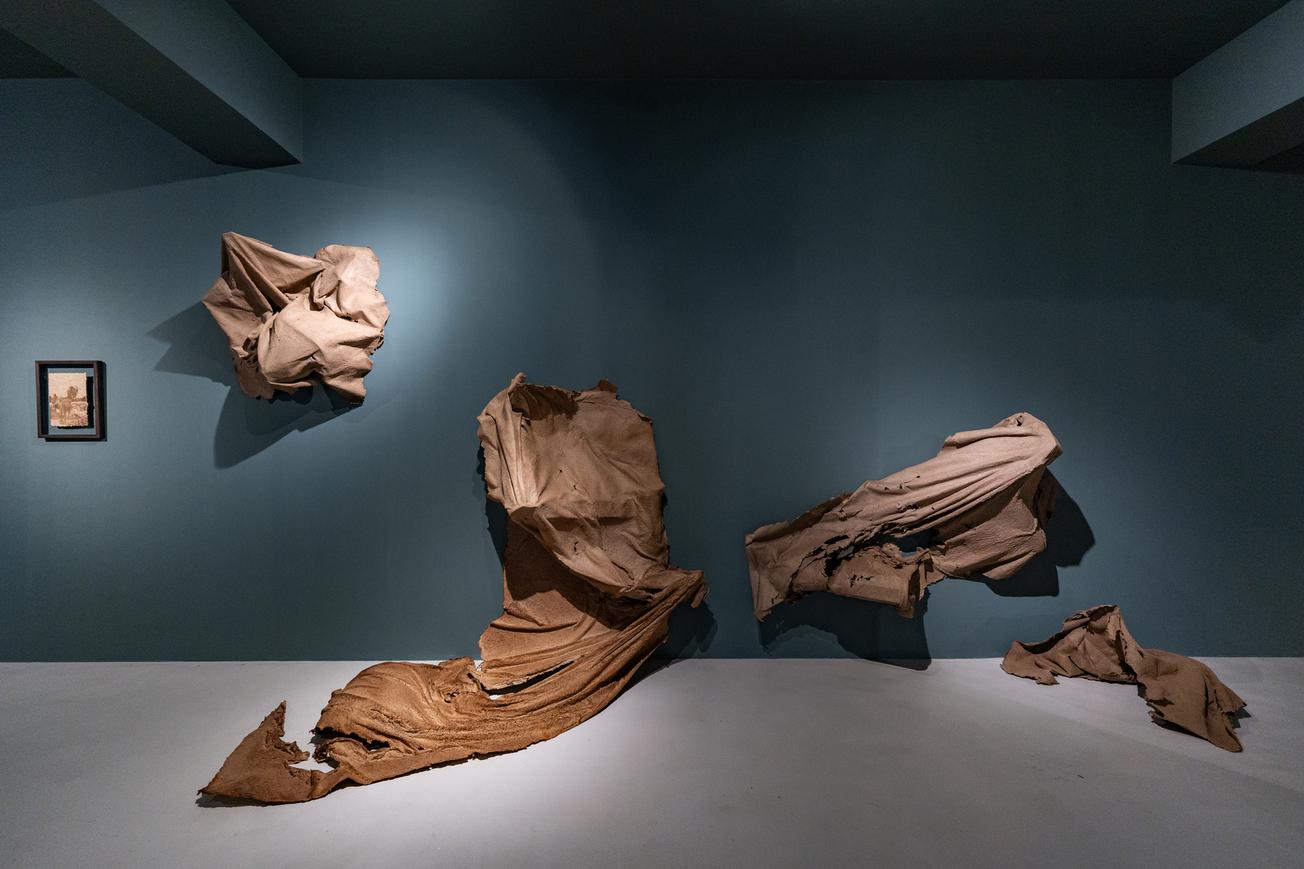
In Who I Become (26 April – 30 July 2026), Salmah Al Mansoori works with handmade paper, fibres, desert grasses, pigments, and found materials to reflect on memory, labour, and inherited landscapes. Sculptural installations and material-based works trace processes of gathering and transformation rather than preservation. Drawing from environments in Al Dhafra, the artist reconfigures overlooked fragments into tactile forms that carry both personal and collective histories, allowing memory to remain fluid and continually reshaped.
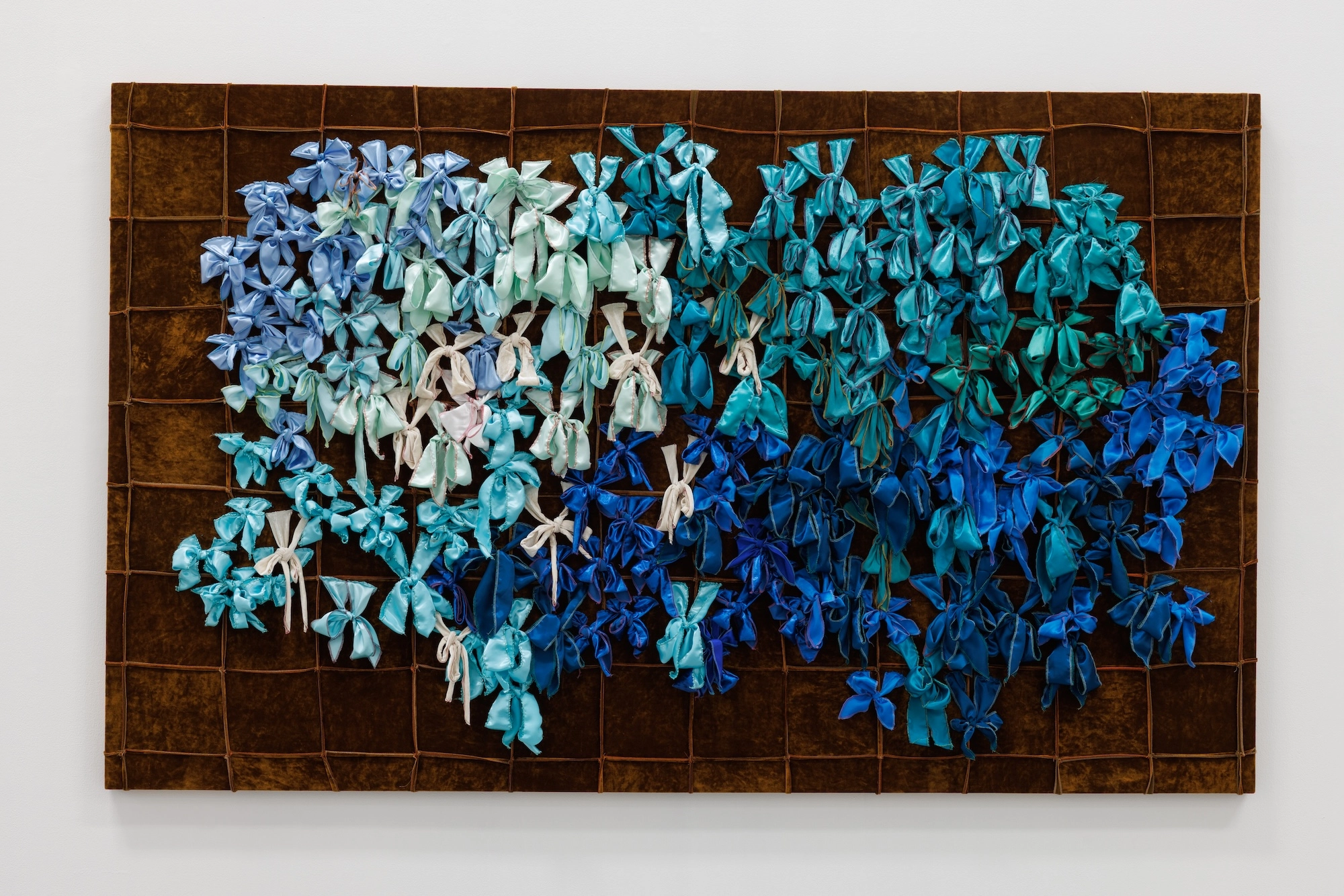
In its final week on display at Carbon 12, Get Well Soon (14 April – 25 May 2026) by Nigerian-American artist Anthony Olubunmi Akinbola revisits the traditions of floral still life through the material language of durags. Using stitched and layered fabric rather than paint, Akinbola constructs flower arrangements that move between abstraction, sculpture, and cultural symbolism. Alongside these compositions, recurring brick motifs evoke permanence, inheritance, and the idea of home. The exhibition also incorporates scent installations and slowly descending helium balloons, introducing time and disappearance into the space. Across the works, fragile materials and enduring structures coexist, reflecting on memory, grief, celebration, and what remains after moments pass.
At Tabari Artspace, Fellow Travellers (13 April – 5 June 2026), conceived by curator and cultural historian Dr Omar Kholeif, brings together works by Irene Scheinmann, Sonia Balassanian, Simone Fattal, Lalitha Lajmi, and Luísa Correia Pereira. Developed through Kholeif’s ongoing research into overlooked histories of modernism, the exhibition considers movement not as displacement but as a space of continuity and reimagination. Painting, ceramics, etching, and mixed media works trace trajectories across Baghdad, Beirut, Tehran, Paris, Kolkata, and New York, revealing how migration, political upheaval, and memory shaped distinct artistic languages. Many of the exhibited works have rarely been shown publicly, foregrounding diasporic experiences and reconnecting marginalised artistic histories across generations and geographies.
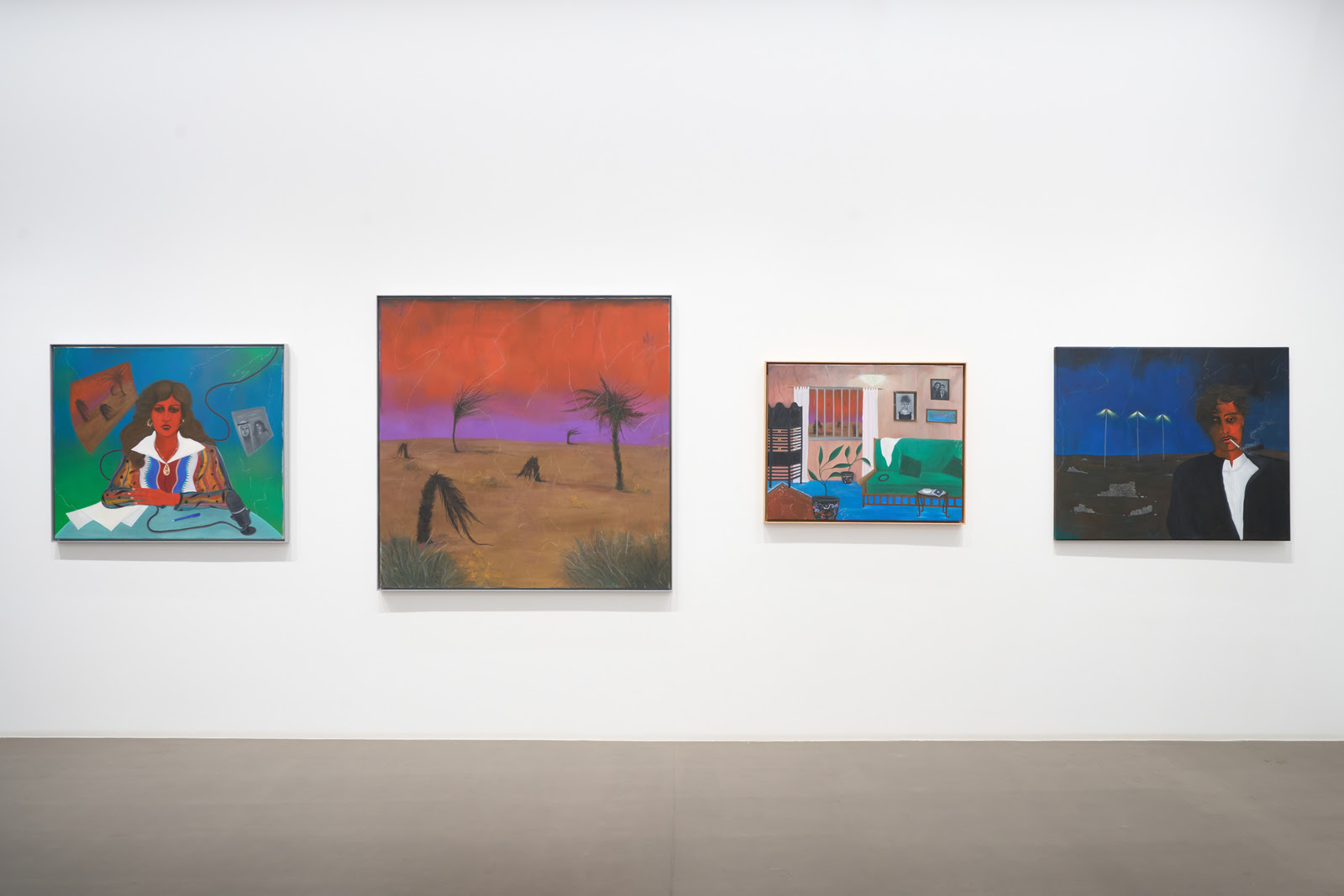
At Taymour Grahne Projects, Five Painters (opening May 2026) brings together Dalal Al-Obaidi, Hawazin Alotaibi, Hayfa Algwaiz, Latifa Alajlan, and Roudhah Al Mazrouei in a group exhibition examining contemporary painting practices across the Gulf. Spanning figuration, abstraction, landscape, and material experimentation, the exhibition reflects on memory, perception, and social transformation within rapidly shifting environments. Al Mazrouei incorporates charcoal, saffron mixtures, and gathered materials linked to land and inheritance, while Algwaiz explores interior space and psychological thresholds through architecturally informed compositions. Al-Obaidi revisits domestic scenes and collective memory through uncanny figurative paintings, and Alotaibi questions representations of masculinity through softened floral imagery. Alajlan engages abstraction and Islamic geometry to create immersive compositions that resist fixed interpretation.
LEBANON
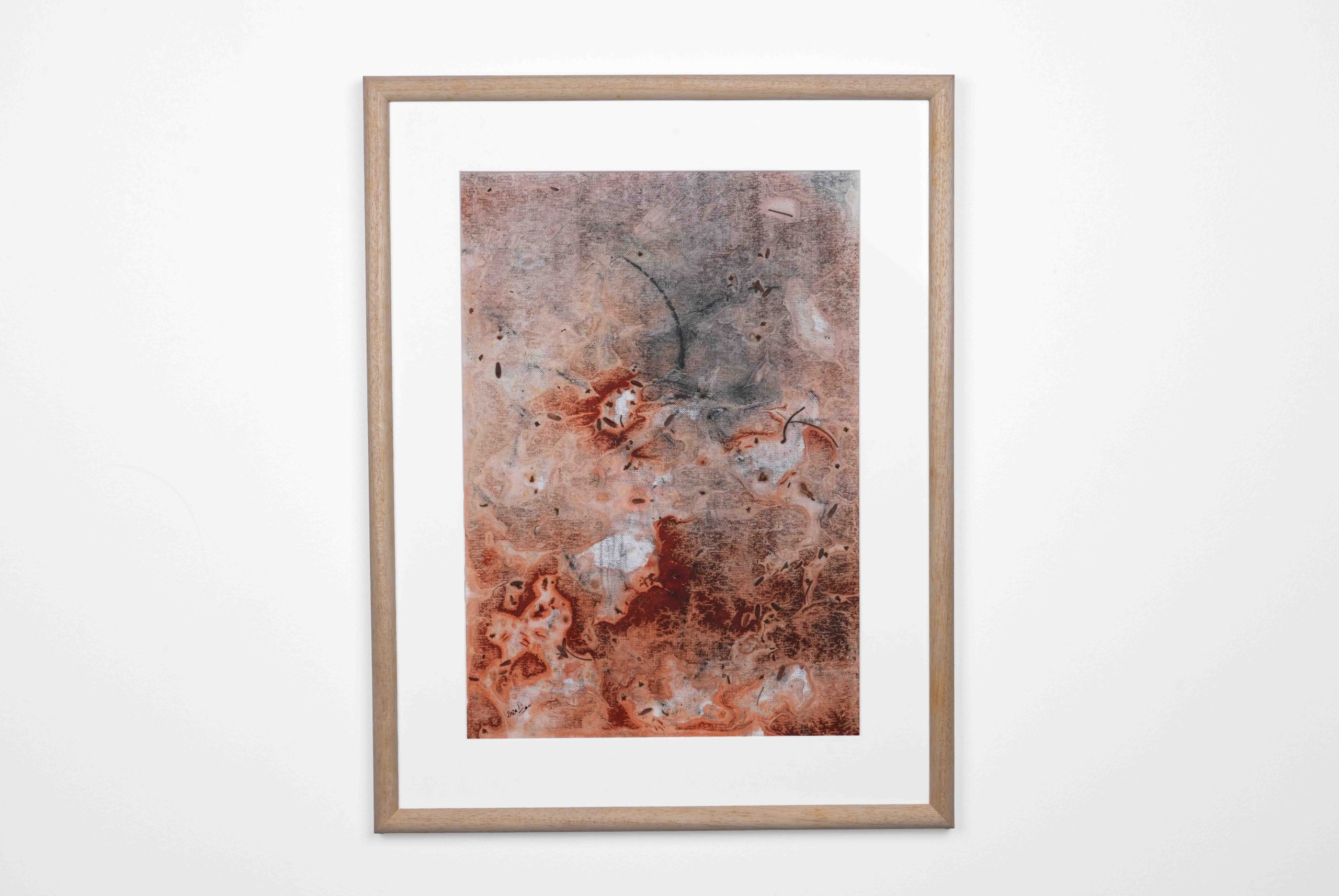
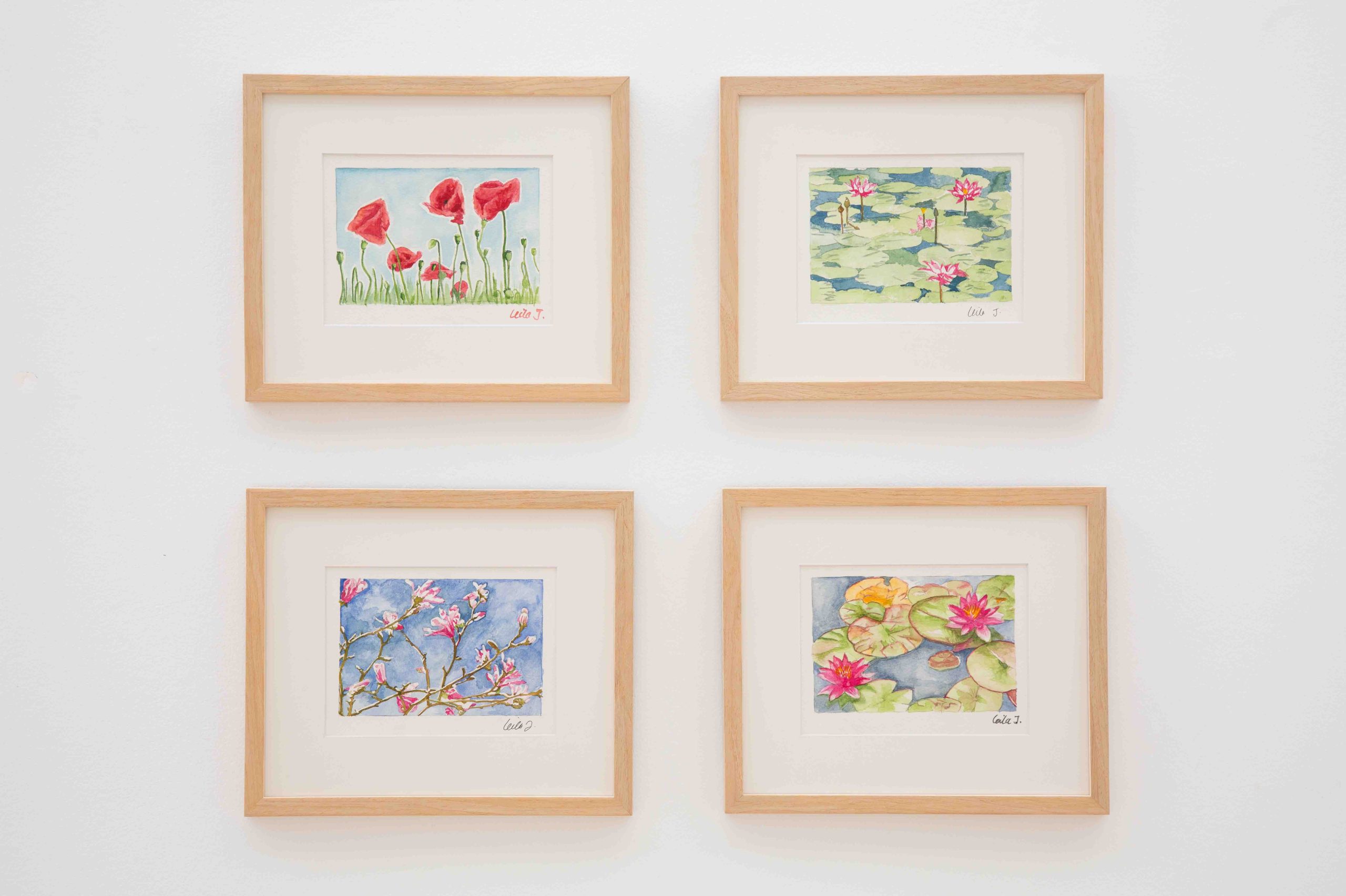
Extended until 23 May 2026, the collective exhibition Témoignages: Works on Paper at Galerie Janine Rubeiz brings together fourteen artists from the gallery’s roster – including Manar Ali Hassan, Hanibal Srouji, Jamil Molaeb, Leila Jabre Jureidini, and Zeina Kamareddine Badran – through works centred on paper as both medium and material. The minimalist presentation highlights the fragility, texture, and expressive potential of paper across varied artistic approaches, ranging from abstraction and drawing to layered mixed-media compositions. Each artist engages the surface differently, revealing how a seemingly delicate material can carry memory, gesture, and experimentation while allowing distinct visual languages to coexist within a restrained spatial setting.
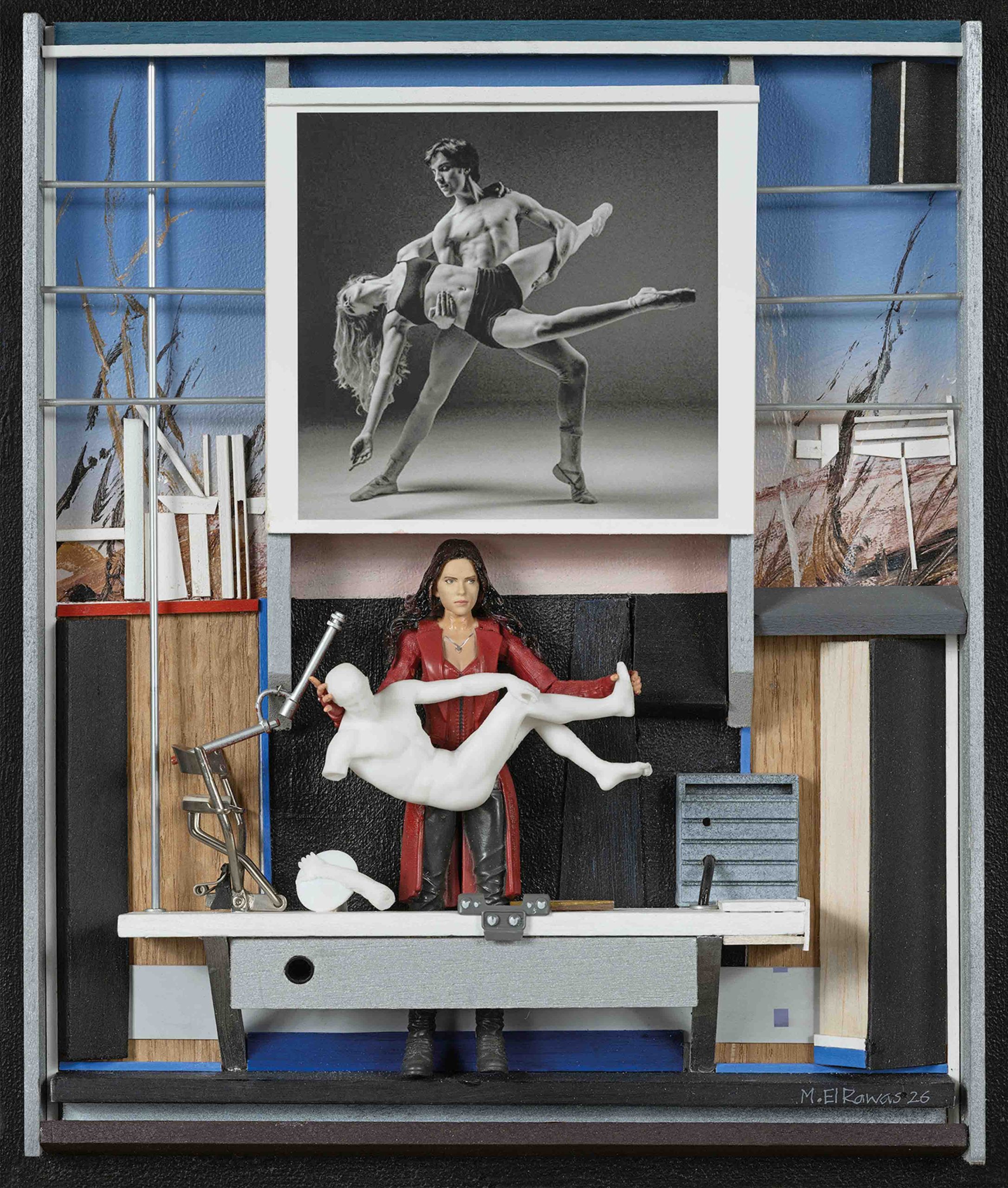
At Saleh Barakat Gallery, Mohammad El Rawas presents Stop Making Sense (21 May – 26 June 2026), an exhibition of assemblages that moves between memory, history and imagined futures. Drawing on painting, photography, objects and geometric structures, El Rawas layers personal fragments with wider cultural references, allowing past and present to coexist within the same visual field. The exhibition reflects his resistance to artistic stagnation and narratives, proposing instead a circulation of images and ideas. Rooted in Beirut yet shaped by years between Lebanon, Morocco and London, his mixed-media works invite viewers into an archaeology where time folds upon itself and certainty loosens.
QATAR
Presented at Bayt Al Wakrah, Be With Us (14 May – 16 June 2026) brings together works produced through Tasweer Photo Festival Qatar’s recent photography workshops and community programmes. Featuring artists including Abdulaziz Almisnad, Maryam Al Kuwari, Olga Khlostkina, Hani Nakib, and Sami Olaimat, the exhibition reflects the collaborative and participatory nature of Tasweer’s educational initiatives. Through photography, participants share personal observations, everyday encounters, and individual visual narratives shaped during the festival’s spring activities. The exhibition highlights photography as a collective platform for exchange and experimentation, while emphasising the role of community engagement in expanding local participation in image-making practices across Qatar.
KINGDOM OF SAUDI ARABIA
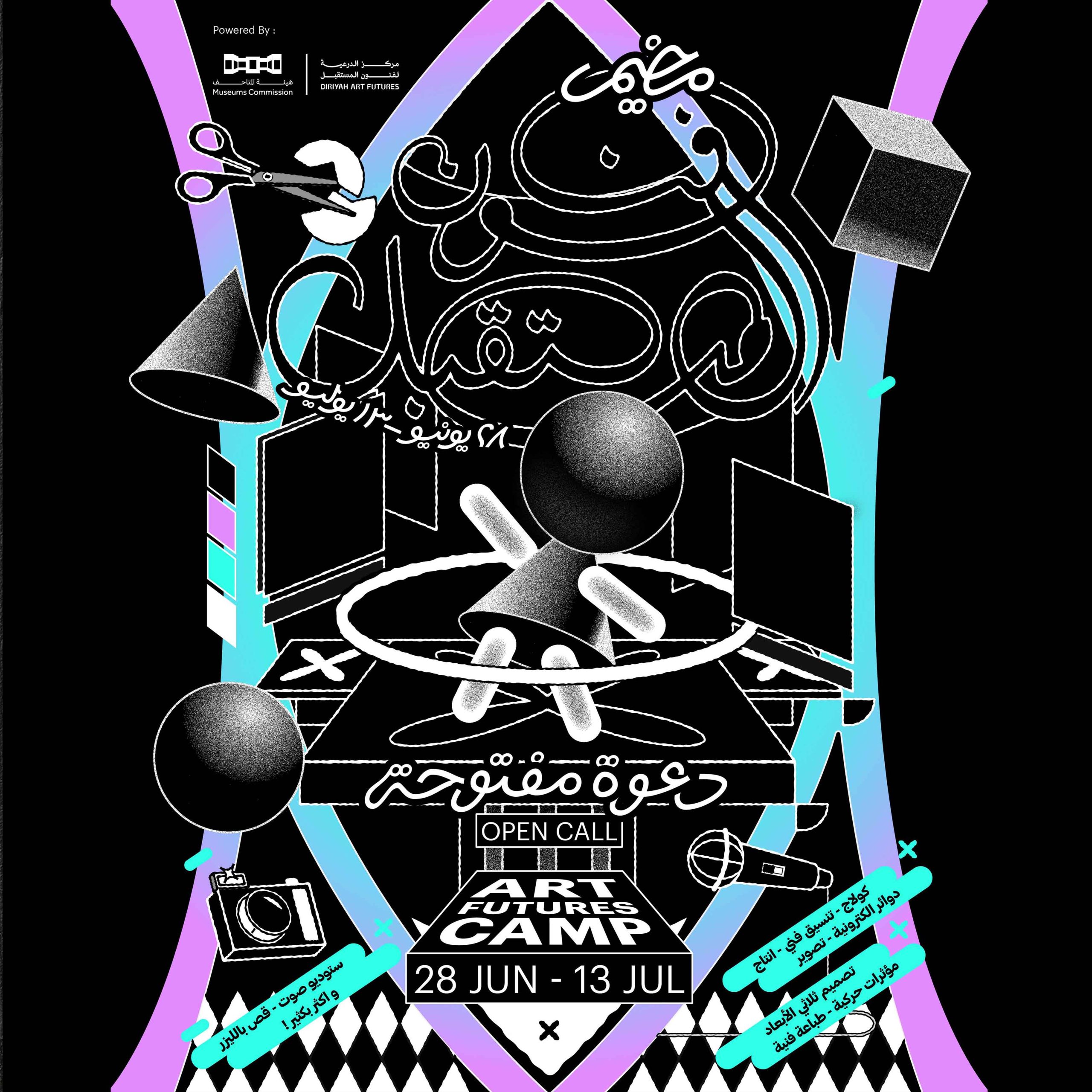
Diriyah Art Futures announces the inaugural edition of its Art Futures Camp 2026, a new three-week programme designed to introduce younger participants to emerging practices in digital and new media art. Developed by Diriyah Art Futures, the initiative extends its broader mandate to support artistic learning across different stages of practice, moving beyond residencies and professional tracks to engage with early creative development. Running from 28 June to 16 July 2026 in Riyadh, the camp is open to Arabic-speaking teenagers aged 14 to 18 with an interest in art and technology. Over the course of the programme, participants will take part in workshops spanning fabrication, digital imaging, 3D techniques, motion and sound, before collaborating to produce and present a collective exhibition of their work at the end of the camp.
THE WORLD
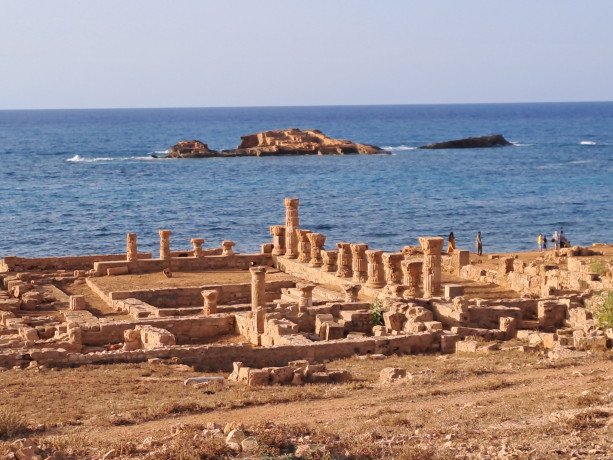
At the Institut du Monde Arabe, Libya, Heritage Revealed (13 May – 20 October 2026) traces nearly five decades of archaeological research conducted by the French archaeological mission in Libya in collaboration with Libyan authorities. Through photographs and video documentation, the exhibition examines excavation sites spanning prehistory to the medieval period, including Leptis Magna, Apollonia, Bu Njem, Surt, and the Sahara region of Măsak. Particular attention is given to underwater excavations, preservation efforts, and the growing threat of illicit trafficking following 2011. By documenting architecture, settlements, and archaeological remains across Libya, the exhibition reflects on cultural heritage as both a historical record and a fragile site of ongoing conservation.
At Comptoir des Mines Galerie in Marrakech, Regards Croisés: Latifa Toujani & Khadija Jayi (9 May – 15 June 2026) brings together two generations of Moroccan photographers through an intergenerational dialogue shaped by memory, identity, and social experience. Through intimate photographic narratives, both artists explore how personal histories intersect with wider social realities in Morocco. While their visual approaches differ, the exhibition connects their practices through shared attention to transmission, inherited experience, and women’s perspectives. Photography becomes a space where individual stories move into collective memory, revealing overlooked emotional and social dimensions across generations.
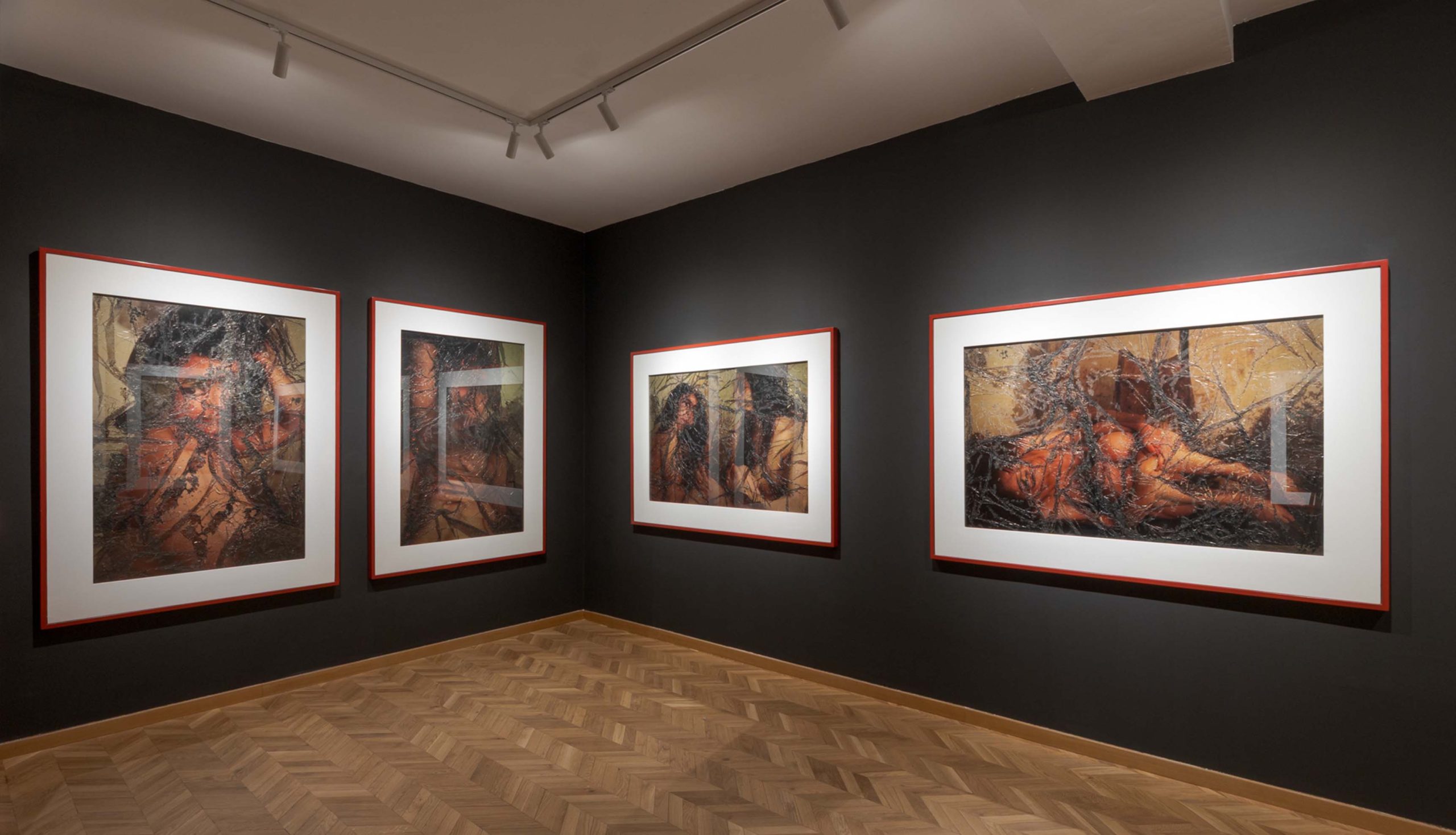
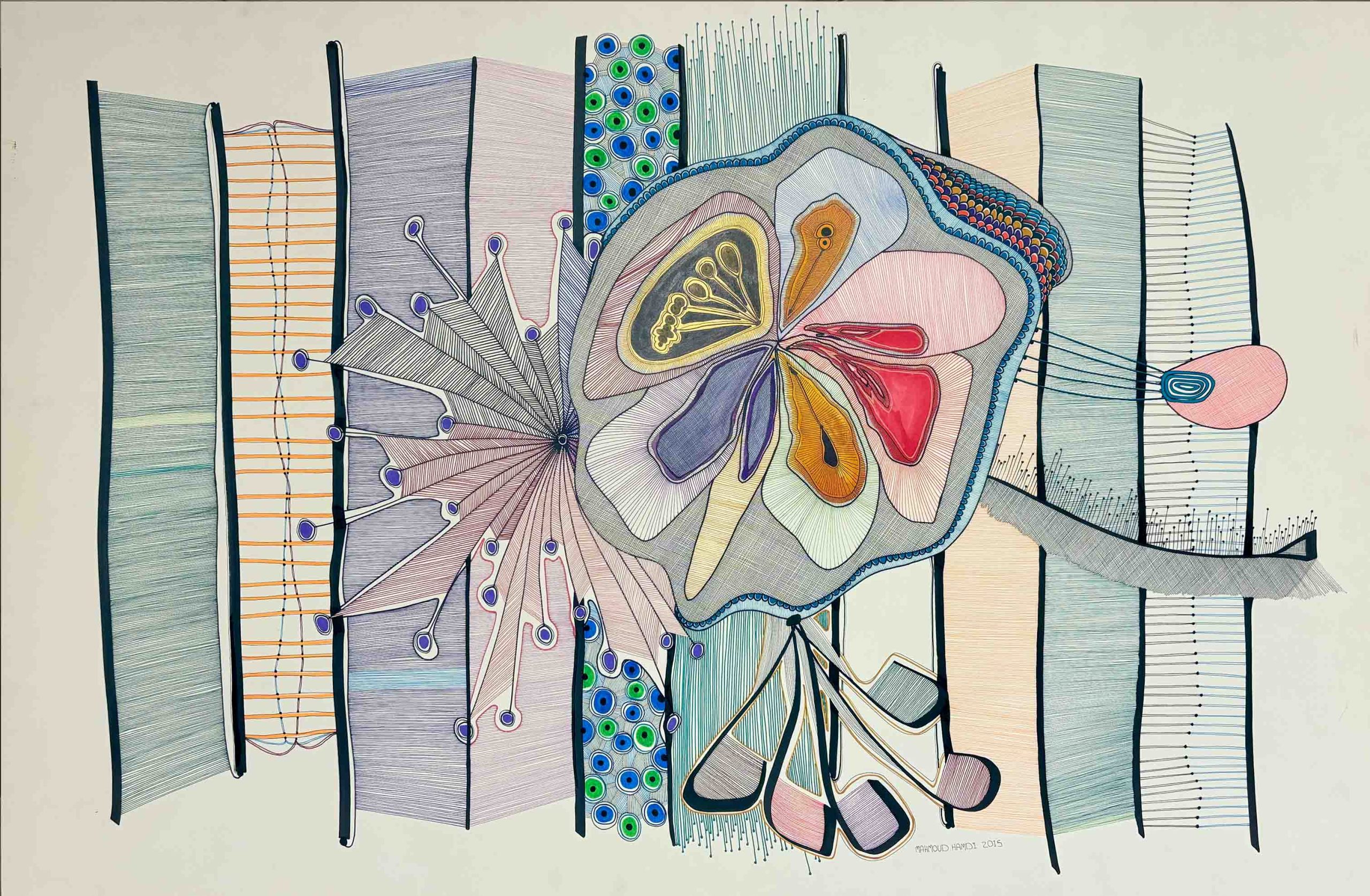
At Difaf Cairo, Mahmoud Hamdi’s Journey to the Core (5 – 25 May 2026) reflects the artist’s long-standing interest in microscopic worlds, perception, and abstraction. Drawing from childhood memories of observing slides through his father’s microscope, Hamdi creates works where lines, colours, and fragmented forms suggest hidden organisms, imagined landscapes, and evolving visual systems. Working primarily on paper, the Cairo-based artist approaches the medium as both material and narrative space, questioning whether paper functions simply as support or as part of the story itself. The exhibition unfolds through intricate compositions that move between observation and imagination, revealing connections between intimate details and larger unseen worlds.