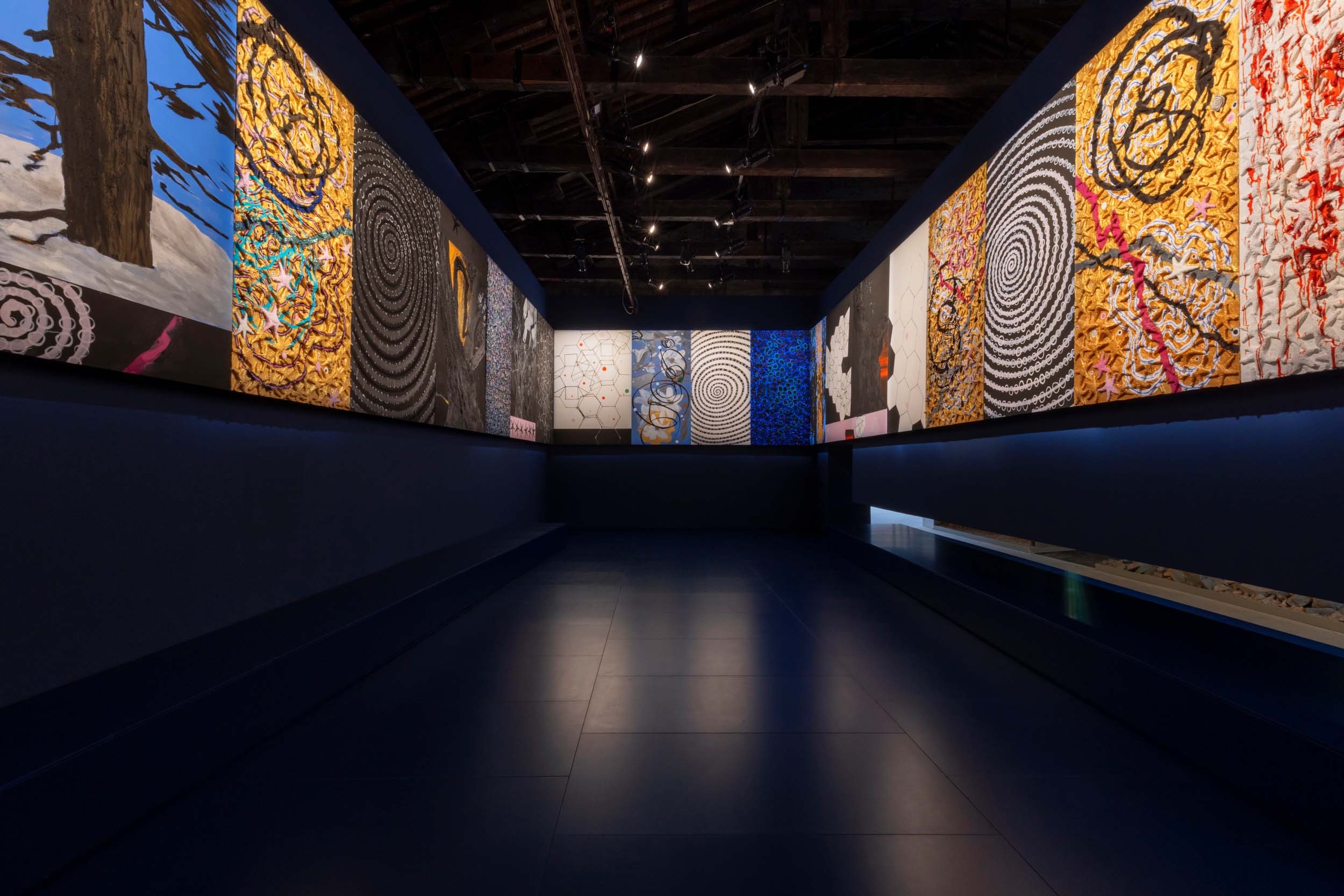
At the Arsenale, the Pavilion of Lebanon has emerged as one of the most mesmerising, critically acclaimed encounters of this year’s Venice Biennale. Entitled Don’t Get Me Wrong, the solo exhibition by renowned Lebanese artist Nabil Nahas is a monumental, 45-meter-long sensory ecosystem that envelops the spectator in a dazzling dialogue between nature, geometry, and time.
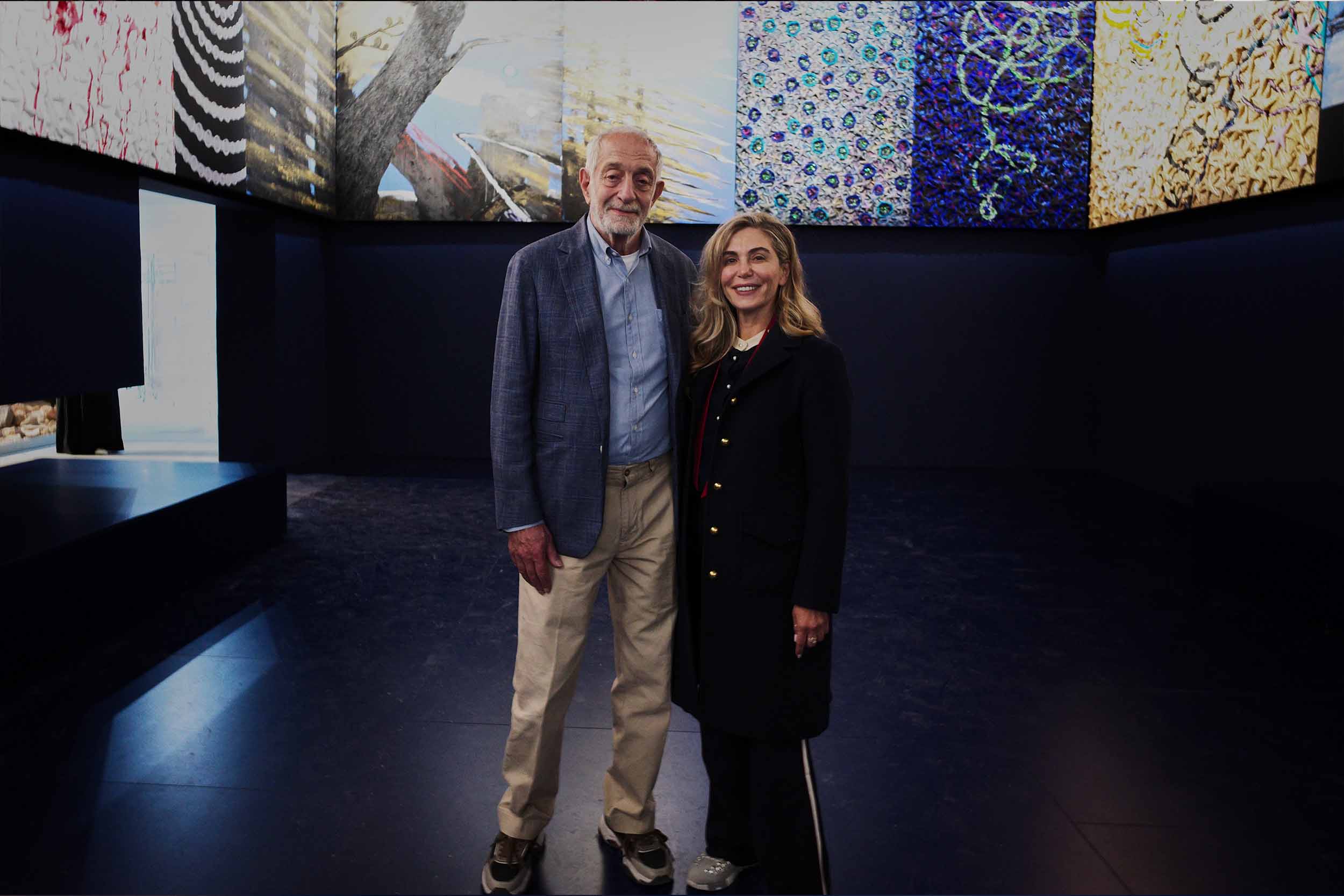
Organised by the Lebanese Visual Art Association under the auspices of the Ministry of Culture, and curated by Dr. Nada Ghandour, the pavilion’s inauguration drew an esteemed international crowd of cultural figures and diplomats. Once inside the space, the socio-political noise of the world falls away, replaced by the profound, quiet hum of an artistic masterclass.
A Monumental Horizon of Meaning Spanning twenty-six monumental acrylic-on-canvas panels, the installation functions as a continuous, undulating frieze that snakes through the rustic brickwork of the Arsenale. By scaling the work to this magnitude, Nahas successfully transforms the traditional medium of painting into a spatial, architectural experience.
Instead of reading the exhibition linearly from left to right, visitors step directly into the landscape. The work offers a fluid terrain where Islamic patterning, Western abstraction, Mediterranean visual histories, and Persian miniature traditions seamlessly coexist.
“My artistic practice is deeply rooted in the country’s rich and layered heritage,” Nahas remarked during the opening.
It is precisely this “layered heritage” that gives the exhibition its breathtaking depth.
2026. Courtesy of the Artist & LVAA – Photo by Celestia Studio ©️ LVAA
Critical Acclaim: Selected Insights from the Global Art World
As a centrepiece of the Biennale, Don’t Get Me Wrong has generated significant international dialogue. Below, Selections highlights a curated breakdown of the defining critical opinions surrounding the pavilion’s triumph:
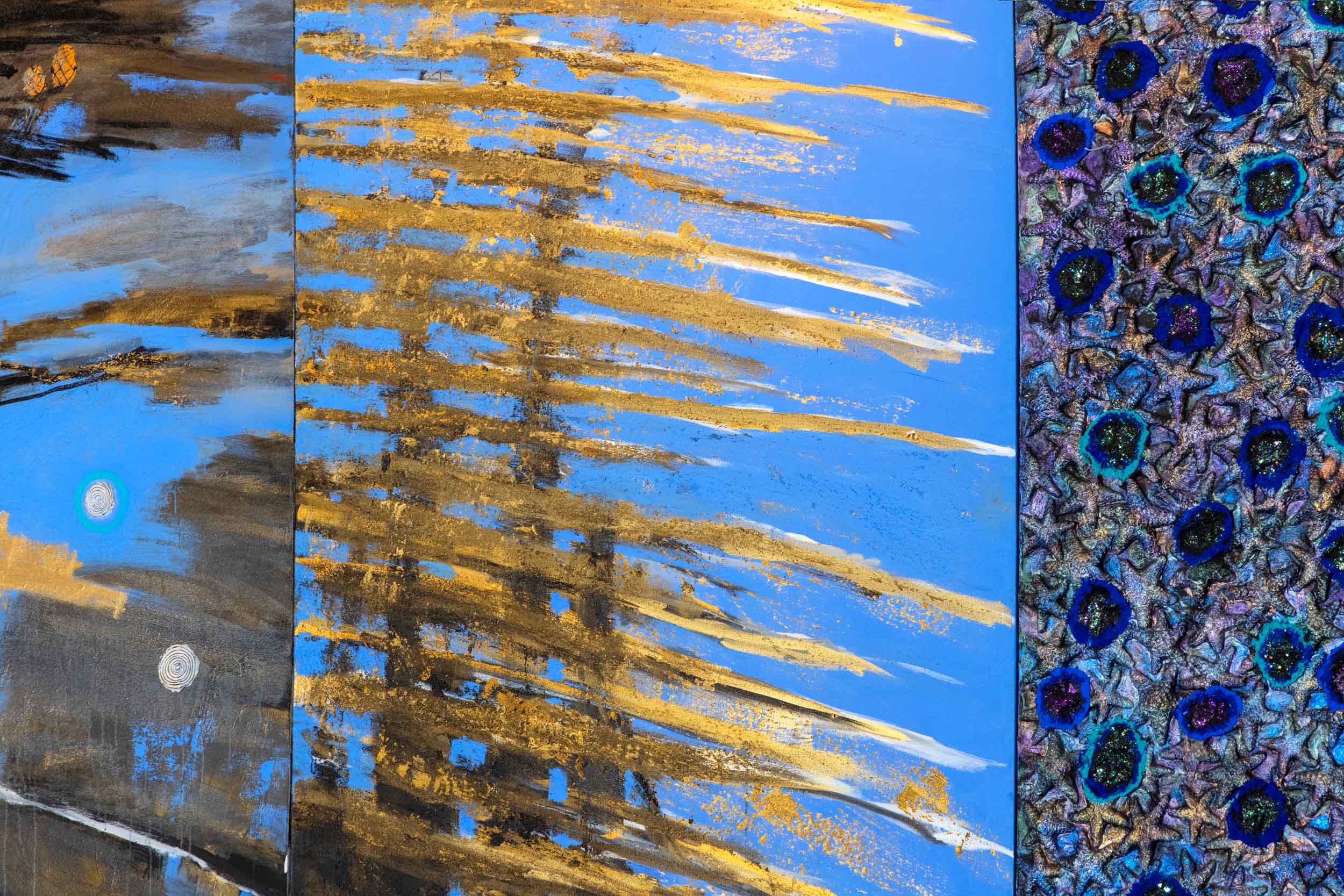
- On its “Cosmology of Form”: Reviewers have expressed deep fascination with the recurring motifs of trees, spirals, polygons, and fractal systems. In the opinion of several prominent art writers, these elements evoke a profound sense of natural order and metaphysical wonder, brilliantly suggesting a universe where the human experience and the cosmos intersect.
- On its “Sensory Masterpiece” Quality: Commentators have widely praised the rich, tactile quality of Nahas’s signature heavy impasto. The overarching consensus among art critics is that the shifting visual field creates an optical rhythm that makes the canvases feel genuinely alive as if the painted forests and geometric webs are actively expanding in real-time.
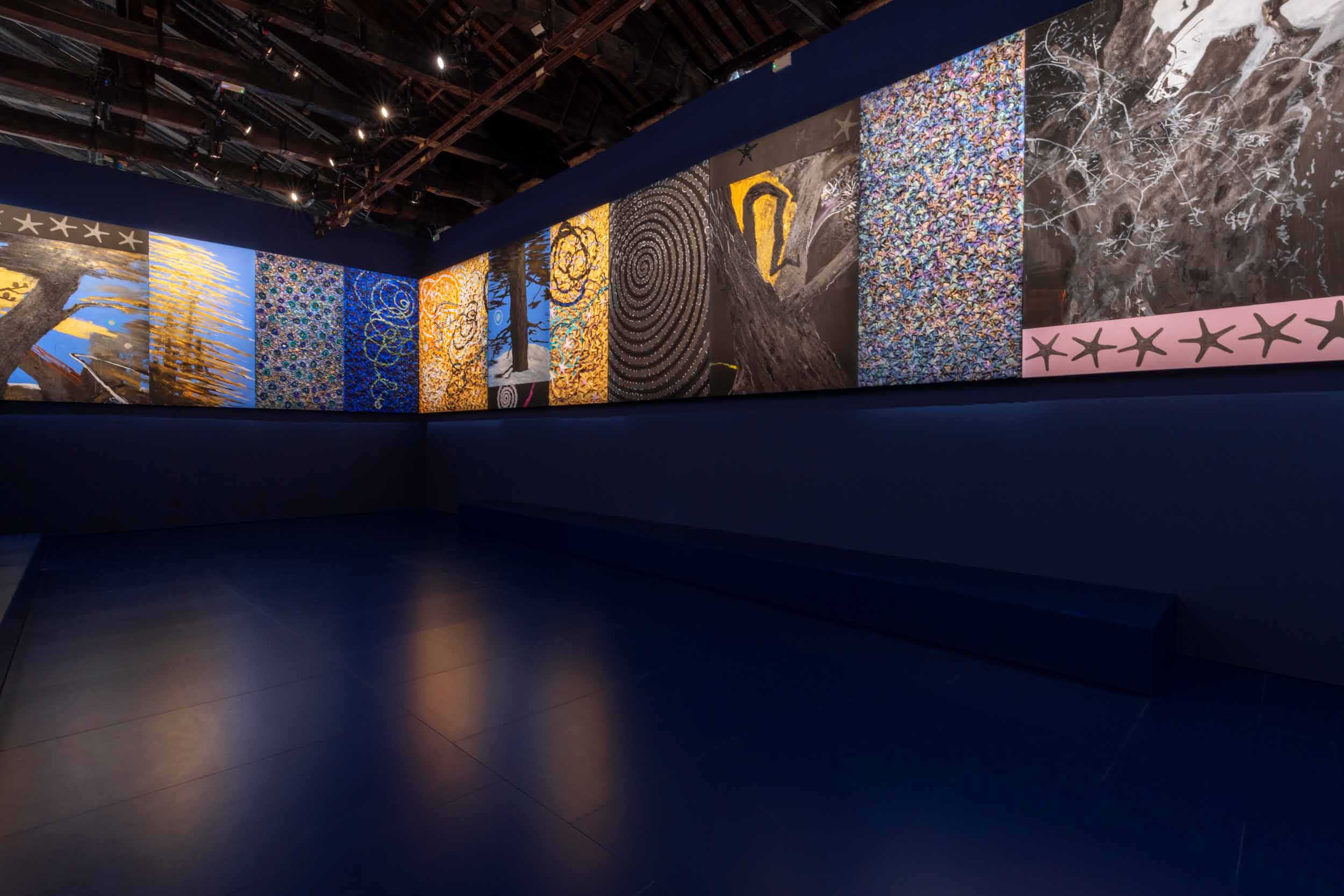
2026. Courtesy of the Artist & LVAA – Photo by Celestia Studio ©️ LVAA
Behind the Canvas: The Artist at Work
To truly understand the gravitas of the exhibition, one must look at the labour, physical intensity, and deep contemplation that birthed it.
Step inside the artist’s sanctuary. Filmed in the quiet months leading up to the Biennale, this exclusive footage captures Nabil Nahas in his studio, building the intricate, heavily textured layers of the monumental panels that now stand proudly in Venice.
As seen in this preview footage, Nahas’s process is a dance of meticulous precision and organic spontaneity. Watching the artist navigate the massive canvases provides an intimate look at how his fractal systems are built layer by layer. The video underscores the physical endurance required to create a work of this scale, grounding the ethereal, cosmic themes of the final exhibition in the raw reality of the studio.
A Living Cultural Condition
Ultimately, the Lebanon Pavilion succeeds because it refuses to reduce identity to a simplified political statement. As Dr. Nada Ghandour’s curation highlights, plurality is a lived condition. Through the convergence of geometric discipline and organic wildness, Nabil Nahas has gifted Venice an unforgettable sanctuary of colour and form, a poetic reminder that within multiplicity lies a profound, unifying beauty.
The Pavilion of Lebanon is open at the Arsenale. Don’t miss this landmark exhibition.
France 24 Interview with Nabil Nahas