UNITED ARAB EMIRATES
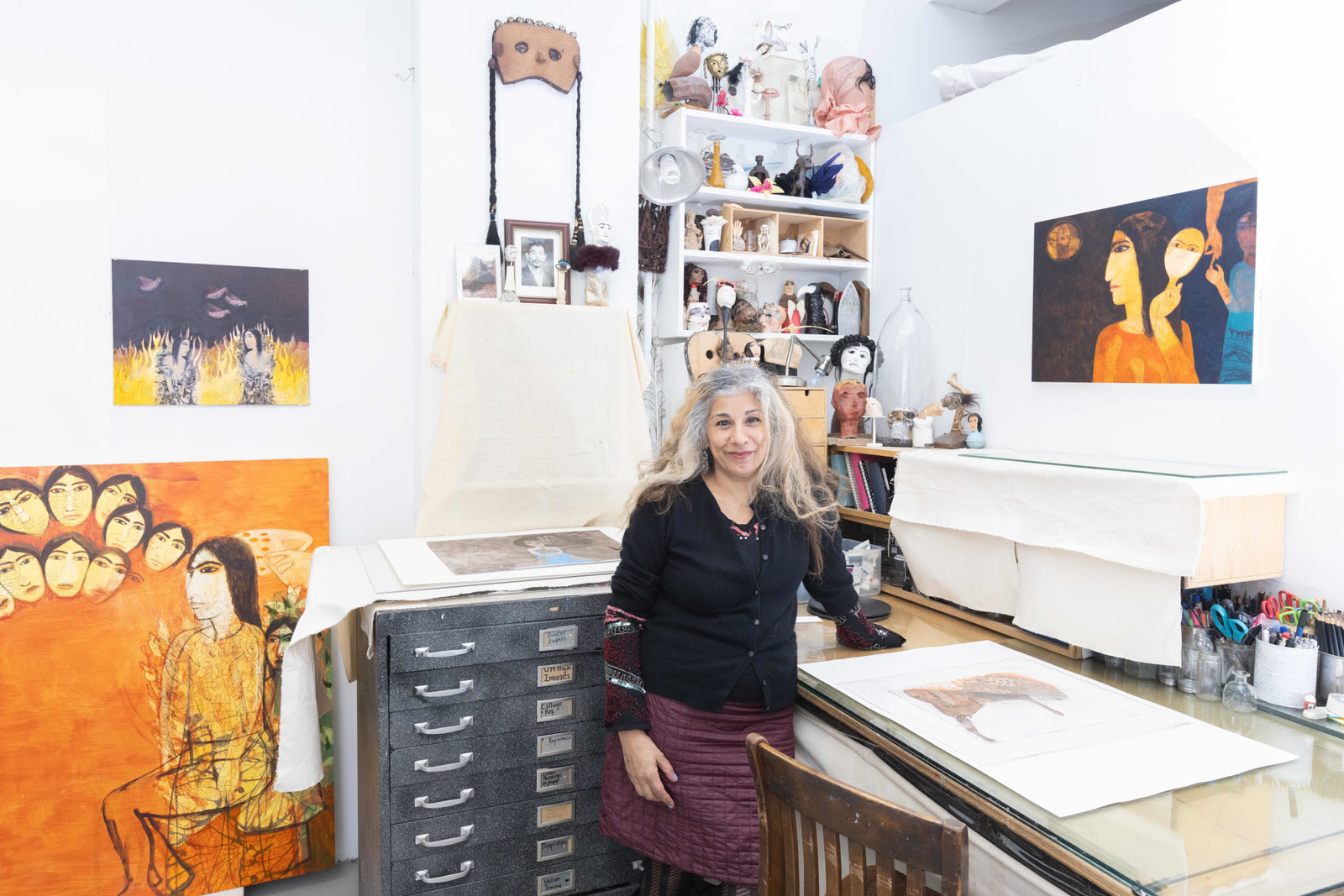
Through Of Loss and Redemption (7 July–4 August 2026), Taymour Grahne Projects presents a digital solo exhibition by New York-based Iranian-British artist Samira Abbassy. Working across painting and drawing, Abbassy explores loss, transformation, memory, and the shifting nature of identity through recurring motifs of fragmented bodies, animals, birds, fire, and symbolic landscapes. Her practice draws on Persian and Islamic visual traditions, Jungian psychology, anatomical imagery, and art-historical references, creating layered compositions that resist fixed interpretation. Works such as The Water Bearers feature flames sustained by hovering disembodied heads, reflecting tensions between individual agency and larger systems of power, while In the Land of Peacocks invokes the peacock as a symbol of endurance and transmutation. Many paintings are executed on wood and scraped back to reveal luminous underlayers, reinforcing the exhibition’s central proposition: that illumination emerges from within.
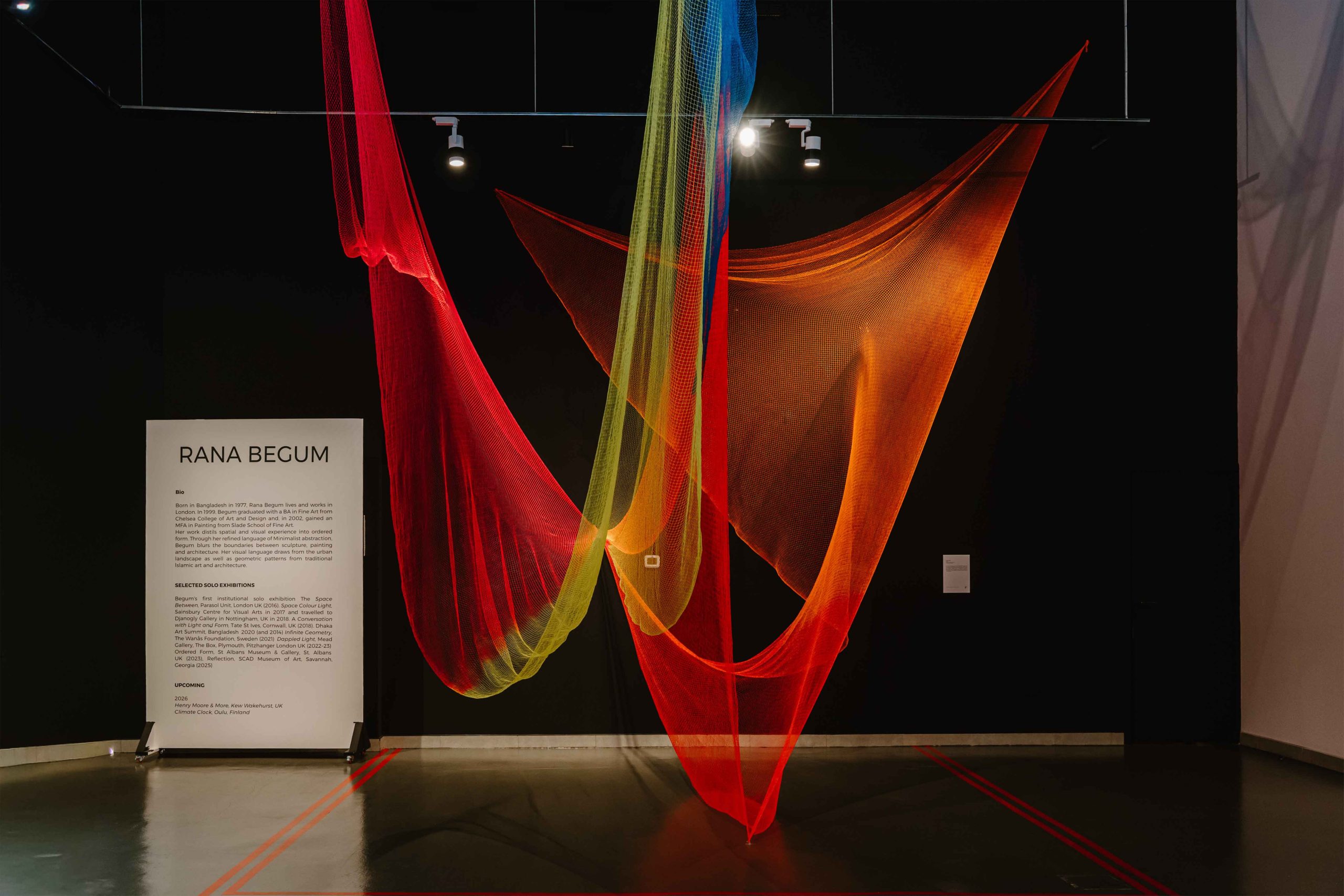
At The Farjam Foundation in Dubai, Boundless Geometry (13 May–13 September 2026) brings together selected works by Rana Begum, curated by Lisa A. Farjam. Known for her investigations into light, colour, geometry, and perception, Begum works across sculpture, painting, and installation using materials including painted steel, mirrored stainless steel, resin, and fishing net. Throughout the exhibition, suspended mesh forms appear almost weightless, reflective surfaces fracture colour across the gallery, and geometric structures shift according to the viewer’s movement and changing light. Rather than treating geometry as a rigid system, Begum approaches it as a language of rhythm, balance, and contemplation, creating environments that invite stillness and close observation. Drawing subtly from abstraction, architecture, and Islamic geometric traditions, the exhibition offers a meditative encounter with space, form, and perception.
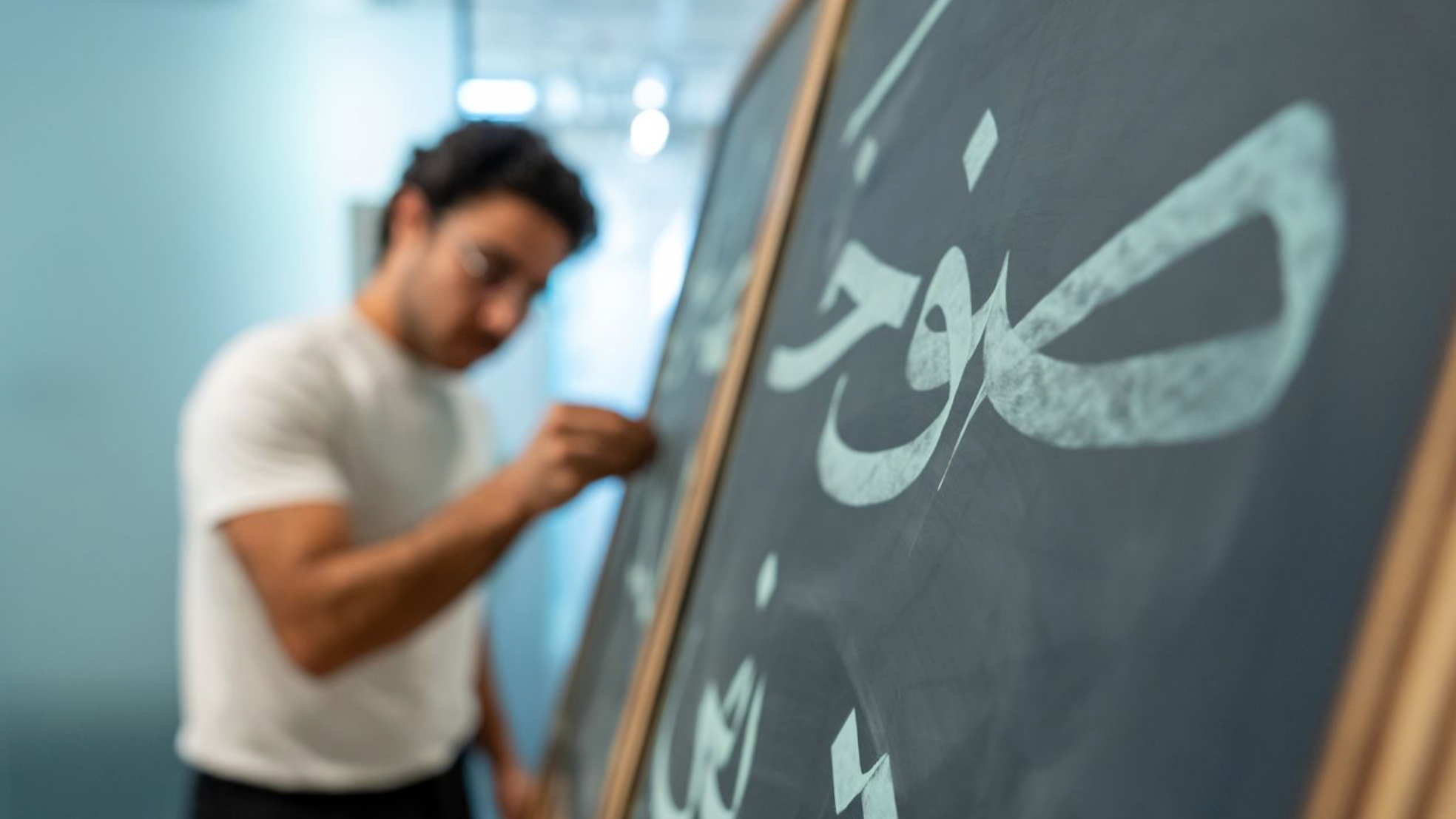
On the 25th of July, 421 Arts Campus will host From Trace to Script: Arabic Calligraphy with Karim El Atrache as part of The Practice Lab’s Studio Seminars. Led by Lebanese artist Karim El Atrache, the workshop explores Arabic calligraphy as a living and evolving visual language, tracing its journey from classical traditions to contemporary experimentation. Participants will be introduced to the foundations of Naskh and Thuluth scripts before developing their own letterforms across paper and digital formats. Combining history, typography, sound, image, and intuitive mark-making, the session encourages a personal approach to script beyond conventional calligraphic practice. Organised by 421 Arts Campus, the programme also includes a presentation of El Atrache’s work and provides participants with materials and references to continue their practice beyond the workshop.
LEBANON
Saleh Barakat Gallery hosts Human Inc. (9 July–14 August 2026), a new solo exhibition by multidisciplinary artist Hady Sy. Born in Beirut in 1964, Sy has exhibited internationally, with works held in major public and private collections across Europe, the Middle East, and the United States. Through a new body of paintings and mixed-media works built from binary forms and coded visual structures, Sy considers the increasingly complex relationship between humanity, technology, and nature. Rather than treating artificial intelligence as a distant possibility, the exhibition suggests it is already embedded within contemporary life, questioning how technological systems reshape ethics, identity, and human experience. Organic forms emerge from digital patterns, creating compositions that oscillate between natural landscapes and computational language. Continuing themes explored throughout his career, Sy reflects on the resilience of human values in an era of accelerating technological change, arguing against the reduction of individuals to data or disposable entities.
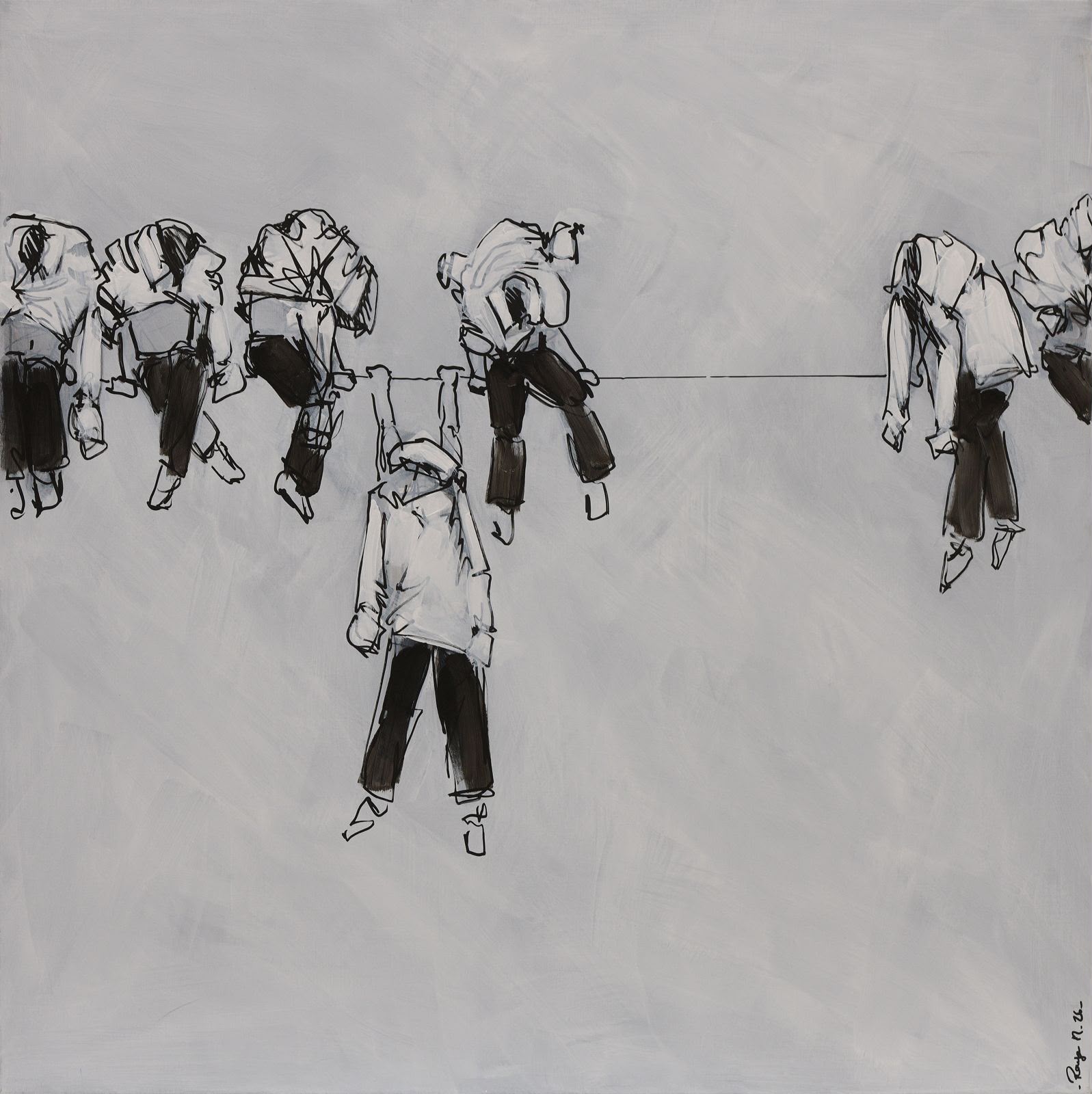
Meanwhile at Maya Art Space, Lebanese-Greek visual artist Raya Matta showcases her solo exhibition Larger Than Us (8–22 July 2026), curated by Randa Sadaka. Centred on Matta’s latest body of work, Power Series, the exhibition examines the shifting relationship between individuals and the structures of authority they create. Working through stark, monochromatic compositions, Matta transforms the image of a crisp white shirt into a recurring symbol of power, order, and institutional control. As the series unfolds, the garment gradually detaches from the body, expanding into an imposing architectural form while the human figure diminishes and eventually disappears. Through painting, fragmented forms, and dramatic contrasts between light and dark, Matta explores ambition, obedience, hierarchy, and the seductive nature of power. Building on earlier investigations into memory, identity, and uncertainty, Power Series reflects on the point at which symbols evolve into autonomous systems capable of overwhelming their creators.
THE WORLD
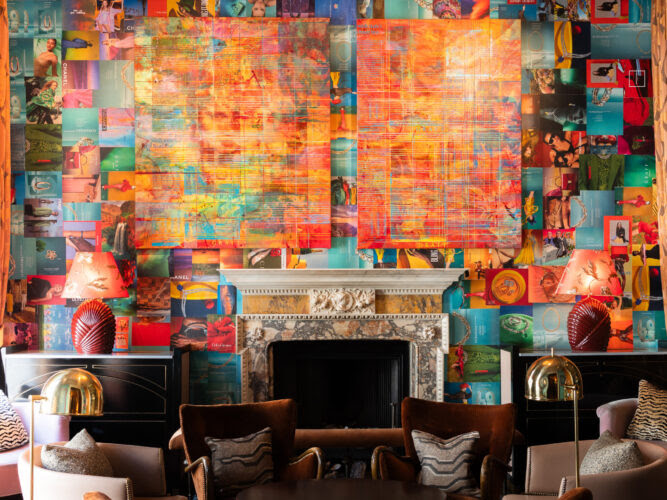
Occupying the Ante Room at The Arts Club in London, Full Bleed (until 27 September 2026) marks a significant new presentation by Mandy El-Sayegh, whose multidisciplinary practice moves between painting, collage, installation and performance. Conceived as a site-specific intervention, the exhibition transforms the space into an immersive environment built from accumulated layers of newspapers, advertisements, medical illustrations and fragments of text. These materials, repeatedly assembled and reworked, reflect the artist’s sustained interest in the circulation of information and the structures through which identity is constructed. Rather than presenting discrete works, El-Sayegh creates an interconnected visual field in which images and language overlap, revealing the tensions between personal experience and wider social systems. Material density is matched by conceptual complexity, inviting close attention to the ways contemporary life is mediated through communication, power and representation.
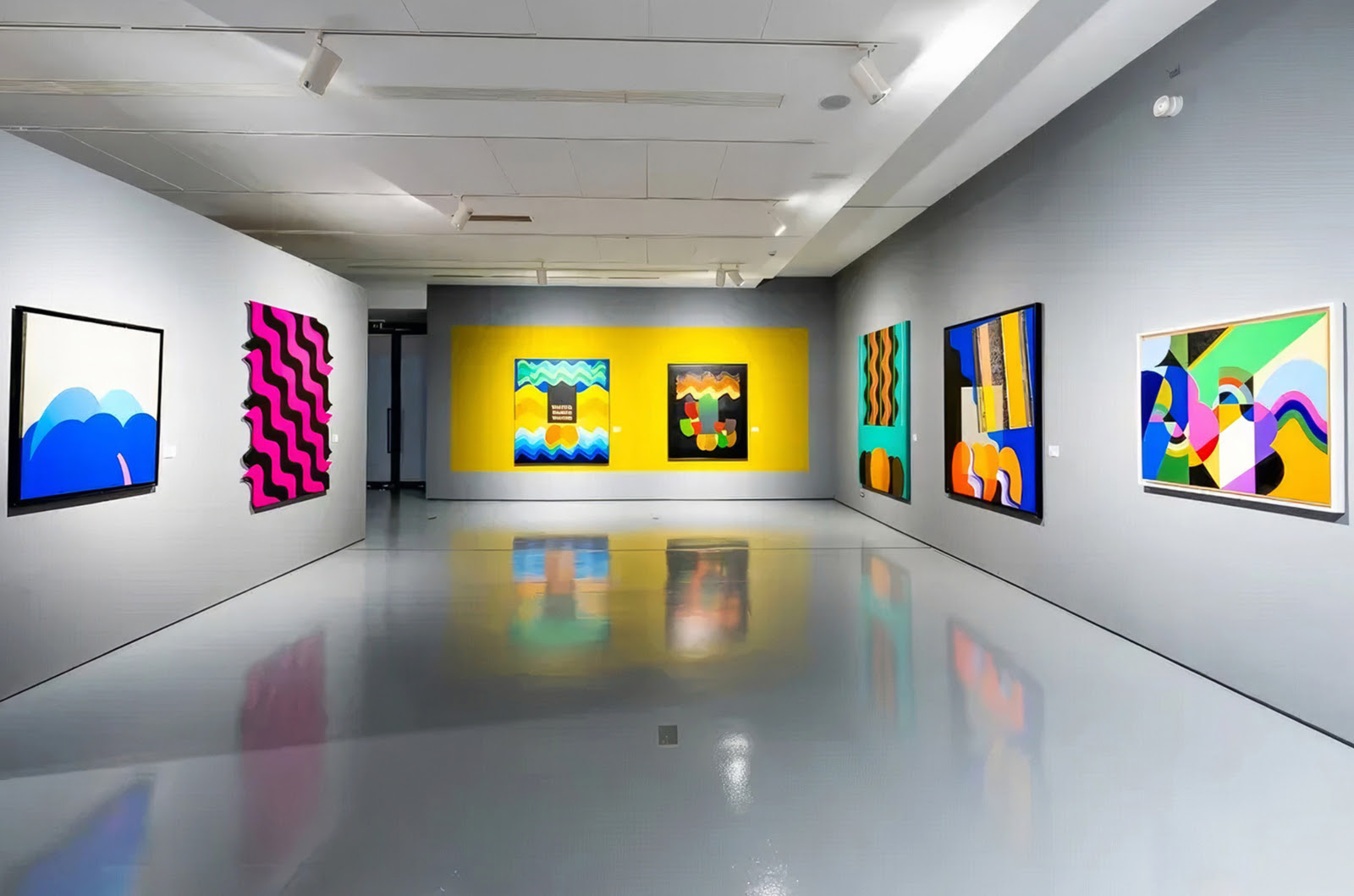
In Rabat, the Mohammed VI Museum of Modern & Contemporary Art, presents Mohamed Melehi: Œuvre en héritage (until 31 August 2026), a major retrospective dedicated to one of the defining figures of modern Moroccan art. Bringing together works spanning almost seven decades, the exhibition follows Melehi’s artistic development from the 1950s to his final years, tracing the journeys and encounters that shaped his practice across Morocco, Europe and the United States. A leading member of the Casablanca Art School, Melehi played a decisive role in forging a distinctly Moroccan modernism by bringing local visual traditions into dialogue with international artistic movements. His celebrated wave motif, characterised by vibrant colour and rhythmic form, emerges throughout the exhibition as both a formal innovation and a symbol of movement, exchange and renewal. Archival photographs, documents and personal material further illuminate the artist’s intellectual legacy, placing his work within the wider cultural transformations that reshaped Morocco in the second half of the twentieth century.
The inaugural edition of Photo Tanger (16 June–31 August 2026) establishes a new international festival dedicated to photography and the moving image while drawing on Tangier’s long photographic history. Conceived following discussions in 2025 about the city’s cultural future, the festival adopts L’appel du large as its central theme, reflecting Tangier’s historic position as a place of exchange between the Mediterranean and the Atlantic. Spain is the guest country for this first edition, with a presentation of Isabel Muñoz’s work at the Instituto Cervantes accompanied by a programme of Spanish cinema. Across museums, galleries and public spaces, numerous exhibitions explore photography’s evolving role in shaping cultural memory. Among the highlights, Tanger, Pourquoi Tanger ? traces 150 years of representations of the city through historical and contemporary photographers, while L’Appel du Large at Galerie Mohamed Drissi brings together Leila Alaoui, Mohamed El Baz, Youssef Nabil and Yoriyas, whose diverse practices examine migration, identity, travel and belonging through distinct visual languages.
Damascus Brings Us Together (10 July–4 September 2026), presented at The Khan in the heart of Old Damascus, reunites artists who remained in Syria with those whose careers developed in exile over the past fifteen years. Organised through a collaboration between Samer Kozah Gallery, Damascus, and Urbanist Art Gallery, Dubai, the exhibition foregrounds artistic dialogue after a prolonged period of displacement, bringing together more than thirty painters, sculptors and mixed-media artists. Conceived as the first stage of a longer-term initiative, it also seeks to re-establish cultural connections within Syria’s artistic community. Participants include Asma Fayoumi, Mohannad Orabi, Mohammad Omran, Mohamad Khayata, Hala Mahayni, Yaser Safi, Abdullah Murad, Ahmad Talaa, Amer Alakl, Zeina Salama and Yamen Yousef, among many others, whose practices reflect diverse generations and artistic approaches. Rather than presenting a single narrative, the exhibition explores shared experiences of memory, loss, resilience and renewal through a broad range of visual languages.