
Artificial intelligence learns from the images we leave behind. What happens when artists ask it to revisit the histories, identities and ideas those images contain? At Dubai’s Alserkal Avenue, eight artists explore that question through works that range from synthetic faces singing familiar love songs to virtual ecosystems that blur the boundaries between human and non-human life.
Running from 9 to 29 November 2026 across two large-scale outdoor screens, The Window in Alserkal marks the Middle Eastern debut of The Window, the CHANEL Culture Fund’s public art project. Working with moving image, AI and generative systems, the artists examine how technology shapes what we remember, how we see ourselves and the futures we imagine. For this edition, four artists from the region: Ayman Zedani, Daniah Alsaleh, Nouf Aljowaysir and Farah Al Qasimi are brought into dialogue with four artists from the project’s international programme: Cao Fei, Jakob Kudsk Steensen, Sarah Meyohas and LuYang. Their approaches vary considerably, yet each finds in digital technology a means of examining something that extends beyond the screen. Some return to historical images to question the narratives they carry, while others use computational systems to imagine unfamiliar forms of life or consider what might become of the human body in an increasingly virtual world.
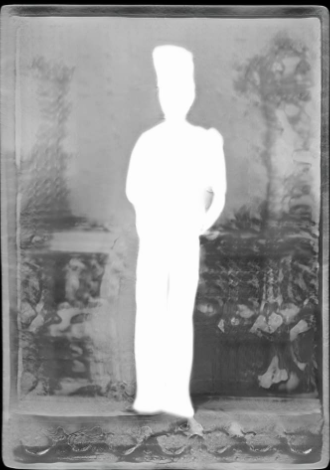
The relationship between technology and cultural memory is particularly evident in Nouf Aljowaysir‘s Salaf: Ancestral Seeds (2025). Drawing on colonial-era photographs, the artist uses a StyleGAN3 model trained on a dataset from which Orientalist figures have been erased. The resulting images take the form of fluid, white silhouettes, described as ‘seeds’. By intervening in an archive shaped by colonial representation, Aljowaysir draws attention to the ways historical stereotypes can persist even within contemporary technologies. The work raises an important question about artificial intelligence: can a system trained on existing images escape the assumptions that have shaped them in the first place?
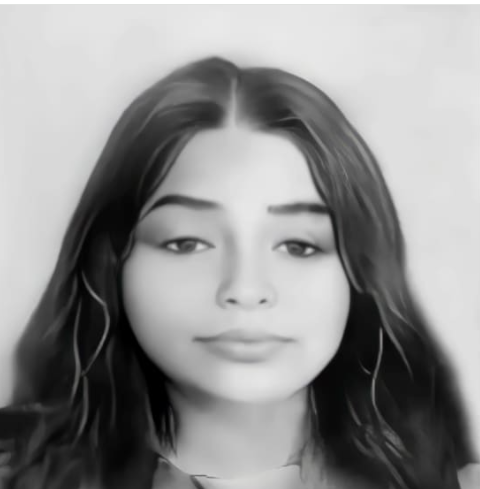
A different encounter between technology and cultural memory unfolds in Daniah Alsaleh‘s Love Stories (2022). Here, machine learning generates synthetic faces that lip-sync to excerpts from popular love songs across the MENA region. The familiar melodies carry their own associations, bringing fragments of collective memory into an otherwise artificial setting. As the digitally generated faces perform these songs, the distinction between genuine expression and its technological reproduction becomes less certain. Alsaleh’s work looks at how emotions are shaped by cultural references and how seemingly intimate experiences can become part of a shared visual and sonic language.
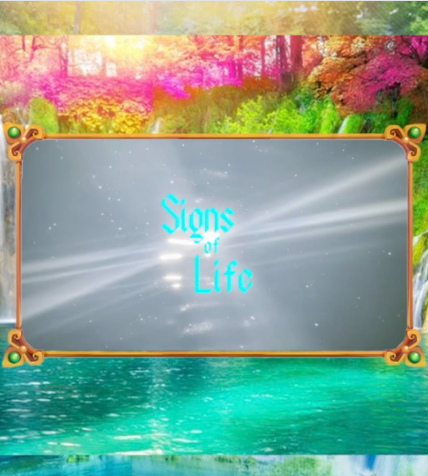
In Farah Al Qasimi‘s Signs of Life (2023), the digital environment takes on a more dreamlike quality. Moving between photography and film, Al Qasimi builds a world of saturated colours, visual abundance and carefully observed everyday details. The work unfolds according to a slowed, game-like logic, with drifting movement and ambient sound creating an atmosphere of suspension, almost as though the viewer were caught between presence and dissociation. Her attention to ordinary surfaces and tactile details brings a sense of familiarity to this otherwise disorienting environment. Identity here is approached through the things that surround us, and through the visual language of everyday life.
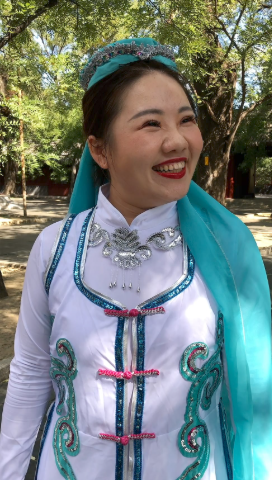
The question of how we might inhabit digital worlds also runs through Cao Fei‘s Meta-Mentary (2022). The artist interviews ordinary people about the metaverse and the distant future, capturing their thoughts at a time when cyberspace has become increasingly intertwined with everyday existence. Rather than presenting a speculative vision of what lies ahead, the work turns its attention to how people imagine that future from the standpoint of the present. Their responses offer a glimpse of a society already trying to make sense of its relationship with virtual spaces. Across her wider practice, which encompasses film, digital media, sculpture and performance, Cao Fei has long explored the effects of technological change on contemporary life.
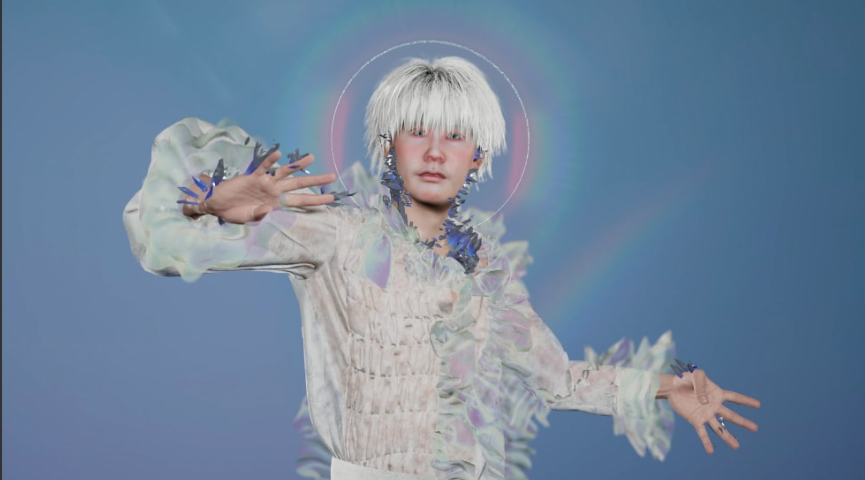
In LuYang‘s DOKU 5 Reincarnations (2022), the human body becomes the starting point for a more unusual exploration. The work follows DOKU, a digitally animated avatar, through the six realms of existence in Buddhist cosmology. Its movements are based on motion-capture recordings of traditional Balinese dance, translating physical gestures into a computer-generated environment. The result brings together references to Buddhist spirituality and contemporary animation, while challenging familiar distinctions between the physical body and its digital counterpart. Through this combination, LuYang considers what happens to our understanding of human existence when the body can be endlessly reproduced and transformed.
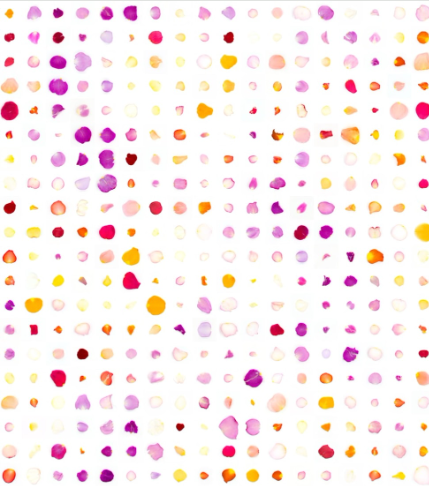
Elsewhere, technology becomes a means of generating forms that have no direct counterpart in the physical world. Sarah Meyohas‘s Infinite Petals (2023) uses a Generative Adversarial Network (GAN) trained on a photographic dataset of 100,000 rose petals. The system produces an uninterrupted succession of new digital petals, each one unique. The choice of the rose is significant: long associated with romance and beauty, it is here subjected to a process of algorithmic reproduction. Meyohas brings the language of artificial intelligence into conversation with the history of photography, questioning how images acquire value and what happens to the idea of originality when creation becomes an ongoing computational process.
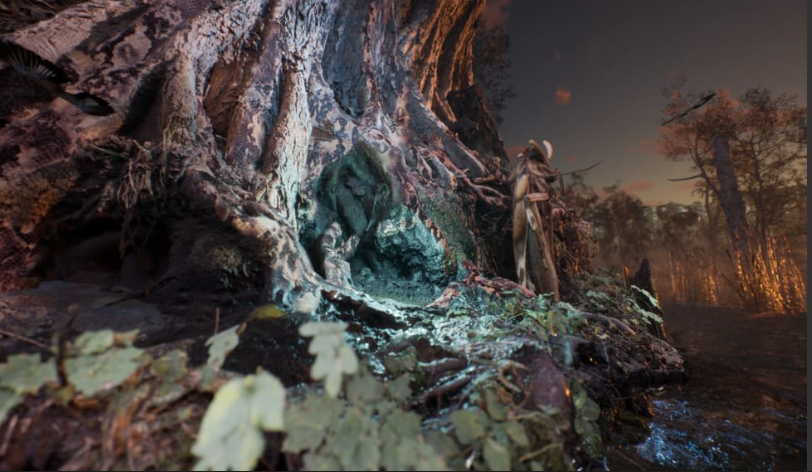
The natural world occupies a more direct place in Jakob Kudsk Steensen‘s Triglav of Berl-Berl (2021–ongoing). Built from hundreds of images of Berlin’s remaining wetlands, the work takes the form of a virtual environment that changes continuously. Its landscape responds to fluctuations in the surrounding environment, creating an evolving digital interpretation of an ecosystem that is often overlooked. Through three-dimensional animation and sound, Steensen gives visibility to these fragile natural spaces, allowing their gradual transformations to unfold on screen. The virtual world does not replace the landscape it represents; instead, it offers another way of paying attention to it.
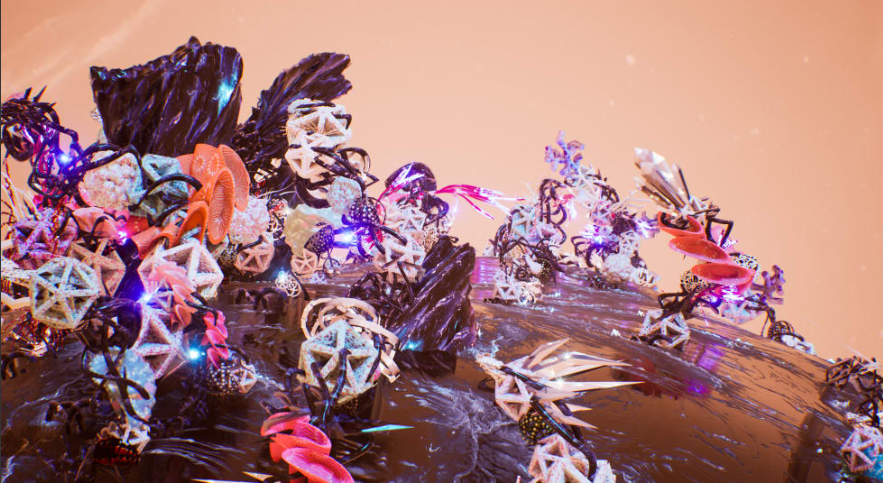
Ayman Zedani‘s Terrapolis (2020) similarly begins with the relationship between human life and the natural environment. Transforming the identities of more than 5,000 people into digital organic extensions, the work creates a simulated ecosystem in which the boundaries between different life forms become increasingly difficult to distinguish. Drawing on his research into the relationship between communities and nature, Zedani imagines alternative forms of coexistence in a world facing climate change and growing digital mediation. The resulting environment invites viewers to reconsider the separation between human and non-human life, suggesting a future in which their identities might become increasingly intertwined.
Displayed across Alserkal Avenue’s outdoor screens, these works enter a space where art is not necessarily sought out, but encountered along the way. A passerby might find themselves watching a digitally generated face, an imagined ecosystem or a landscape assembled from fragments of the natural world. There is something fitting about this setting: works concerned with the growing presence of technology in everyday life are presented within the very fabric of the city. Rather than offering a single vision of the digital future, The Window in Alserkal leaves room for different interpretations, inviting viewers to pause and reconsider the images and virtual spaces that have quietly become part of how we experience the world.
ABOUT THE CHANEL CULTURE FUND
The CHANEL Culture Fund supports a global network of artists, cultural institutions and innovators, fostering new ideas and initiatives that shape the cultural landscape. Through programmes such as CHANEL’s Art Partners and the CHANEL Next Prize, the Fund champions artistic innovation and supports the next generation of creative voices.