LEBANON
Beirut’s autumn season probes transformation, from fluid paint to the afterlife of discarded objects. Across the city’s galleries and cultural spaces, memory, architecture, material experimentation and collective experience become starting points for distinct artistic approaches, each offering a different way of looking at the world and the traces it leaves behind.
A spinning top, for instance, becomes the unlikely protagonist of Toupie, Zad Moultaka’s latest exhibition at Galerie Tanit (29 October–3 December). Inspired by an object whose balance depends entirely on movement, the Lebanese composer and visual artist explores the delicate relationship between stability and change. Through shifting fields of colour, gestural marks and dissolving forms, his paintings translate the spinning top’s energy into a visual language informed by rhythm, tension and silence. The exhibition brings together a new body of work produced in 2026, comprising a numbered series extending from Toupie I to Toupie XLIII. The works move between intimate canvases and larger compositions, allowing the motif to unfold across different scales and configurations. While some paintings offer fleeting, almost abstract traces of the spinning object, others give its movement a more expansive presence. Beyond painting, the exhibition also incorporates photography and video, extending Moultaka’s exploration of movement into other visual mediums.
Toupie follows Oro Tenebris, the artist’s previous exhibition at Galerie Tanit in 2024, which approached painting as an introspective journey into darkness, transformation and dormant spirituality. Where that body of work explored the emergence of unexpected forms through material experimentation, Toupie shifts its attention towards movement and the possibility of finding balance within perpetual change.
From movement to memory, Sweet Dust by the multidisciplinary Lebanese artist Johanne Issa turns towards more intimate territory. Presented at The Upper Gallery, Saleh Barakat Gallery (30 October–4 December), the exhibition brings together eight mixed-media works on panel, depicting unique still lives of deep colours contrasting with shadowy earthy surfaces.
Beirut itself provides the material for Sara Chaar’s Inside of Outside, presented at Art on 56th (9–30 October). Drawing inspiration from the city’s weathered façades, cracked walls and layered architectural surfaces, Chaar transforms familiar urban details into abstract compositions. Working with oil and wax, she builds and scrapes successive layers, treating the painted surface as a palimpsest in which traces of earlier forms remain visible beneath new ones. Moving between macro and micro perspectives, her compositions shift from the scale of the city to the minute details of its surfaces, revealing the layers of time and transformation embedded within the urban landscape.
Beirut-based multidisciplinary visual artist Ali Merhi explores the afterlives of discarded materials in Afteruse, on view at Ashkal Alwan (16 October 2026–15 January 2027). Food tins, containers, furniture fragments and salvaged objects are assembled into kinetic sculptures that vibrate, move and produce unexpected sounds. Drawing on Beirut’s informal economies of repair and reuse, Merhi challenges conventional distinctions between utility and artistic expression, transforming materials that might otherwise have been abandoned. The sculptures’ sounds form a stringent cacophony that acts almost like a cry of refusal, giving an audible dimension to the works’ resistance to disposability and the logic of consumption.
Fire, meanwhile, becomes both medium and collaborator in Jean Boghossian’s exhibition at Saleh Barakat Gallery (6 October–13 November). Through paintings, sculptures and works on paper, the artist explores the unpredictable effects of flame and smoke on different materials. Ash, pigments, wood and clay are transformed through processes that balance artistic intention with chance, allowing destruction and creation to coexist within the same gesture.
Beyond the gallery walls, Today I Would Like to Be a Tree – Edition 4 brings an altogether different perspective to Beirut’s cultural calendar. Opening on 11 November at the Nuhad Es-Said Pavilion for Culture, the initiative centres on the drawings and creative expressions of children displaced by conflict in Lebanon. Conceived by artist and publisher Abed Al Kadiri, the project transforms children’s drawings into large-scale leporello artist books, developed in collaboration with contemporary artists. Now in its fourth edition, it offers a space for imagination and expression at a time when displacement has disrupted the everyday lives of thousands of children. Here, art moves beyond the exhibition space, becoming a means of giving visibility to young voices and supporting their access to education and psychosocial care.

QATAR
From contemporary design to the dialogue between art and nature, Doha’s cultural calendar brings together exhibitions addressing heritage, artistic experimentation and material transformation. The return of Design Doha Biennial, alongside presentations at the National Museum of Qatar and Mathaf, foregrounds the region’s changing creative practices.
Bringing together more than 100 designers, studios and practitioners from across the Middle East, North Africa and South Asia, Design Doha Biennial (5 November 2026–31 January 2027) returns for its second edition with exhibitions, installations, public commissions, talks and workshops. Centred around Fereej Al Asmakh, this year’s edition focuses on the ever-growing and evolving relationship between cultural heritage and contemporary design. Among its highlights, Arab Design Now examines how local identities, craftsmanship and material knowledge inform contemporary approaches to architecture, furniture and textiles.
A more elemental exploration of materials unfolds at the National Museum of Qatar, where Giuseppe Penone: The Inner Flow of Life (26 October 2026–13 February 2027) brings together more than five decades of the Italian artist’s practice. Associated with the Arte Povera movement, Penone has consistently explored the relationship between the human body and the natural world. Through sculptures and installations in wood, iron, bronze, clay and marble, he investigates the passage of time and the transformations embedded in organic matter. Extending across the museum’s indoor and outdoor spaces, the exhibition also features Idee di Pietra, a public sculpture installed at Doha Old Port. Curated by Hans Ulrich Obrist and Issa Al Shirawi, the presentation offers an encounter with an artistic practice in which nature is not simply a subject, but an active force in the creative process.
Questions of artistic heritage and cultural identity take centre stage at Mathaf: Arab Museum of Modern Art with What Lingers in the Artist’s Mind: Experiments and Legacies of the Baghdad Modern Art Group (25 October 2026–6 February 2027). Curated by Nada Shabout, the exhibition traces more than seven decades of Iraqi artistic experimentation, examining the legacy of the Baghdad Modern Art Group, founded in 1951 by Jewad Selim and Shakir Hassan Al Said. Across 17 thematic sections, paintings, sculptures, sketches, photographs and archival documents reveal how the collective sought to develop a distinctly Iraqi artistic language, one forged at the crossroads of Mesopotamian heritage, Islamic traditions and international modernism. Featuring works by leading figures including Naziha Selim, Faiq Hassan and Dia Al-Azzawi, the exhibition also considers how conflict, displacement and missing archives have shaped the preservation and understanding of Iraqi modern art.
The National Museum of Qatar’s programme also looks east with Boats Floating Afar: The Maritime Trade of Ancient Chinese Ceramics (26 October 2026–15 February 2027). Presented in collaboration with the National Museum of China, the exhibition brings together more than 120 objects, tracing over 1,000 years of Chinese ceramic production and maritime trade from the Tang to the Qing dynasties. Alongside Chinese ceramics, objects from Qatar Museums’ collections, including pottery fragments excavated in Qatar, provide evidence of the goods exchanged along the Maritime Silk Road and its connections with the Gulf. The collaboration marks the tenth anniversary of the 2016 Qatar–China Year of Culture and continues an institutional exchange between the two museums, following the presentation of the National Museum of Qatar’s On the Move at the National Museum of China in Beijing in June 2026.

UNITED ARAB EMIRATES
From the legacy of one of Lebanon’s most celebrated modern painters to contemporary regional design, the UAE’s cultural calendar brings together distinct approaches to artistic expression. In Abu Dhabi, a major retrospective revisits the life and work of Paul Guiragossian, while Dubai explores the relationship between design, communication and collective experience.
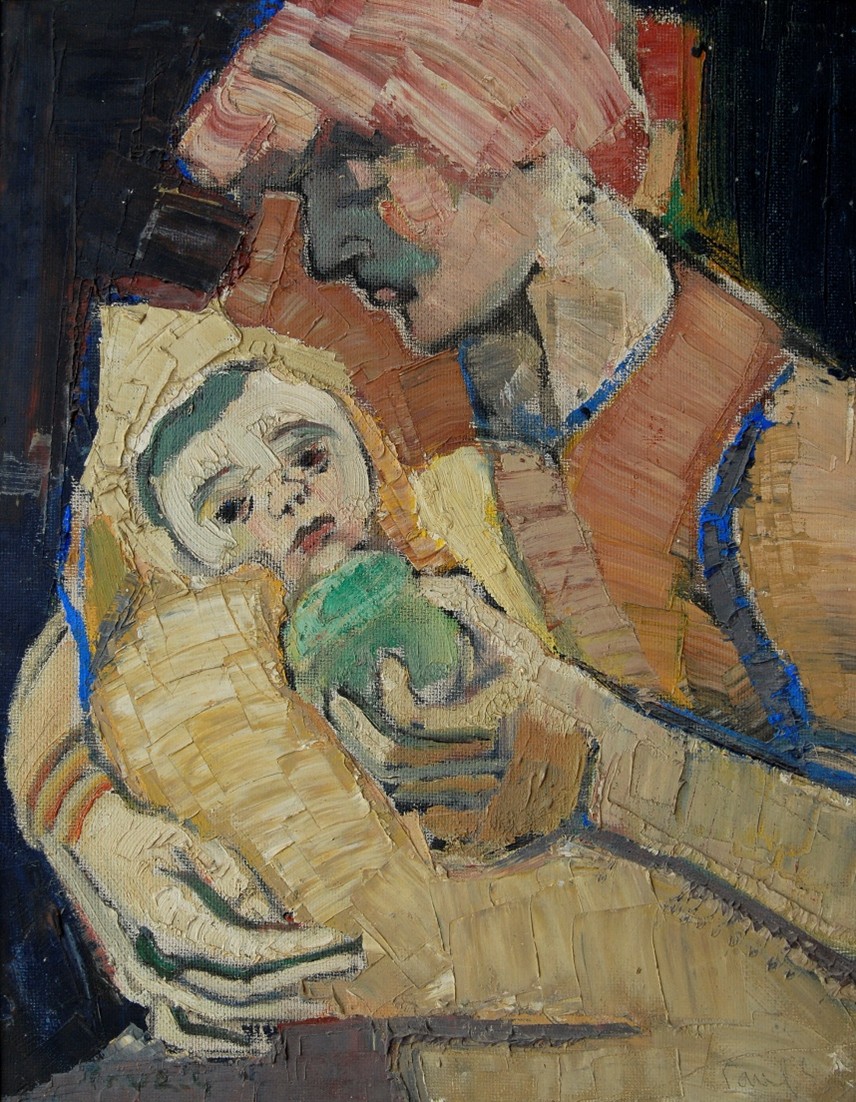
A century after his birth, Paul Guiragossian is the subject of a major retrospective at the Bassam Freiha Art Foundation in Abu Dhabi. In his paintings, elongated figures gather in dense, towering phalanxes, their bodies overlapping in compositions built through thick, incandescent slabs of pigment. Paul Guiragossian: 100 Years of Art (17 October 2026–17 January 2027) revisits five decades of the artist’s practice through paintings, drawings, archival photographs and personal documents, including works rarely seen outside the family’s collection. Developed in collaboration with the Paul Guiragossian Foundation and co-curated by his daughter Manuella Guiragossian and Dr Michaela Watrelot, the retrospective traces the evolution of an artistic language that gradually moved towards abstraction while retaining the human figure at its centre.
Born in Jerusalem in 1926 into an Armenian family, Guiragossian arrived in Lebanon from Jaffa in 1948. His early portraits reveal a painter concerned with identity, expression and the emotional presence of his subjects. The exhibition follows his gradual transition from individual portraits towards densely grouped compositions, in which figures merge, overlap and rise together. Central to this evolution are three women who shaped his life: his mother Rahel, his wife Juliette and his daughter Manuella. Works such as Juliette and Manu (1955) and L’Etreinte (1973) demonstrate how family, motherhood and affection remained enduring sources of inspiration. Particularly poignant is an unfinished self-portrait from the final months of his life in 1993, bringing the exhibition full circle to the artist’s earliest explorations of his own image.
Further along the Emirates’ cultural landscape, Dubai Design Week (3–8 November 2026) returns to Dubai Design District (d3) for its 12th edition under the theme Atmospheres. The programme brings together regional and international designers, architects and creative practitioners through exhibitions, installations, talks and workshops. Among its highlights, Abwab: In Other Words brings five creative practices together in a unified group exhibition, marking a shift from the standalone pavilions of previous editions. The exhibition explores forms of communication beyond spoken and written language. Meanwhile, Urban Commissions: Three Gardens and a Room, by Dubai-based NAO Architects, introduces an intimate, human-scale refuge amid the surrounding glass-and-steel commercial buildings, using architecture and landscape to create spaces for pause and encounter. Running alongside the festival, Downtown Design (4–8 November) presents contemporary furniture, interiors and objects by established international names and emerging regional designers.
THE WORLD
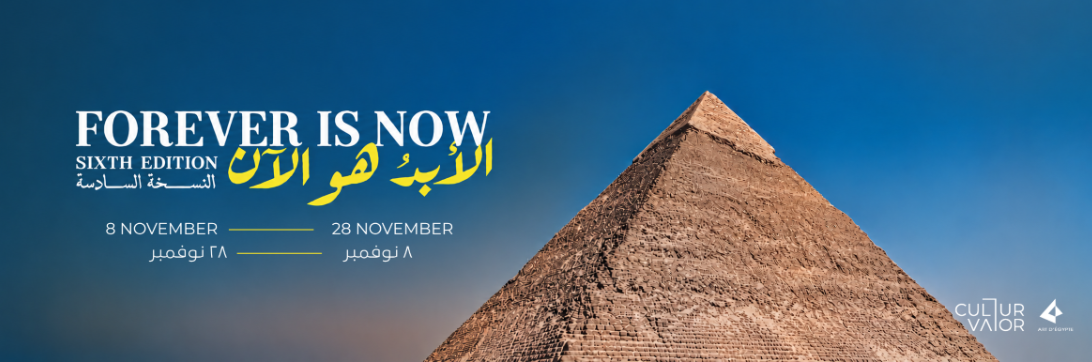
Set against the Giza Pyramids, Forever Is Now returns for its sixth edition (4–28 November), bringing together eight artists from six countries in a series of site-specific installations. Organised by Art D’Égypte under UNESCO patronage and in collaboration with Egypt’s Ministries of Culture, Tourism and Antiquities, the exhibition marks its first predominantly women-led edition. Moving between craft, sculptural form and natural materials, the works introduce contrasting interventions into the desert landscape. Jiang Qiong Er draws on traditional craft, while Reham Abo Elazm works with solid sculptural mass and Rochelle Webster Nembhard explores the textures of raw earth, clay and stone. Their installations engage directly with the scale and material presence of the ancient monuments.